Lower-risk serving reminders
When cooked properly until tender, squid ring has a low choking risk because it becomes soft and easy to chew or gum. The key is to avoid overcooked or rubbery squid, which can be tough and pose a greater risk.
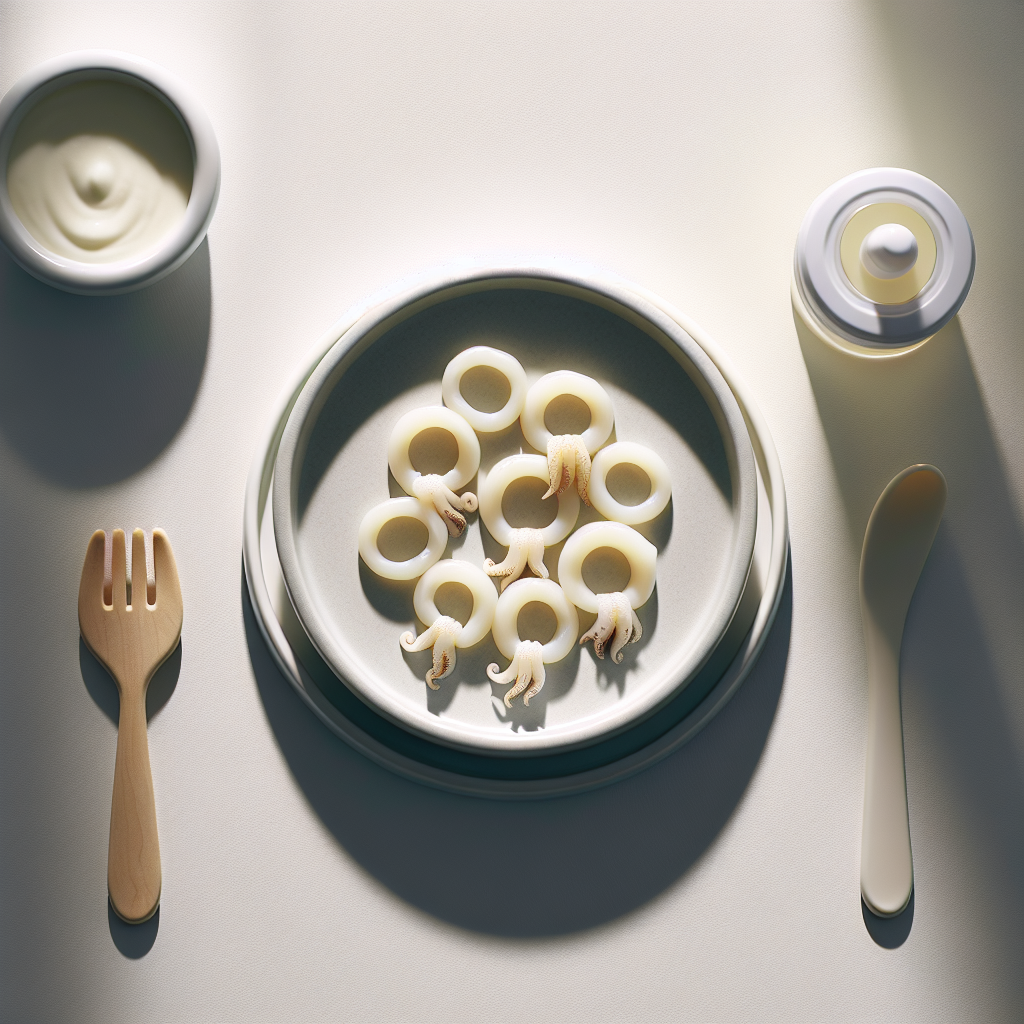
Squid ring can be introduced from around 6 months of age, as soon as your baby is ready to start solid foods. As squid is a common allergen, it's important to introduce it carefully and watch for any signs of a reaction. Ensure the squid is fully cooked until tender, as undercooked squid can be rubbery and difficult for babies to manage safely.
Squid is a protein-rich food that supports your baby's growth and development. It provides important nutrients including selenium, vitamin B12, and phosphorus, which contribute to immune function, energy production, and bone health. Squid is also naturally low in fat and contains some omega-3 fatty acids, which support brain development.
When cooked properly until tender, squid ring has a low choking risk because it becomes soft and easy to chew or gum. The key is to avoid overcooked or rubbery squid, which can be tough and pose a greater risk.
Squid is classified as a shellfish allergen and should be introduced carefully, as shellfish is one of the more common food allergens. Watch for signs of an allergic reaction such as hives, swelling, vomiting, or difficulty breathing after introducing squid for the first time.
Detailed prep guidance tailored to each stage.
Cook squid rings until completely tender, then shred the flesh into small pieces or offer finger-length strips without any tough outer skin or coating. The texture should be soft enough that your baby can easily mash it with their gums. You can serve plain cooked squid strips on their own or alongside other foods like mashed vegetables or soft grains.
Continue to offer tender, well-cooked squid in shreds, flakes, or small soft bites that your baby can pick up with developing pincer grasp. Ensure the squid is moist and tender rather than rubbery or overcooked. You can mix shredded squid into pasta, risotto, or soft grains to add protein and variety to meals.
Offer tender squid rings cut into small bites or strips, ensuring they remain moist throughout cooking. Avoid dry or overcooked edges, which become tough and difficult to chew. At this age, squid can be served as part of family meals such as pasta dishes, paella, or seafood stews, always checking that portions are appropriately sized and tender.