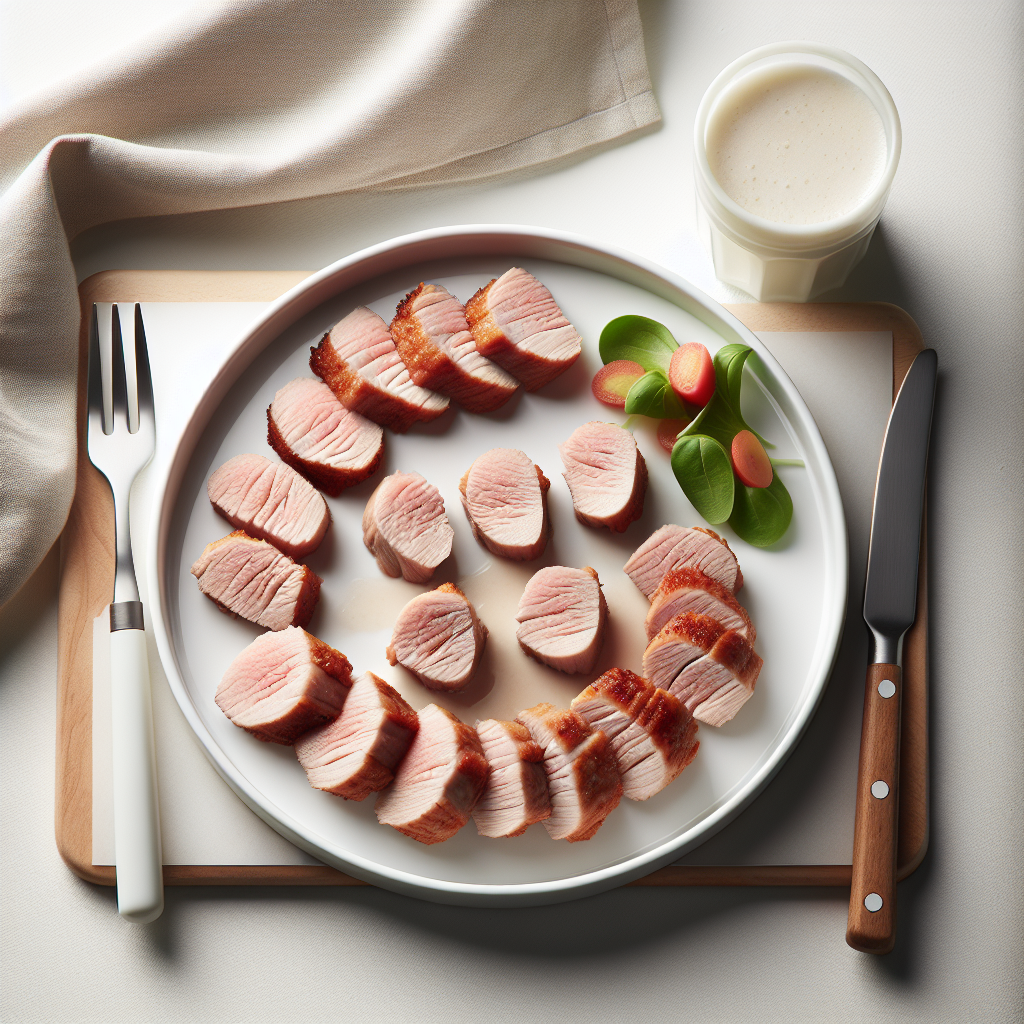
Pork tenderloin may be introduced as soon as your baby is ready to start solid foods, which is generally around 6 months of age. This lean cut of pork is a nutritious protein choice when cooked until tender and served in an age-appropriate size and texture. Always ensure pork tenderloin is cooked to an internal temperature of at least 63°C to ensure it is safe for your baby to eat.
Is Pork tenderloin healthy for babies?
Pork tenderloin is an excellent source of high-quality protein, which supports your baby's growth and development. It also provides important B vitamins, including thiamine, niacin, and vitamin B6, which help with energy metabolism and brain development. Additionally, pork tenderloin contains zinc and selenium, minerals that support immune function and overall health.
Lower-risk serving reminders
Pork tenderloin carries a low choking risk when prepared correctly because it becomes soft and easy to chew when cooked until tender. The key is to avoid overcooking, which can make the meat dry and difficult for babies to manage safely.
Allergen introduction checklist
Pork tenderloin is not a common allergen and is generally well tolerated by babies. However, as with any new food, it is sensible to introduce pork tenderloin on its own and watch for any signs of an adverse reaction.
General feeding checklist
Seat baby upright and stable for all meals.
Model slow chewing and allow baby to control pace.
Stop and reset if baby is upset, tired, or over-stuffed.
Readiness signs to check
Baby can sit upright with minimal support during meals.
Hands and mouth coordinate for bringing food to the mouth.
Tongue-thrust reflex is reduced, so food is not immediately pushed out.
Interest in self-feeding and opening mouth for food cues is visible.
Pause and seek advice if
Coughing is persistent or distress does not settle quickly during meals.
You notice repeated vomiting, rash, swelling, wheeze, or breathing changes after a food.
Baby struggles with swallowing progression over multiple meals despite texture adjustments.
There is a known medical condition affecting feeding, growth, or airway safety.
Cook pork tenderloin until very tender, either by roasting at a low temperature, braising, or slow cooking. Offer finger-length strips about the width of two adult fingers, ensuring the meat is soft enough to squash between your thumb and forefinger. You can also shred the meat and form it into a small patty or meatball shape that your baby can palm and self-feed.
9–11 months
Continue to cook pork tenderloin until tender and offer it as shredded meat, small flakes, or bite-sized pieces about the size of a chickpea. As your baby develops their pincer grasp, smaller pieces will allow them to practise picking up food with their thumb and forefinger. Ensure the pork remains moist by serving it with a little cooking liquid, gravy, or a suitable sauce.
12–24 months
Serve pork tenderloin in small, manageable bites or thin strips that your toddler can chew easily. Continue to prioritise moisture by avoiding dry or overcooked edges, and consider pairing the pork with vegetables or grains for a balanced meal. At this age, toddlers can handle slightly firmer textures, but the meat should still be tender and easy to chew.
Common questions about Pork tenderloin
How do I keep pork tenderloin moist for my baby?
Cook pork tenderloin gently using methods like roasting, slow cooking, or braising, and avoid overcooking. Slicing the meat against the grain and serving it with a little sauce or gravy also helps keep it moist and easier for babies to manage.
Can I serve pork tenderloin cold to my baby?
Yes, leftover cooked pork tenderloin can be served cold, though warming it slightly often makes it easier for babies to chew and more appealing. Ensure any reheated pork is heated thoroughly and allowed to cool to a safe temperature before serving.
Is pork tenderloin better than other cuts of pork for babies?
Pork tenderloin is one of the leanest cuts of pork, making it a healthy choice, though it can dry out more easily than fattier cuts. Fattier cuts like pork shoulder may stay moister during cooking, but tenderloin works well when prepared carefully to retain moisture.