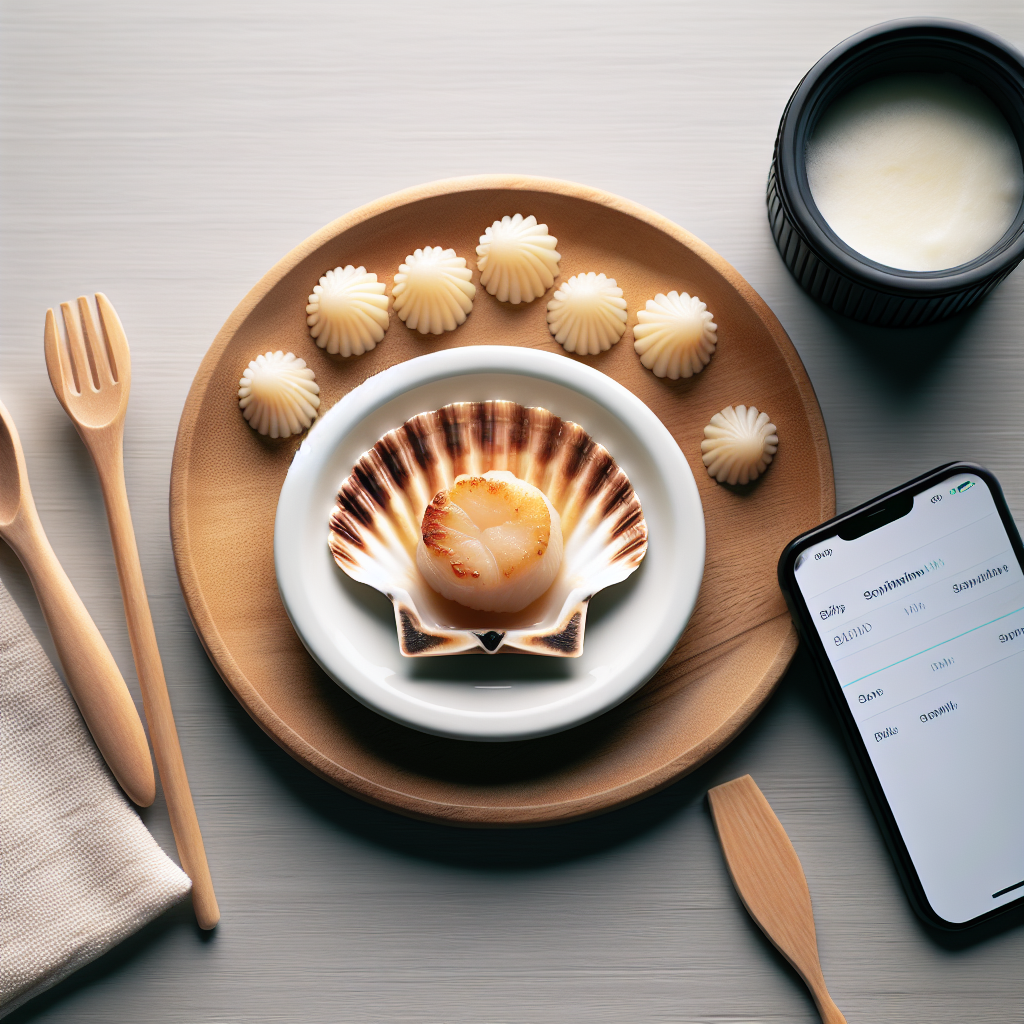
Scallops may be introduced as soon as your baby is ready to start solids, which is generally around 6 months of age. As with all shellfish, scallops must be cooked thoroughly until opaque and tender to minimise food safety risks. Choose fresh or frozen scallops and ensure they are sustainably sourced where possible.
Is Scallop healthy for babies?
Scallops are an excellent source of protein, which supports growth, tissue repair, and immune function in babies. They also provide important nutrients including vitamin B12 for brain development, selenium for immune health, and zinc for growth and wound healing. While scallops are not particularly high in iron, they offer a valuable mix of minerals and omega-3 fatty acids that support overall development.
Lower-risk serving reminders
Scallops have a low choking risk when cooked properly until soft and tender, as they break down easily in the mouth and do not pose the firm, round hazard that some other seafood might. Always ensure scallops are fully cooked through, as undercooked scallops can be rubbery and harder to manage.
Allergen introduction checklist
Scallops are a shellfish and therefore a common allergen, though they are not as allergenic as crustaceans such as prawns or crab. If your baby has not yet tried shellfish, introduce scallops in a small amount and watch for signs of an allergic reaction, which may include hives, vomiting, or difficulty breathing.
General feeding checklist
Seat baby upright and stable for all meals.
Model slow chewing and allow baby to control pace.
Stop and reset if baby is upset, tired, or over-stuffed.
Readiness signs to check
Baby can sit upright with minimal support during meals.
Hands and mouth coordinate for bringing food to the mouth.
Tongue-thrust reflex is reduced, so food is not immediately pushed out.
Interest in self-feeding and opening mouth for food cues is visible.
Pause and seek advice if
Coughing is persistent or distress does not settle quickly during meals.
You notice repeated vomiting, rash, swelling, wheeze, or breathing changes after a food.
Baby struggles with swallowing progression over multiple meals despite texture adjustments.
There is a known medical condition affecting feeding, growth, or airway safety.
Cook scallops gently by steaming, poaching, or pan-searing until opaque and very tender throughout. Shred the cooked scallop into small pieces, or offer a whole scallop that has been sliced into finger-length strips about the size of two adult fingers pressed together. You can also serve a whole small scallop that baby can grasp and gnaw on, making sure it is soft enough to compress easily between your fingers.
9–11 months
Continue to cook scallops until tender and offer them as shreds, flakes, or small soft bites that are easy for your baby to pick up with their developing pincer grasp. You may also offer scallop cut into small pieces about the size of a chickpea, ensuring each piece is moist and soft. If serving larger pieces, make sure they are still tender enough to break apart easily in baby's mouth.
12–24 months
Serve scallops as small bite-sized pieces or tender strips that your toddler can manage with a fork or fingers. Keep portions moist by serving scallops with a little sauce, broth, or healthy fat such as olive oil, and avoid overcooking as this can make them dry and rubbery. Scallops can be added to pasta, rice dishes, or served alongside vegetables as part of a balanced family meal.
Common questions about Scallop
Are scallops a common allergen for babies?
Yes, scallops are a shellfish and therefore a common allergen, though they tend to be less allergenic than crustacean shellfish like prawns. Introduce them carefully and watch for any signs of reaction.
How do I know when scallops are cooked enough for my baby?
Scallops are safely cooked when they are opaque throughout and tender to the touch. Undercooked scallops will be translucent and rubbery, which can be difficult for babies to chew and swallow.
Can I use frozen scallops for baby-led weaning?
Yes, frozen scallops are fine to use as long as they are fully defrosted and cooked thoroughly until tender. Choose plain frozen scallops without added salt or sauces.