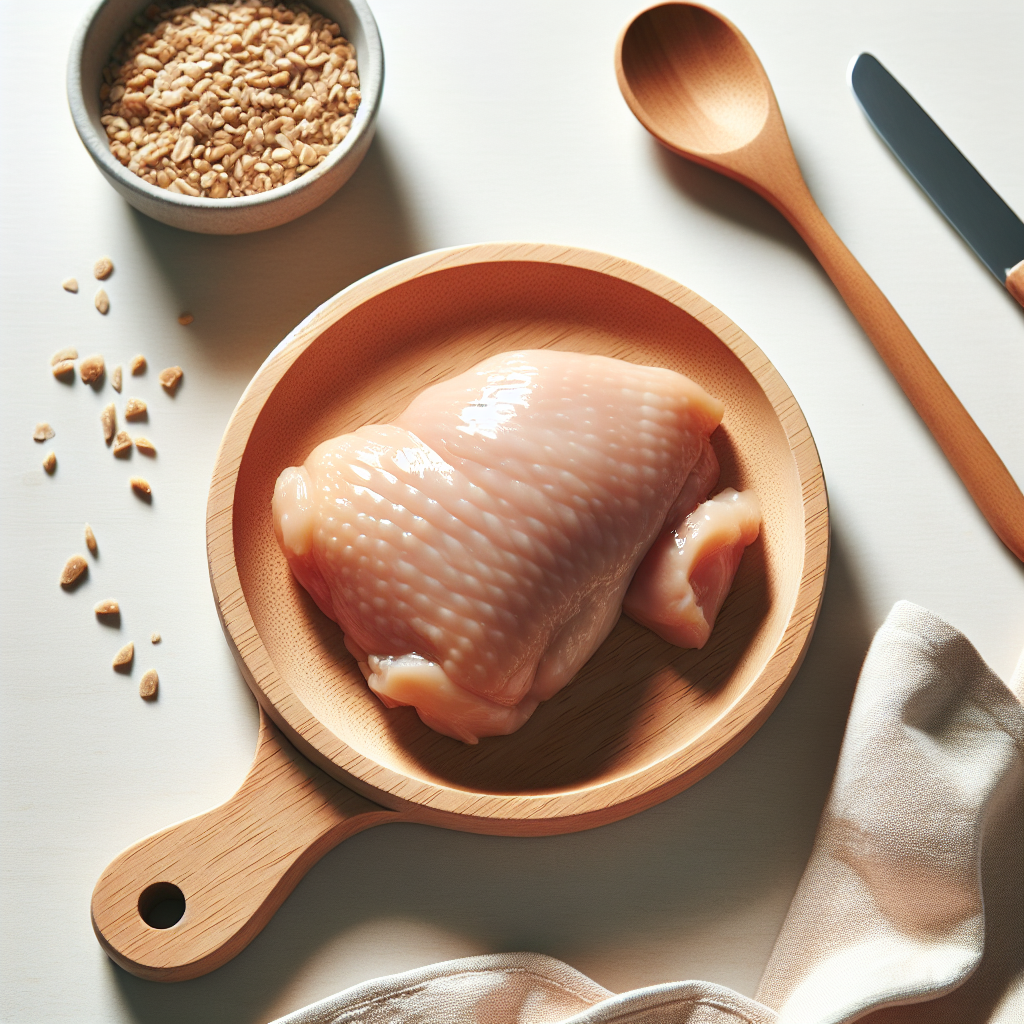
Chicken thigh can be introduced as soon as your baby is ready to start solid foods, which is typically around 6 months of age. It is a tender, flavourful cut of poultry that is easier to keep moist than chicken breast, making it well suited to early eaters. Always ensure the chicken is fully cooked to an internal temperature of 75°C and avoid adding salt, honey, or other unsuitable ingredients.
Is Chicken thigh healthy for babies?
Chicken thigh is an excellent source of protein, which supports muscle development and growth in babies. It also provides important B vitamins, including niacin and B6, which help with energy metabolism and brain development. The higher fat content compared to chicken breast supports calorie needs and helps babies absorb fat-soluble vitamins.
Lower-risk serving reminders
Chicken thigh has a low choking risk when prepared properly because its higher fat content keeps the meat moist and tender, making it easier for babies to chew and swallow. Offering appropriately sized pieces and avoiding dry, overcooked meat further reduces risk.
Allergen introduction checklist
Chicken is not a common allergen and does not appear on the major allergen lists for the UK or US. Whilst rare, poultry allergy can occur, so watch for signs of a reaction such as hives, vomiting, or difficulty breathing when introducing chicken for the first time.
General feeding checklist
Seat baby upright and stable for all meals.
Model slow chewing and allow baby to control pace.
Stop and reset if baby is upset, tired, or over-stuffed.
Readiness signs to check
Baby can sit upright with minimal support during meals.
Hands and mouth coordinate for bringing food to the mouth.
Tongue-thrust reflex is reduced, so food is not immediately pushed out.
Interest in self-feeding and opening mouth for food cues is visible.
Pause and seek advice if
Coughing is persistent or distress does not settle quickly during meals.
You notice repeated vomiting, rash, swelling, wheeze, or breathing changes after a food.
Baby struggles with swallowing progression over multiple meals despite texture adjustments.
There is a known medical condition affecting feeding, growth, or airway safety.
Cook chicken thigh until very tender, then remove the skin and any bones. Offer finger-length strips about the size of two adult fingers placed together, ensuring the meat is moist and easy to squash between your fingers. You can serve the strips on their own or roll them lightly in mashed avocado or unsalted hummus to make them easier to grip.
9–11 months
Continue to cook chicken thigh until tender and remove the skin and bones. You can now offer shredded chicken, small flakes, or bite-sized pieces about the size of a chickpea, which are ideal as your baby develops their pincer grasp. Mix shredded chicken into porridge, pasta, or mashed vegetables, or serve pieces alongside other finger foods.
12–24 months
Serve chicken thigh in small, manageable bites or tender strips, keeping the meat moist to prevent dryness. You can include chicken thigh in family meals such as mild curries, stews, or casseroles, ensuring portions are not overcooked or chewy. Continue to remove the skin and check carefully for any small bones before serving.
Common questions about Chicken thigh
Is chicken thigh better than chicken breast for babies?
Chicken thigh is often easier for babies because it stays moist and tender due to its higher fat content, whereas chicken breast can become dry and difficult to chew if overcooked.
Should I remove the skin from chicken thigh for baby-led weaning?
Yes, it is best to remove the skin as it can be tough, chewy, and difficult for babies to manage, which may increase choking risk or cause gagging.
Can I give my baby chicken thigh with bones?
No, always remove all bones before serving chicken thigh to your baby, as bones pose a serious choking hazard and can splinter.