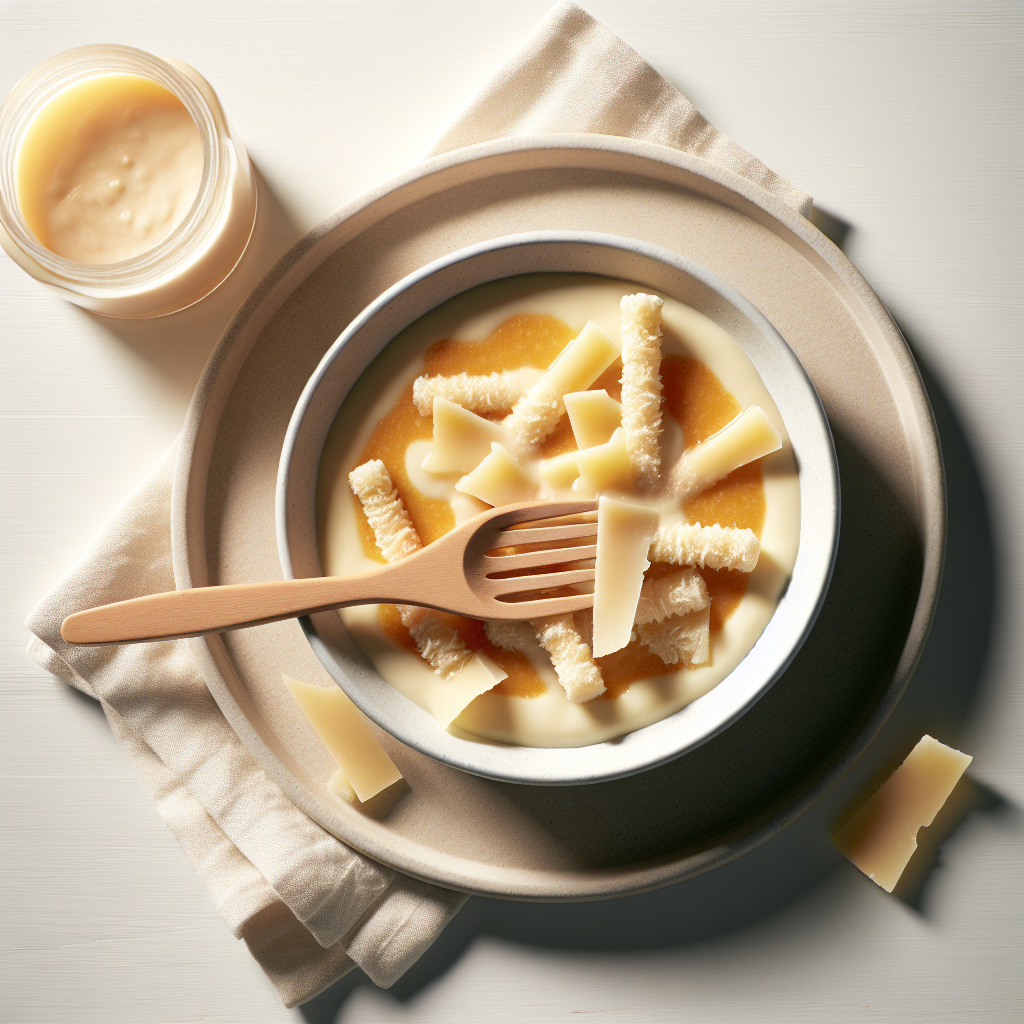
Parmesan trace can be introduced from around 6 months of age, as soon as your baby is ready to start solid foods. Because Parmesan contains milk, it should be introduced carefully if your baby has not yet been exposed to dairy, and you should watch for signs of cow's milk protein allergy. The trace amounts typically used in cooking or as a light sprinkle mean babies receive only a small quantity, making it a gentle way to introduce the flavour of this cheese.
Is Parmesan trace healthy for babies?
Parmesan is a rich source of protein and calcium, both of which support your baby's growth and bone development. It also provides phosphorus, vitamin A, and vitamin B12, which contribute to energy metabolism and healthy vision. Because Parmesan is typically used in trace amounts, it adds nutritional value and flavour without contributing excessive sodium or saturated fat.
Lower-risk serving reminders
Parmesan trace presents a low choking risk because it is used in very small amounts, either finely grated or melted onto other foods. The tiny particles dissolve easily in the mouth and do not form a solid mass that could obstruct the airway.
Allergen information
Parmesan is made from cow's milk and is a common allergen. When introducing Parmesan trace for the first time, watch for signs of an allergic reaction such as hives, vomiting, or symptoms of cow's milk protein allergy including persistent eczema or digestive upset.
Milk (dairy)
General feeding checklist
Seat baby upright and stable for all meals.
Model slow chewing and allow baby to control pace.
Stop and reset if baby is upset, tired, or over-stuffed.
Readiness signs to check
Baby can sit upright with minimal support during meals.
Hands and mouth coordinate for bringing food to the mouth.
Tongue-thrust reflex is reduced, so food is not immediately pushed out.
Interest in self-feeding and opening mouth for food cues is visible.
Pause and seek advice if
Coughing is persistent or distress does not settle quickly during meals.
You notice repeated vomiting, rash, swelling, wheeze, or breathing changes after a food.
Baby struggles with swallowing progression over multiple meals despite texture adjustments.
There is a known medical condition affecting feeding, growth, or airway safety.
Offer Parmesan in trace amounts by lightly grating it over foods like roasted vegetables, pasta, or fingers of toast, allowing it to melt slightly from the warmth of the food. You can also stir a small amount into soft foods like risotto or polenta. The finely grated texture should dissolve easily in your baby's mouth, presenting no choking risk.
9–11 months
Continue to use Parmesan trace as a flavour enhancer by grating it over handheld foods such as fritters, omelette strips, or pasta shapes. A light sprinkle on toast fingers or mixed into mashed potato gives your baby exposure to the taste without overwhelming their meal. The trace amounts remain safe and easy to manage as your baby develops their pincer grasp.
12–24 months
At this age, Parmesan trace can be grated over family meals such as pasta, soups, or roasted vegetables, just as you would serve it to older children and adults. You can also offer very thin shavings on the side of a meal for your toddler to explore. Continue using it sparingly to keep sodium intake appropriate for young children.
Common questions about Parmesan trace
Can I give my 6-month-old food with Parmesan on it?
Yes, Parmesan trace is safe from 6 months when finely grated or melted onto food. Introduce it carefully if your baby has not yet had dairy, and watch for any signs of allergy.
Is Parmesan too salty for babies?
Parmesan is a high-sodium cheese, but when used in trace amounts as a light sprinkle or flavouring, the overall salt content remains low and appropriate for babies.
Does Parmesan need to be pasteurised for babies?
Parmesan is typically made from unpasteurised milk, but the long ageing process eliminates harmful bacteria, making it safe for babies from 6 months.