Lower-risk serving reminders
Ripe mulberries have a low choking risk because they are naturally soft and break down easily in the mouth when gummed by babies. Their oblong shape and soft texture make them safer than firm, round berries.
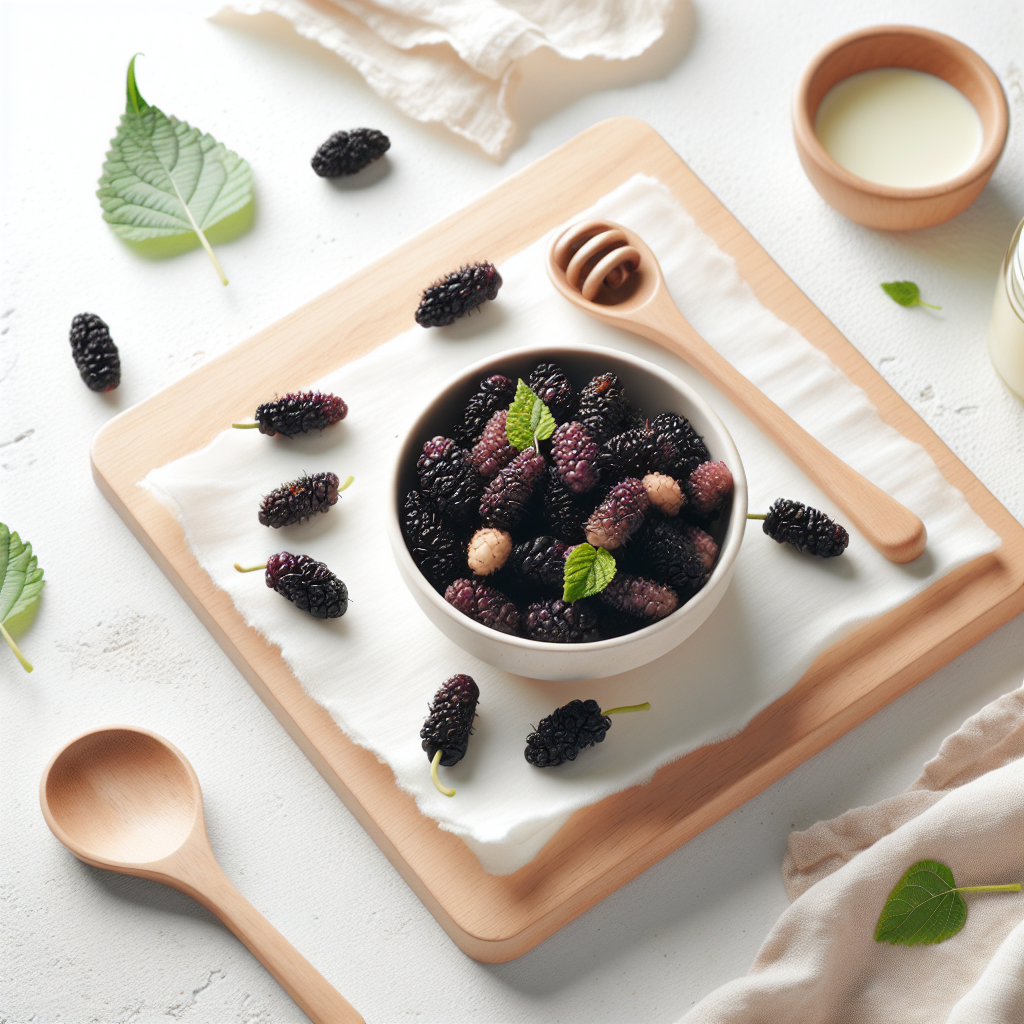
Mulberries may be introduced as soon as your baby is ready to start solids, which is generally around 6 months of age. Choose very ripe, soft mulberries to ensure they are easy for your baby to gum and swallow. As with all new foods, introduce mulberries on their own at first so you can watch for any signs of a reaction.
Mulberries are an excellent source of iron, which supports healthy blood development and brain function in growing babies. They also provide vitamin C, which helps the body absorb iron more effectively, and dietary fibre to support digestion. Additionally, mulberries contain beneficial plant compounds called anthocyanins that act as antioxidants.
Ripe mulberries have a low choking risk because they are naturally soft and break down easily in the mouth when gummed by babies. Their oblong shape and soft texture make them safer than firm, round berries.
Mulberries are not considered a common allergen and allergic reactions to them are rare. As with any new food, watch your baby during and after eating for signs of a reaction such as hives, rash, or vomiting.
Detailed prep guidance tailored to each stage.
Choose very ripe, soft mulberries that yield easily to gentle pressure. Serve whole large mulberries as finger-sized pieces that your baby can grip in their palm with a bit sticking out to gnaw on, or press them flat onto a plate or high chair tray so your baby can scoop and rake them into their mouth. If the skin feels tough or leathery, gently peel it away before serving.
Offer ripe, soft mulberries whole or gently flattened if they are particularly plump. At this age, babies are developing their pincer grasp and can pick up individual berries between thumb and forefinger. You can also serve them in strips or torn pieces if your baby finds whole berries easier to manage.
Continue serving ripe, soft mulberries whole or in bite-sized pieces as your toddler's chewing skills mature. If mulberries are on the firmer side, quarter them lengthwise or flatten them slightly to reduce any potential risk. Mulberries can be stirred into porridge, yoghurt, or served alongside other finger foods at mealtimes.