Baby-led weaning · age-specific guide
Mulberry for 6–8 months
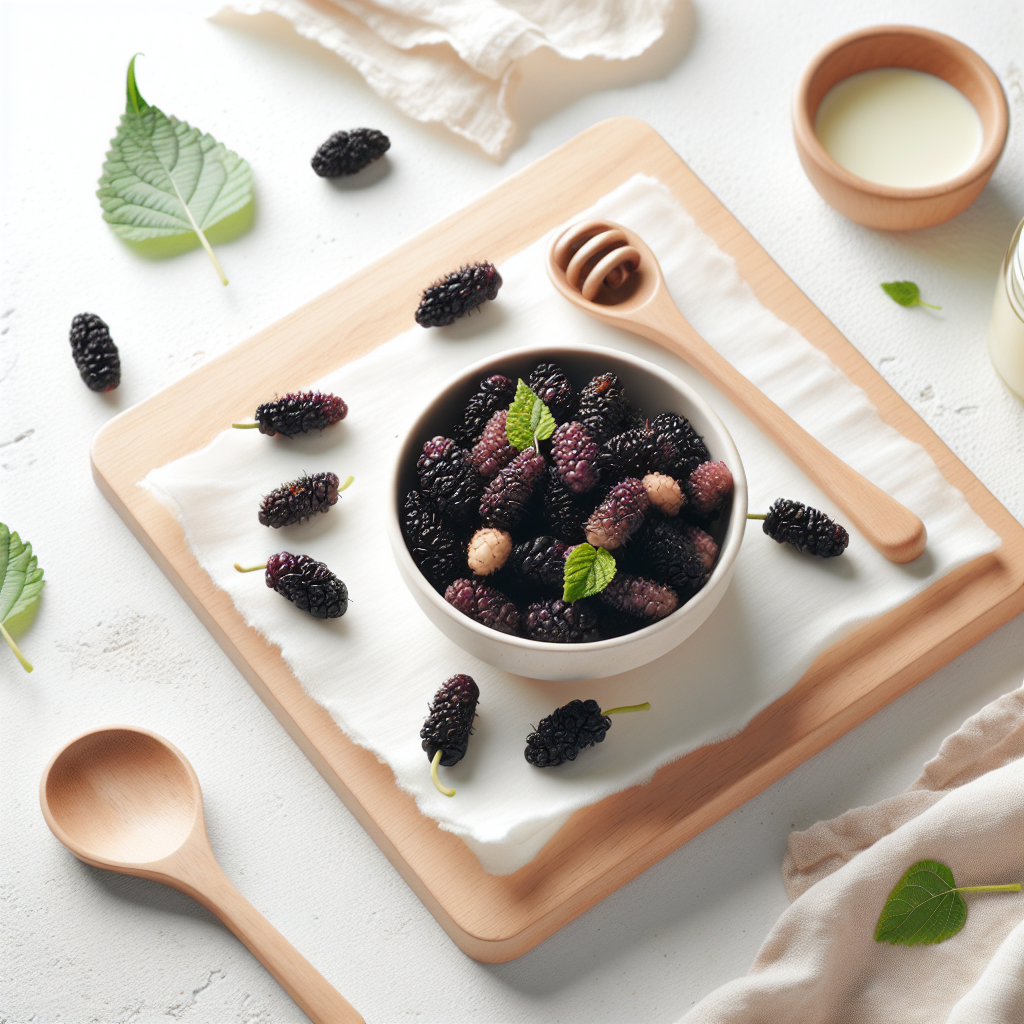
Mulberries may be introduced as soon as your baby is ready to start solids, which is generally around 6 months of age. Choose very ripe, soft mulberries to ensure they are easy for your baby to gum and swallow. As with all new foods, introduce mulberries on their own at first so you can watch for any signs of a reaction.
How to serve at 6–8 months
Choose very ripe, soft mulberries that yield easily to gentle pressure. Serve whole large mulberries as finger-sized pieces that your baby can grip in their palm with a bit sticking out to gnaw on, or press them flat onto a plate or high chair tray so your baby can scoop and rake them into their mouth. If the skin feels tough or leathery, gently peel it away before serving.
Nutrition highlights
Mulberries are an excellent source of iron, which supports healthy blood development and brain function in growing babies. They also provide vitamin C, which helps the body absorb iron more effectively, and dietary fibre to support digestion. Additionally, mulberries contain beneficial plant compounds called anthocyanins that act as antioxidants.
Lower-risk serving reminders
Ripe mulberries have a low choking risk because they are naturally soft and break down easily in the mouth when gummed by babies. Their oblong shape and soft texture make them safer than firm, round berries.
Allergen introduction checklist
Mulberries are not considered a common allergen and allergic reactions to them are rare. As with any new food, watch your baby during and after eating for signs of a reaction such as hives, rash, or vomiting.
Common questions
Can I give my baby dried mulberries?
Dried mulberries are very sticky and chewy, making them a choking hazard for babies and toddlers under 4 years old. Stick to fresh, ripe mulberries until your child is older.
Do mulberries need to be peeled for babies?
Ripe mulberries do not need to be peeled as their skin is very thin and soft. If the skin seems tough, choose riper fruit or gently peel it away.
Will mulberries stain my baby's clothes?
Yes, mulberries contain deep purple pigments that can stain clothing, high chairs, and skin. The stains are temporary on skin but may be permanent on fabric.
General feeding checklist
- Seat baby upright and stable for all meals.
- Model slow chewing and allow baby to control pace.
- Stop and reset if baby is upset, tired, or over-stuffed.
Readiness signs to check
- Baby can sit upright with minimal support during meals.
- Hands and mouth coordinate for bringing food to the mouth.
- Tongue-thrust reflex is reduced, so food is not immediately pushed out.
- Interest in self-feeding and opening mouth for food cues is visible.
Pause and seek advice if
- Coughing is persistent or distress does not settle quickly during meals.
- You notice repeated vomiting, rash, swelling, wheeze, or breathing changes after a food.
- Baby struggles with swallowing progression over multiple meals despite texture adjustments.
- There is a known medical condition affecting feeding, growth, or airway safety.
Other ages: 9–11 months · 12–24 months