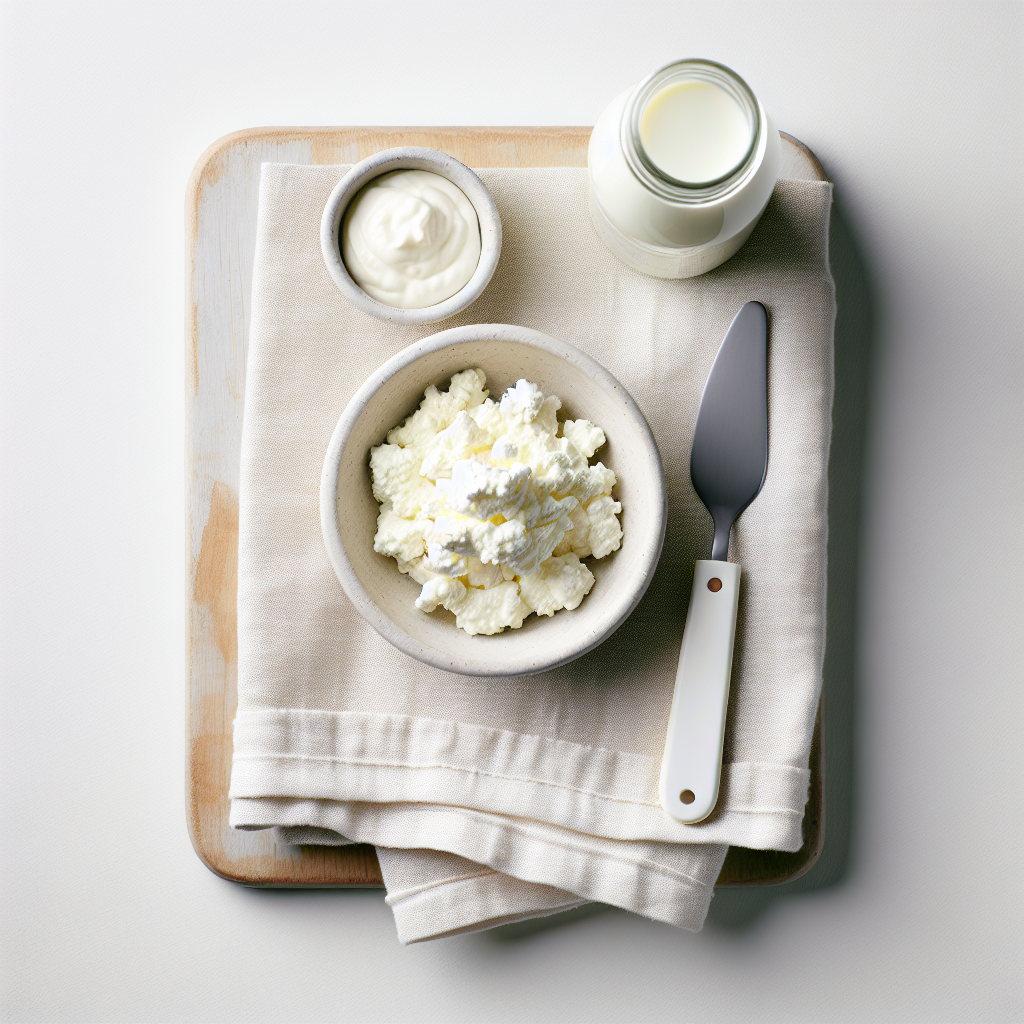
Cottage cheese can be introduced as soon as your baby is ready to start solids, which is typically around 6 months of age. Always choose low-salt or no-added-salt varieties, as babies under 12 months should have less than 1g of salt per day. If dairy has not been introduced yet, start with a small amount and watch for signs of cow's milk protein allergy during the first few days.
Is Cottage cheese low salt healthy for babies?
Cottage cheese is a good source of protein, which supports your baby's growth and development. It also provides calcium and phosphorus for building strong bones and teeth. Low-salt varieties are preferable, as they help keep sodium intake within safe limits for babies.
Lower-risk serving reminders
Cottage cheese has a low choking risk because of its soft, moist texture that breaks down easily in the mouth. The small curds can be mashed or spread, making it manageable for babies who are just learning to chew and swallow.
Allergen information
Cottage cheese contains cow's milk, which is one of the most common food allergens in infancy. When introducing dairy for the first time, offer a small amount and watch for signs of an allergic reaction such as hives, vomiting, or facial swelling.
Milk (dairy)
General feeding checklist
Seat baby upright and stable for all meals.
Model slow chewing and allow baby to control pace.
Stop and reset if baby is upset, tired, or over-stuffed.
Readiness signs to check
Baby can sit upright with minimal support during meals.
Hands and mouth coordinate for bringing food to the mouth.
Tongue-thrust reflex is reduced, so food is not immediately pushed out.
Interest in self-feeding and opening mouth for food cues is visible.
Pause and seek advice if
Coughing is persistent or distress does not settle quickly during meals.
You notice repeated vomiting, rash, swelling, wheeze, or breathing changes after a food.
Baby struggles with swallowing progression over multiple meals despite texture adjustments.
There is a known medical condition affecting feeding, growth, or airway safety.
Offer cottage cheese spread thinly on strips of toast about the size of two adult fingers placed together, which makes it easier for babies to grasp and self-feed. You can also dollop small amounts onto a spoon or preloaded spoon for baby to bring to their mouth. Ensure the cottage cheese is at room temperature and opt for low-salt, full-fat varieties to support healthy development.
9–11 months
Continue offering cottage cheese spread on toast fingers, or allow your baby to scoop it with their fingers from a bowl as their pincer grasp develops. You can also mix cottage cheese with soft cooked vegetables or offer small lumps for babies to practise picking up. Keep portions small and always choose low-salt options to protect developing kidneys.
12–24 months
Toddlers can enjoy cottage cheese served in a small bowl with a spoon for independent eating, or spread on crackers and bread. You can mix it with soft fruit, mashed avocado, or cooked pasta to add variety. Continue to choose low-salt cottage cheese and encourage self-feeding to build confidence and coordination at mealtimes.
Common questions about Cottage cheese low salt
What is the difference between low-salt and regular cottage cheese for babies?
Low-salt cottage cheese contains significantly less sodium than regular varieties, making it safer for babies whose kidneys are still developing. Always check the label and aim for cottage cheese with less than 0.3g of salt per 100g.
Can I serve cottage cheese on its own to my baby?
Yes, you can offer cottage cheese on its own, though its slippery texture can be tricky for younger babies to pick up. Spreading it on toast strips or mixing it with mashed vegetables can make it easier to handle.
Does cottage cheese need to be full-fat for babies?
Full-fat dairy is generally recommended for babies under 2 years to support their rapid growth and brain development. Choose full-fat or standard cottage cheese rather than low-fat versions when possible.