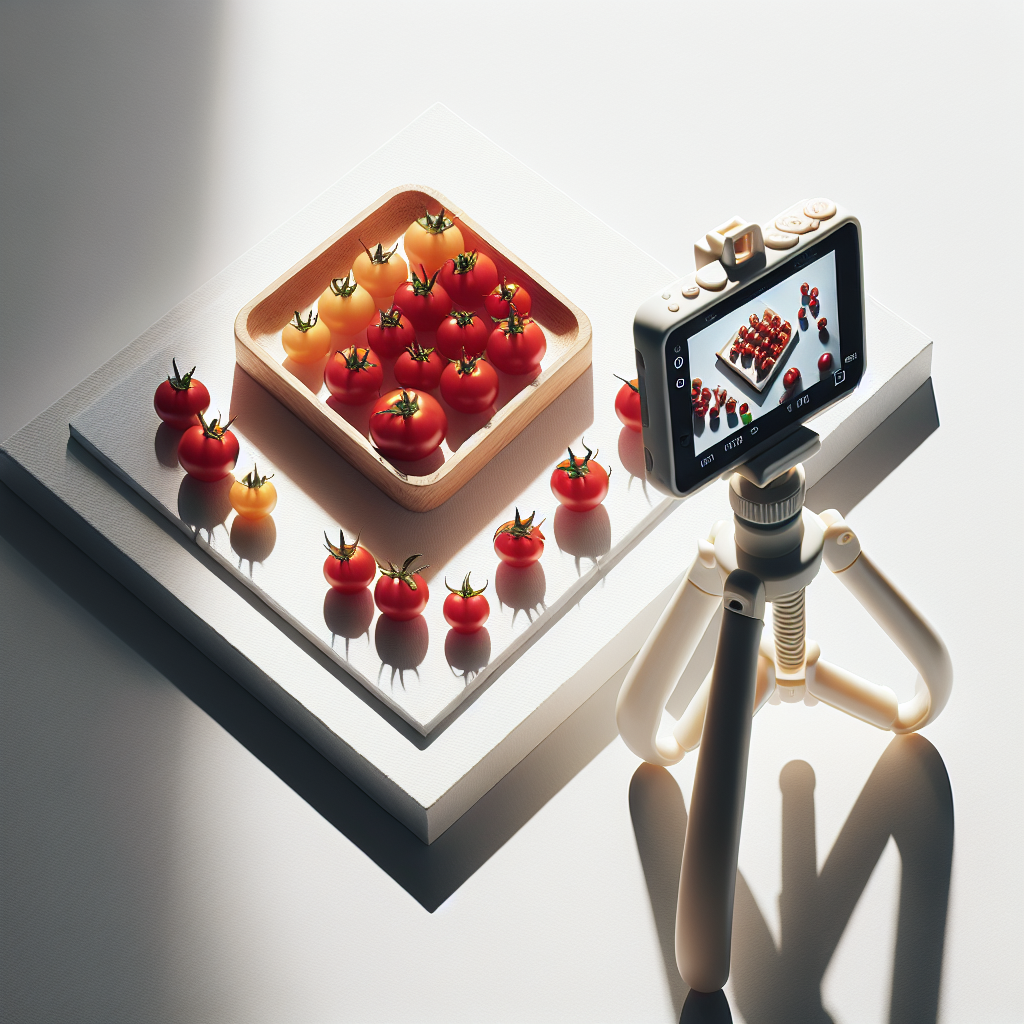
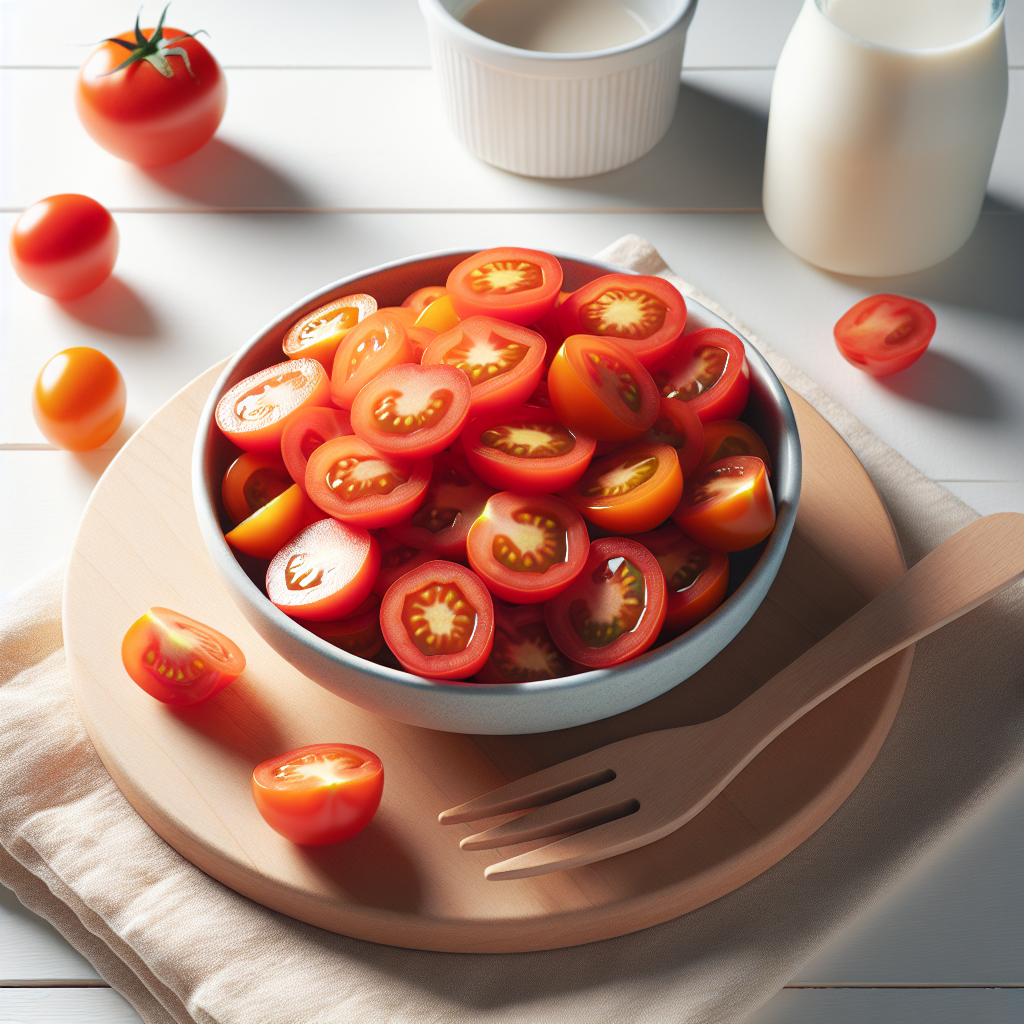
Cherry tomatoes can be introduced as soon as your baby is ready to start solids, which is typically around 6 months of age. Because cherry tomatoes are small, round, and firm when raw, they must be prepared carefully to minimise choking risk. Always serve cherry tomatoes that are very ripe and soft, and cut them appropriately for your baby's age and developmental stage.
Is Tomato cherry healthy for babies?
Cherry tomatoes are rich in vitamin C, which supports immune function and helps the body absorb iron from plant-based foods. They also provide lycopene, a powerful antioxidant that gives tomatoes their red colour and supports overall health. The high water content in cherry tomatoes helps keep babies hydrated whilst offering important nutrients in a low-calorie package.
Lower-risk serving reminders
Cherry tomatoes have a low choking risk when properly prepared by halving or quartering them lengthwise and ensuring they are very ripe and soft. The risk increases if they are served whole or when firm, as their round shape and slippery skin can make them difficult for babies to manage safely.
Allergen introduction checklist
Cherry tomatoes are not considered a common allergen. However, tomatoes are acidic and some babies may develop a temporary rash around the mouth or in the nappy area, which is usually a contact reaction rather than a true allergy.
General feeding checklist
Seat baby upright and stable for all meals.
Model slow chewing and allow baby to control pace.
Stop and reset if baby is upset, tired, or over-stuffed.
Readiness signs to check
Baby can sit upright with minimal support during meals.
Hands and mouth coordinate for bringing food to the mouth.
Tongue-thrust reflex is reduced, so food is not immediately pushed out.
Interest in self-feeding and opening mouth for food cues is visible.
Pause and seek advice if
Coughing is persistent or distress does not settle quickly during meals.
You notice repeated vomiting, rash, swelling, wheeze, or breathing changes after a food.
Baby struggles with swallowing progression over multiple meals despite texture adjustments.
There is a known medical condition affecting feeding, growth, or airway safety.
Offer very ripe, soft cherry tomatoes halved or quartered lengthwise to create flat pieces rather than round shapes. You can also cut them into wide wedges or leave the halves large enough for your baby to grasp in their palm with some sticking out to bite from. Serve at room temperature or lightly warmed, and ensure the flesh is soft enough to mash easily between your fingers.
9–11 months
Continue offering very ripe cherry tomatoes quartered lengthwise into strips or smaller pieces as your baby's pincer grasp develops. You can flatten each piece slightly with your fingers to reduce the round shape if needed. At this age, babies can manage slightly smaller pieces but still benefit from lengthwise cuts that break up the spherical form.
12–24 months
Serve ripe cherry tomatoes halved or quartered lengthwise into bite-sized pieces. Even though your toddler's chewing skills are improving, continue to avoid serving whole cherry tomatoes as their round, slippery shape remains a choking hazard. Ripe, soft cherry tomatoes can now be mixed into pasta, salads, or served as a snack alongside other finger foods.
Common questions about Tomato cherry
Do I need to remove the skin from cherry tomatoes for baby-led weaning?
You only need to remove the skin if it is very tough or thick, which is rare with ripe cherry tomatoes. Most ripe cherry tomatoes have soft enough skins for babies to manage safely.
Can the acidity in cherry tomatoes upset my baby's tummy?
The acidity in cherry tomatoes can sometimes cause a harmless rash around the mouth or a red bottom, but this is not usually a sign of a true allergy or digestive upset. If you notice persistent discomfort, speak with your health visitor.
How ripe should cherry tomatoes be for baby-led weaning?
Cherry tomatoes should be very ripe and soft enough that they squash easily between your fingers. Firm or underripe tomatoes are harder for babies to chew and pose a greater choking risk.