Lower-risk serving reminders
Plums have a low choking risk when they are very ripe and soft, as the flesh breaks down easily in the mouth. Firmer or underripe plums should be avoided, as they are more difficult for babies to chew and manage safely.
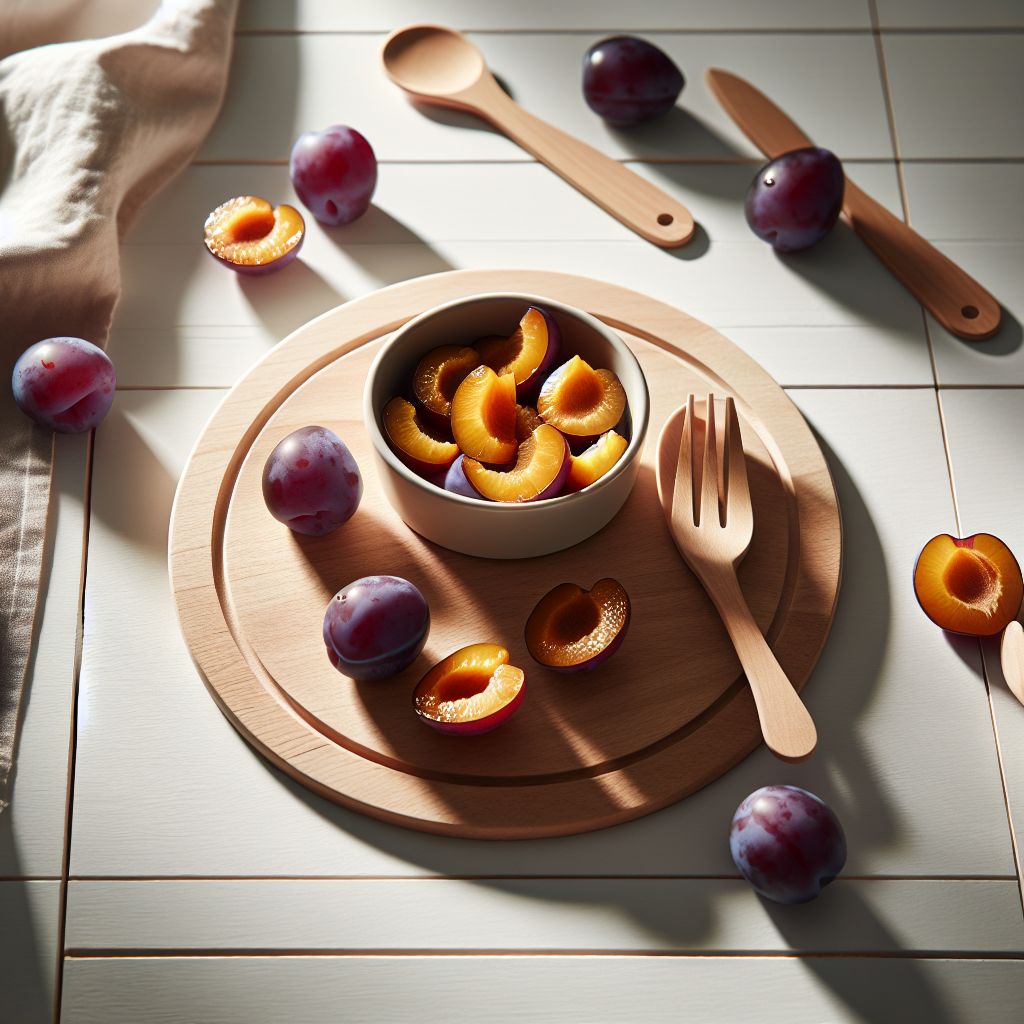
Plums may be introduced as soon as your baby is ready to start solid foods, which is typically around 6 months of age. Choose ripe, very soft plums that yield easily to gentle pressure, as firmer fruit can pose more of a choking risk. Always remove the stone and any tough skins before serving.
Plums offer vitamin C to support iron absorption and immune function, as well as fibre to aid digestion. They also provide smaller amounts of vitamin A for healthy vision and skin development. The natural sugars in plums give babies energy, whilst the water content helps with hydration.
Plums have a low choking risk when they are very ripe and soft, as the flesh breaks down easily in the mouth. Firmer or underripe plums should be avoided, as they are more difficult for babies to chew and manage safely.
Plums are not considered a common allergen and are generally well tolerated by babies. As with any new food, watch for signs of an allergic reaction such as rash, vomiting, or diarrhoea when introducing plums for the first time.
Detailed prep guidance tailored to each stage.
Offer very ripe, soft plums cut in half with the stone removed, or slice into wide wedges that are at least the width of two adult fingers so your baby can grasp them easily. Remove any tough skins before serving, as these can be difficult for young babies to manage. You can also serve a whole pitted plum half, allowing your baby to gnaw and suck on the soft flesh.
Continue offering ripe, soft plums cut into thick strips or quarters with the stone removed. If the plum is small and round, quarter it lengthwise or flatten it slightly to reduce choking risk. You may leave the skin on if it is very soft and thin, but peel tougher skins as needed.
Serve ripe plums cut into bite-sized pieces, ensuring they are soft enough to squash easily between your fingers. Continue to halve or quarter small round plums lengthwise to keep them safe for self-feeding. As your toddler's chewing skills improve, you can gradually offer larger pieces, but always supervise mealtimes closely.