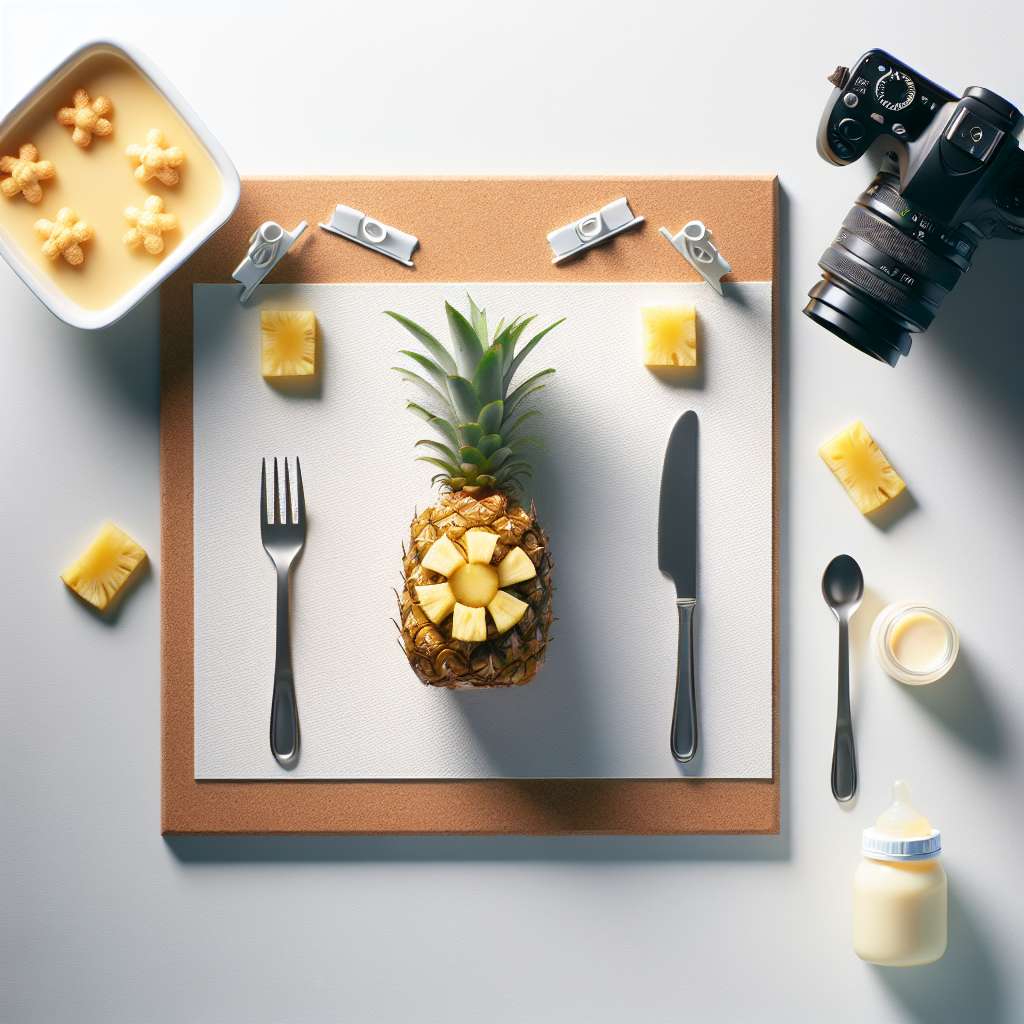
Pineapple may be introduced as soon as your baby is ready to start solid foods, which is generally around 6 months of age. Choose very ripe, soft pineapple and prepare it appropriately for your baby's age and eating skills. Because pineapple contains bromelain, an enzyme that can sometimes cause temporary tingling or soreness in the mouth, it's best to offer small amounts at first and watch how your baby responds.
Is Pineapple healthy for babies?
Pineapple is an excellent source of vitamin C, which supports immune function and helps your baby absorb iron from other foods. It also provides manganese, important for bone development, and contains bromelain, a digestive enzyme. The fruit's natural fibre supports healthy digestion, though its acidity means it's best offered in moderation alongside other foods.
Medium-risk prep checks
Pineapple carries a medium choking risk because the flesh can be firm and fibrous, making it difficult for young babies to chew and break down. Very ripe, soft pineapple reduces this risk, but the fruit's stringy texture can still pose a challenge if pieces are not cut appropriately for your baby's age.
Allergen introduction checklist
Pineapple is not considered a common allergen. However, some babies may develop a rash around the mouth or mild digestive upset due to the fruit's natural acidity and bromelain content, which is not a true allergic reaction but can cause temporary irritation.
General feeding checklist
Seat baby upright and stable for all meals.
Model slow chewing and allow baby to control pace.
Stop and reset if baby is upset, tired, or over-stuffed.
Readiness signs to check
Baby can sit upright with minimal support during meals.
Hands and mouth coordinate for bringing food to the mouth.
Tongue-thrust reflex is reduced, so food is not immediately pushed out.
Interest in self-feeding and opening mouth for food cues is visible.
Pause and seek advice if
Coughing is persistent or distress does not settle quickly during meals.
You notice repeated vomiting, rash, swelling, wheeze, or breathing changes after a food.
Baby struggles with swallowing progression over multiple meals despite texture adjustments.
There is a known medical condition affecting feeding, growth, or airway safety.
Offer very ripe, soft pineapple cut into wide wedges or thick rings about the size of two adult fingers pressed together, at least 5 cm long so your baby has plenty to grip. Remove the tough outer skin and core, keeping only the softest, most tender flesh. You can also offer a large spear with the skin left on one end as a handle for your baby to suck and gnaw, which can be easier for very young babies to manage.
9–11 months
Continue offering very ripe, soft pineapple in strips or slightly smaller wedges that your baby can pick up with their developing pincer grasp. Cut pieces about the size of an adult finger, roughly 2–3 cm wide, ensuring the fruit is tender enough to mash easily between your fingers. Remove all skin and core, and check that the flesh has minimal fibrous strings that could pose a choking risk.
12–24 months
Offer bite-sized pieces of very ripe, soft pineapple, about 1–2 cm in size, that your toddler can spear with a fork or pick up easily. Continue to ensure the fruit is tender and free from tough fibrous bits, and supervise closely as your child practises chewing. At this age, you can also offer pineapple mixed into yoghurt, porridge, or alongside other fruits to balance its acidity.
Common questions about Pineapple
Why does pineapple sometimes cause a rash around my baby's mouth?
The acidity of pineapple and its bromelain enzyme can cause temporary redness or irritation around the mouth, which typically resolves quickly. This is not usually an allergic reaction but rather contact irritation from the fruit's natural properties.
Can I give my baby tinned pineapple?
Fresh pineapple is preferable, but tinned pineapple in juice (not syrup) can be offered occasionally. Choose varieties with no added sugar and rinse before serving to reduce acidity.
How do I know if pineapple is ripe enough for my baby?
Ripe pineapple should smell sweet at the base, yield slightly to gentle pressure, and have golden-yellow skin. The flesh should be very soft and easily pierced with a fork, with minimal fibrous texture.