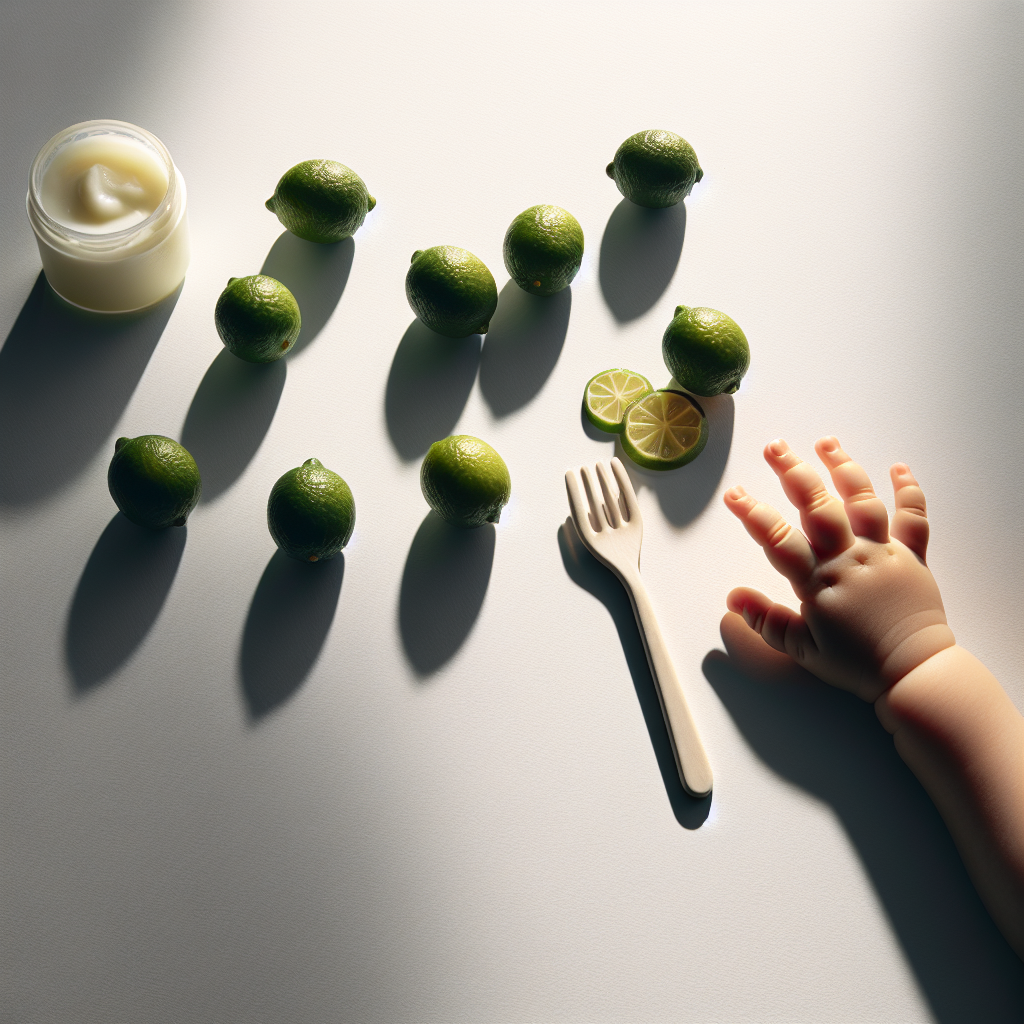
Finger lime may be introduced as soon as your baby is ready to start solids, which is generally around 6 months of age. As with all citrus fruits, finger lime is quite acidic and may cause or worsen nappy rash in some babies, so you may wish to offer small amounts at first to see how your baby tolerates it. Always ensure the fruit is very ripe and soft to make it safe and palatable for young eaters.
Is Finger lime healthy for babies?
Finger lime is rich in vitamin C, which supports immune function and helps the body absorb iron from plant-based foods. It also contains small amounts of folate and potassium, which contribute to healthy cell growth and fluid balance. The bright, tangy flavour of finger lime can help introduce babies to more diverse tastes early on.
Lower-risk serving reminders
Finger lime presents a low choking risk because the tiny juice-filled pearls inside burst easily in the mouth and do not require chewing. The outer skin can be removed for younger babies, eliminating any tougher texture that could pose difficulty.
Allergen introduction checklist
Finger lime is not a common allergen, though allergic reactions to citrus fruits are possible. If your baby has severe eczema or a known allergy to other citrus fruits, consider consulting your health visitor or GP before introducing finger lime.
General feeding checklist
Seat baby upright and stable for all meals.
Model slow chewing and allow baby to control pace.
Stop and reset if baby is upset, tired, or over-stuffed.
Readiness signs to check
Baby can sit upright with minimal support during meals.
Hands and mouth coordinate for bringing food to the mouth.
Tongue-thrust reflex is reduced, so food is not immediately pushed out.
Interest in self-feeding and opening mouth for food cues is visible.
Pause and seek advice if
Coughing is persistent or distress does not settle quickly during meals.
You notice repeated vomiting, rash, swelling, wheeze, or breathing changes after a food.
Baby struggles with swallowing progression over multiple meals despite texture adjustments.
There is a known medical condition affecting feeding, growth, or airway safety.
Cut the finger lime in half lengthwise and gently squeeze or scoop out the juicy pearls, discarding the skin. You can serve the pearls directly on your baby's tray for them to explore and scoop up, or spread them over a soft food like porridge or mashed avocado to make them easier to grasp. The pearls are very slippery, so expect mess and exploration rather than efficient eating at this stage.
9–11 months
Continue to serve the juicy pearls scooped from the skin, either on their own or mixed into yoghurt, mashed banana, or other soft foods. As your baby's pincer grasp develops, they may enjoy picking up individual pearls, though this can be tricky given how slippery they are. You can also offer a halved finger lime with the flesh exposed for your baby to suck and explore independently.
12–24 months
Toddlers can continue to enjoy finger lime pearls scooped from the skin and served on their own or as a tangy topping for other foods. You may also offer a halved finger lime for your toddler to squeeze and scoop out themselves, which can be a fun sensory activity. As chewing skills improve, small pieces of the flesh with pearls attached are generally safe, though the skin should still be removed.
Common questions about Finger lime
Can the acidity in finger lime upset my baby's tummy or cause nappy rash?
Yes, the acidity in finger lime may cause or worsen nappy rash in some babies, though it does not typically upset the stomach. Offer small amounts initially and monitor for any skin irritation.
Do I need to remove the skin from finger lime for my baby?
For babies under 12 months, it is best to remove the outer skin and serve only the soft, juicy pearls inside, as the skin can be tough and difficult for young babies to manage.
How do I know if a finger lime is ripe enough for my baby?
A ripe finger lime will feel slightly soft when gently squeezed and the pearls inside should be plump and juicy. Avoid offering fruit that feels very firm or has dry, hard pearls.