Lower-risk serving reminders
Boysenberries have a low choking risk because they are naturally soft and easily mash between the gums when ripe. Their juice content means they break down quickly in the mouth, reducing the likelihood of obstruction.
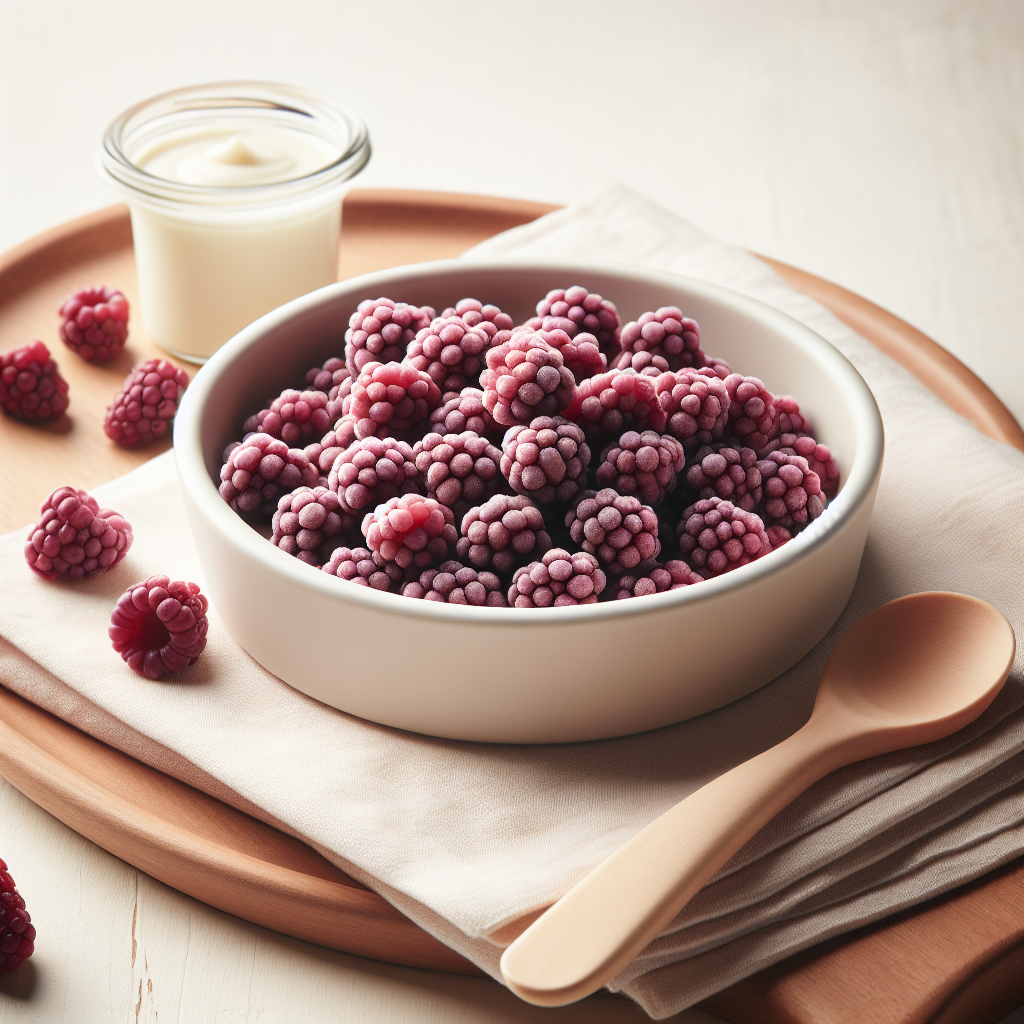
Boysenberries may be introduced as soon as your baby is ready to start solid foods, which is generally around 6 months of age. These sweet, juicy berries are naturally soft when ripe, making them well-suited for early eaters who are learning to manage new textures. Always ensure the berries are fully ripe and very soft before offering them to your baby.
Boysenberries provide vitamin C to support immune function and iron absorption, as well as fibre to aid healthy digestion. They also contain smaller amounts of vitamin K, folate, and manganese, which support overall growth and development. The antioxidants found in boysenberries contribute to cellular health.
Boysenberries have a low choking risk because they are naturally soft and easily mash between the gums when ripe. Their juice content means they break down quickly in the mouth, reducing the likelihood of obstruction.
Boysenberries are not a common allergen and are generally well-tolerated by babies. As with any new food, introduce boysenberries on their own and watch for any signs of sensitivity, such as rash around the mouth or changes in nappy output.
Detailed prep guidance tailored to each stage.
Offer ripe, very soft boysenberries that yield easily to gentle pressure. You can serve them whole as a large handle for your baby to hold and suck on, or slice them into wide, flat wedges that are easy to grasp. If the skin seems tough or leathery, gently peel it away before serving.
Continue offering ripe, soft boysenberries in manageable pieces such as strips or halves. If the berries are particularly small and round, quarter them lengthwise to reduce any risk. Your baby may now be developing a pincer grasp, so smaller pieces become easier to manage.
Serve boysenberries in bite-sized soft pieces that your toddler can self-feed with fingers or a spoon. Continue halving or quartering any particularly round berries to maintain safety as your child practises chewing. Ripe, soft berries remain the best choice for texture and ease of eating.