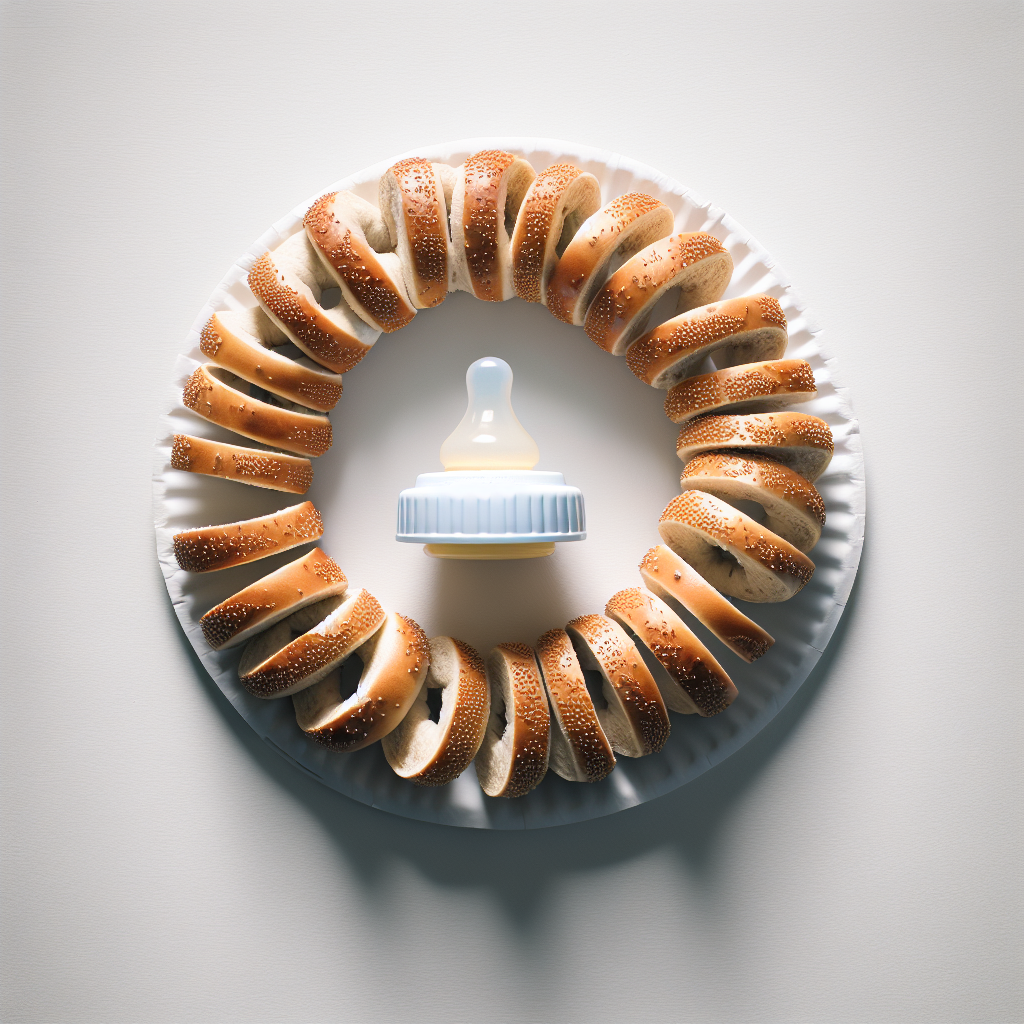
Bagel strips can be introduced from around 6 months of age, once your baby is ready to start solid foods and is showing signs of readiness for baby-led weaning. Choose plain bagels without added salt, sugar, seeds, or toppings that could pose a choking risk. Because bagels contain wheat, they should be offered as part of early allergen introduction alongside other foods.
Is Bagel strip healthy for babies?
Bagels provide carbohydrates for energy, which supports babies' rapid growth and development during the first year. Wholemeal bagels offer more fibre and B vitamins than white varieties, supporting digestive health and overall nutrition. Whilst bagels are not a significant source of protein or iron on their own, they pair well with nutrient-dense toppings like nut butters, avocado, or hummus to create a more balanced meal.
Lower-risk serving reminders
Bagel strips have a low choking risk when prepared appropriately because they become soft and moist when chewed or gummed, especially when lightly toasted to create a tender interior. The strip shape allows babies to hold the bagel easily whilst working on the portion in their mouth, and any pieces that break off typically dissolve with saliva.
Allergen information
Bagels contain wheat and gluten, which are common allergens and among the foods often introduced early and regularly to help reduce allergy risk. Watch for signs of an allergic reaction such as hives, vomiting, or difficulty breathing, and consult your GP if you have concerns about wheat or gluten introduction.
Wheat / gluten
General feeding checklist
Seat baby upright and stable for all meals.
Model slow chewing and allow baby to control pace.
Stop and reset if baby is upset, tired, or over-stuffed.
Readiness signs to check
Baby can sit upright with minimal support during meals.
Hands and mouth coordinate for bringing food to the mouth.
Tongue-thrust reflex is reduced, so food is not immediately pushed out.
Interest in self-feeding and opening mouth for food cues is visible.
Pause and seek advice if
Coughing is persistent or distress does not settle quickly during meals.
You notice repeated vomiting, rash, swelling, wheeze, or breathing changes after a food.
Baby struggles with swallowing progression over multiple meals despite texture adjustments.
There is a known medical condition affecting feeding, growth, or airway safety.
Cut a plain bagel in half, then slice each half into long strips about the width of two adult fingers (roughly 5 cm wide). Lightly toast the strips until just golden to make them easier to grip, but ensure the interior remains soft and yielding when pressed. You can spread a thin layer of unsalted nut butter, mashed avocado, or cream cheese on top to add moisture and nutrients, making the strip easier to gum.
9–11 months
Continue offering lightly toasted bagel strips in the same size, allowing your baby to practice biting and tearing with emerging teeth. You can now offer slightly shorter strips (around 3–4 cm) as your baby develops their pincer grasp, though longer pieces still work well. Try topping with cottage cheese, hummus, or mashed banana to add variety and nutrition whilst keeping the texture soft and manageable.
12–24 months
At this age, toddlers can manage bite-sized pieces of lightly toasted bagel, cut into small squares or triangles. You can offer half a bagel split open and spread with toppings, allowing your child to bite directly from the larger piece as their jaw strength and coordination improve. Bagels make convenient finger foods for meals and snacks, though continue to choose lower-salt options and offer them alongside vegetables, fruits, and protein foods.
Common questions about Bagel strip
Should I toast bagels for my baby?
Light toasting is helpful as it makes the bagel easier to grip and creates a soft, chewy interior that's easier for babies to gum and chew. Avoid toasting until crisp or hard, which can create sharp edges.
Can I give my baby a whole bagel?
Whole bagels are too large and dense for babies to manage safely. Always slice bagels into long, thin strips about the width of an adult finger so your baby can hold and bite pieces safely.
Are bagels too salty for babies?
Many shop-bought bagels contain added salt, so check labels and choose plain varieties with the lowest sodium content. Bagels should be offered occasionally rather than daily to help keep overall salt intake low.