Baby-led weaning · age-specific guide
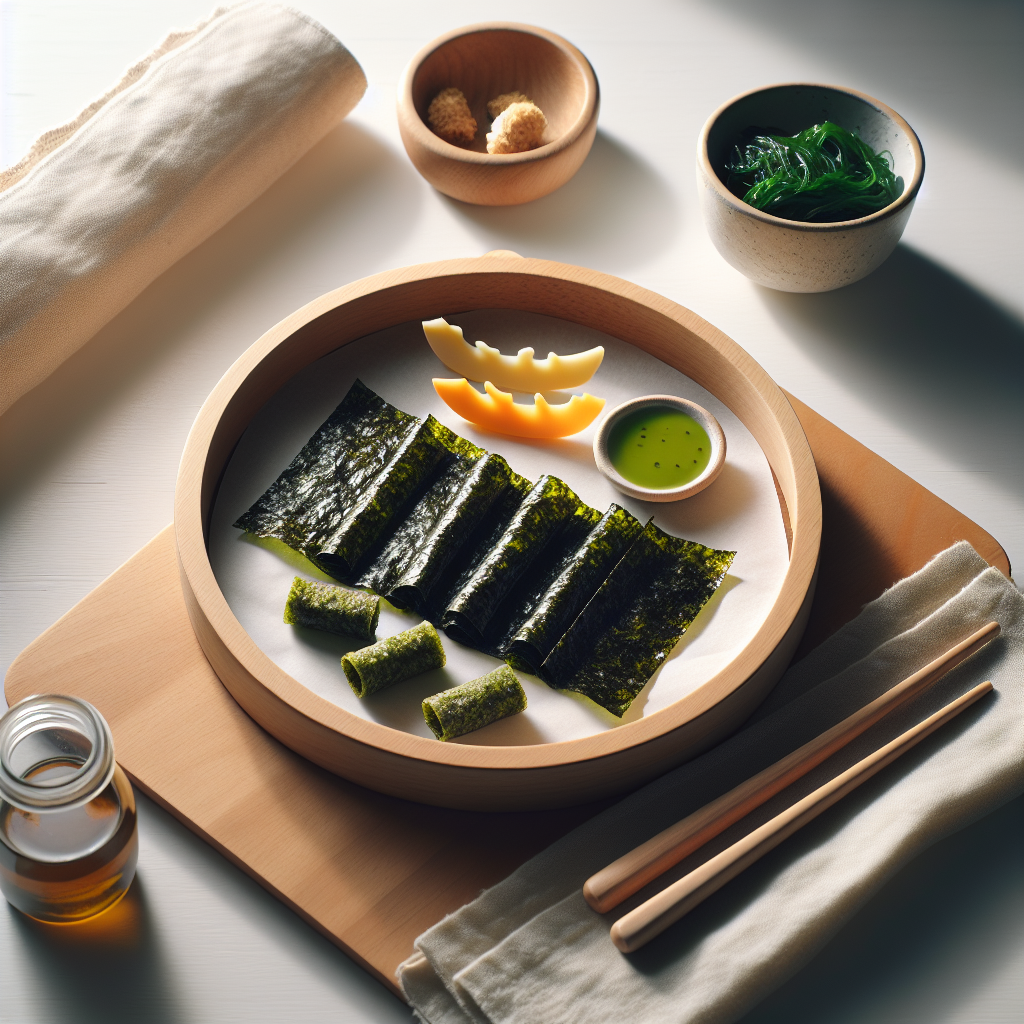
Seaweed nori strip for 6–8 months
Nori seaweed can be introduced as soon as your baby is ready to start solids, which is typically around 6 months of age. Nori sheets are naturally thin and dissolve when moistened, making them easier for young babies to manage than many other foods. Always ensure nori is served appropriately prepared to match your baby's developmental stage.
How to serve at 6–8 months
Lightly steam a nori sheet until it becomes very soft and pliable, or brush it with a little water to help it break down more easily. Cut the softened nori into finger-length strips, about the size of two adult fingers placed together, so your baby can grasp one end and gnaw on the other. You can also wrap a softened nori strip around a piece of steamed sweet potato or avocado to add grip and flavour.
Nutrition highlights
Nori is rich in iodine, which supports thyroid function, as well as B vitamins including folate and B12. It also provides small amounts of fibre, vitamin C, and trace minerals like selenium and manganese. Though nori is nutritious, the small serving sizes typical for babies mean it contributes modest amounts of these nutrients to their overall diet.
Lower-risk serving reminders
Nori has a low choking risk because it becomes soft and dissolves quickly when it mixes with saliva in the mouth. The thin, pliable texture breaks down easily, even for babies who are just learning to chew.
Allergen introduction checklist
Seaweed is not considered a common allergen and allergic reactions are rare. However, as with any new food, it's sensible to introduce nori on its own and watch for any signs of sensitivity during the first few servings.
Common questions
Does nori contain too much salt for babies?
Plain, unseasoned nori sheets contain naturally occurring sodium but are generally low in salt and safe for babies in small amounts. Avoid seasoned or roasted nori snacks that have added salt.
Can nori be a choking hazard if it's dry?
Dry nori can stick to the roof of the mouth or throat, so it's best to lightly steam or moisten it for younger babies to ensure it softens quickly when chewed.
How much nori should I offer my baby?
A small strip or half a sheet is plenty for a young baby. Nori is nutrient-dense but also high in iodine, so it's best offered occasionally rather than daily.
General feeding checklist
- Seat baby upright and stable for all meals.
- Model slow chewing and allow baby to control pace.
- Stop and reset if baby is upset, tired, or over-stuffed.
Readiness signs to check
- Baby can sit upright with minimal support during meals.
- Hands and mouth coordinate for bringing food to the mouth.
- Tongue-thrust reflex is reduced, so food is not immediately pushed out.
- Interest in self-feeding and opening mouth for food cues is visible.
Pause and seek advice if
- Coughing is persistent or distress does not settle quickly during meals.
- You notice repeated vomiting, rash, swelling, wheeze, or breathing changes after a food.
- Baby struggles with swallowing progression over multiple meals despite texture adjustments.
- There is a known medical condition affecting feeding, growth, or airway safety.
Other ages: 9–11 months · 12–24 months