Savoy cabbage may be introduced as soon as your baby is ready to start solids, which is generally around 6 months of age. When prepared correctly by steaming or roasting until very soft, this leafy green vegetable is gentle on developing gums and easy for babies to grasp. Always ensure the cabbage is cooked until tender enough to mash easily between your fingers before offering it to your baby.
Is Savoy cabbage healthy for babies?
Savoy cabbage provides vitamin C, which supports immune function and helps your baby absorb iron from other foods in the meal. It also contains vitamin K, important for blood clotting and bone health, as well as folate, which supports cell growth and development. The fibre in Savoy cabbage aids healthy digestion as your baby transitions to solid foods.
Lower-risk serving reminders
Savoy cabbage presents a low choking risk when cooked until very soft, as its crinkled leaves break down easily in the mouth and become mashable. The vegetable's structure allows babies to gum and manipulate it safely, particularly when served in appropriately sized pieces.
Allergen introduction checklist
Savoy cabbage is not a common allergen and does not belong to any of the major allergen groups. As with any new food, introduce Savoy cabbage on its own and watch for any signs of sensitivity, though reactions are uncommon.
General feeding checklist
Seat baby upright and stable for all meals.
Model slow chewing and allow baby to control pace.
Stop and reset if baby is upset, tired, or over-stuffed.
Readiness signs to check
Baby can sit upright with minimal support during meals.
Hands and mouth coordinate for bringing food to the mouth.
Tongue-thrust reflex is reduced, so food is not immediately pushed out.
Interest in self-feeding and opening mouth for food cues is visible.
Pause and seek advice if
Coughing is persistent or distress does not settle quickly during meals.
You notice repeated vomiting, rash, swelling, wheeze, or breathing changes after a food.
Baby struggles with swallowing progression over multiple meals despite texture adjustments.
There is a known medical condition affecting feeding, growth, or airway safety.
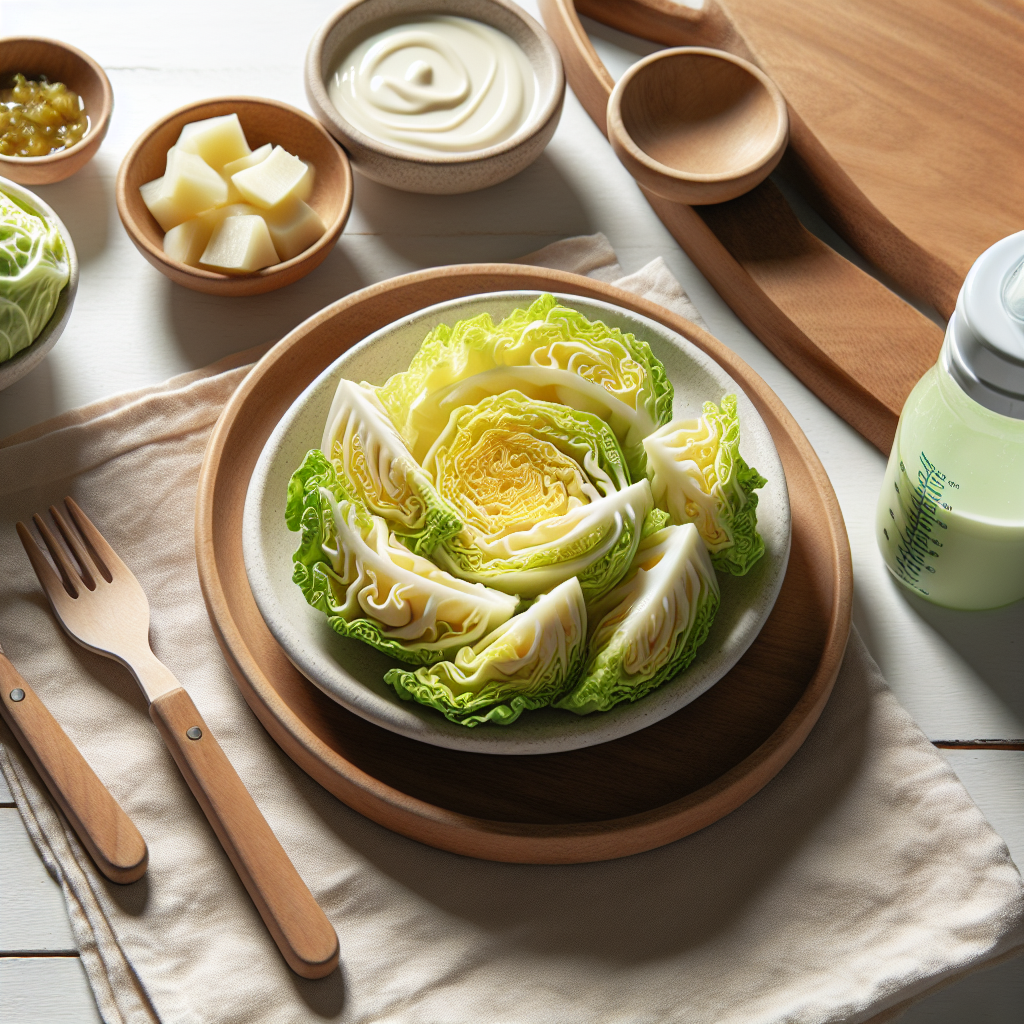
Steam or roast Savoy cabbage until completely soft and easy to squish between your fingers. Serve individual leaves or large finger-length strips that baby can hold in their fist with some sticking out for gumming. You can also offer thick wedges from the core end, which provide a natural handle for baby to grip whilst munching on the soft leaf portions.
9–11 months
Continue to cook Savoy cabbage until soft, and adjust the size to suit your baby's developing pincer grasp. Offer bite-sized pieces such as small florets, coins cut from rolled leaves, or shorter strips that your baby can pick up between thumb and finger. Ensure each piece is still soft enough to mash easily, as chewing skills are still emerging at this age.
12–24 months
At this age, you can serve Savoy cabbage as part of family meals in smaller, bite-sized pieces that match your toddler's chewing ability. Continue to cook it until soft, whether steamed, sautéed, or added to soups and stews. You might offer shredded cabbage stirred into dishes or small ribbon-like strips that your toddler can manage with utensils or fingers.
Common questions about Savoy cabbage
Does Savoy cabbage cause gas in babies?
Savoy cabbage belongs to the brassica family and may cause gas in some babies, though this varies by child. If you notice discomfort, offer smaller portions and pair it with other vegetables.
Should I remove the tough ribs from Savoy cabbage leaves?
The thicker ribs can be tougher even when cooked, so it's sensible to remove or finely chop them for younger babies. The softer leaf portions are easier to gum and swallow.
Can I serve Savoy cabbage raw to my baby?
Raw Savoy cabbage is too firm and fibrous for babies and poses a choking risk. Always cook Savoy cabbage until very soft before offering it to your baby.