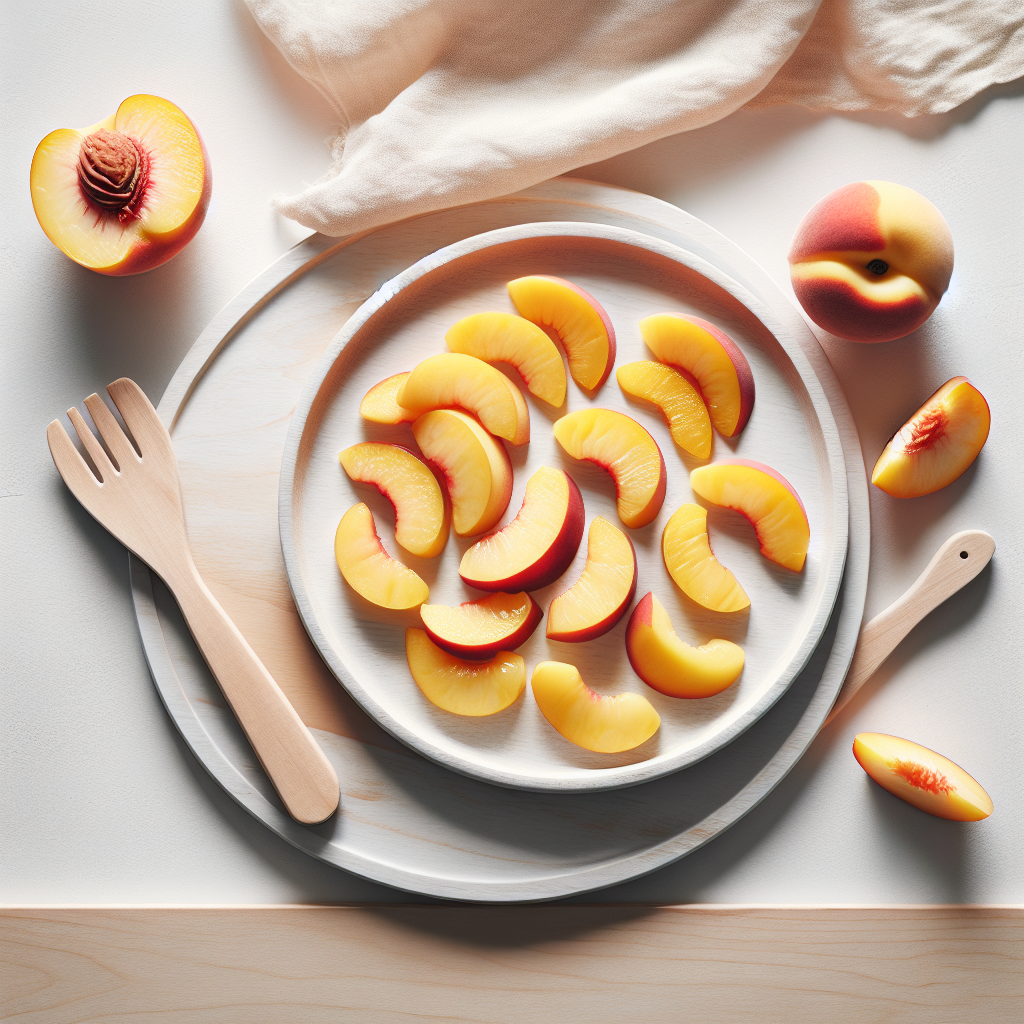
Baby-led weaning · age-specific guide
Peach for 6–8 months
Peaches may be introduced as soon as your baby is ready to start solid foods, which is generally around 6 months of age. Choose ripe, soft peaches that yield to gentle pressure, as these are easiest for babies to gum and swallow. Always ensure the fruit is properly prepared to minimise any risk and support your baby's developing eating skills.
How to serve at 6–8 months
Offer ripe, very soft peaches cut into large pieces that your baby can hold in their fist with some fruit sticking out for them to gnaw on. Wide wedges with the pit removed work well, roughly the size of two adult fingers placed side by side. If the skin is tough or your baby struggles with it, peel the peach before serving to make it easier to manage.
Nutrition highlights
Peaches offer vitamin C, which supports immune function and helps with iron absorption from other foods. They also provide vitamin A for healthy vision and skin development, as well as dietary fibre to support digestion. The natural sweetness and high water content make peaches a hydrating and nutritious choice for babies.
Lower-risk serving reminders
Peaches carry a low choking risk when they are ripe, soft, and cut appropriately for your baby's age and stage. Their juicy, tender flesh breaks down easily in the mouth, making them safer than firm or hard fruits.
Allergen introduction checklist
Peaches are not considered a common allergen and are generally well tolerated by babies. However, some children with pollen allergies may experience oral allergy syndrome, which can cause mild itching or tingling in the mouth after eating raw peaches.
Common questions
Should I remove the skin from peaches for my baby?
Remove the skin if it is tough or your baby is just starting solids, as it can be difficult to chew. As your baby's chewing skills develop, you can leave the soft skin on ripe peaches.
Can I serve tinned peaches to my baby?
You can offer tinned peaches packed in water or juice (not syrup), but rinse them first to remove excess sugar and check they are soft enough. Fresh or frozen peaches are generally preferable as they contain no added ingredients.
What if my baby gags on peach?
Gagging is a normal part of learning to eat and helps your baby move food safely in their mouth. Ensure peaches are ripe, soft, and cut appropriately for your baby's age, and always supervise mealtimes closely.
General feeding checklist
- Seat baby upright and stable for all meals.
- Model slow chewing and allow baby to control pace.
- Stop and reset if baby is upset, tired, or over-stuffed.
Readiness signs to check
- Baby can sit upright with minimal support during meals.
- Hands and mouth coordinate for bringing food to the mouth.
- Tongue-thrust reflex is reduced, so food is not immediately pushed out.
- Interest in self-feeding and opening mouth for food cues is visible.
Pause and seek advice if
- Coughing is persistent or distress does not settle quickly during meals.
- You notice repeated vomiting, rash, swelling, wheeze, or breathing changes after a food.
- Baby struggles with swallowing progression over multiple meals despite texture adjustments.
- There is a known medical condition affecting feeding, growth, or airway safety.
Other ages: 9–11 months · 12–24 months