Baby-led weaning · age-specific guide
Miso trace in soup for 12–24 months
Babies can enjoy soup with a trace amount of miso from around 6 months of age, once they are ready to start solid foods. Miso is a fermented soybean paste that adds umami flavour to broths and soups, and when used sparingly, it can introduce your baby to new tastes. Because miso is high in sodium, it should only be used in very small amounts for babies and young children.
How to serve at 12–24 months
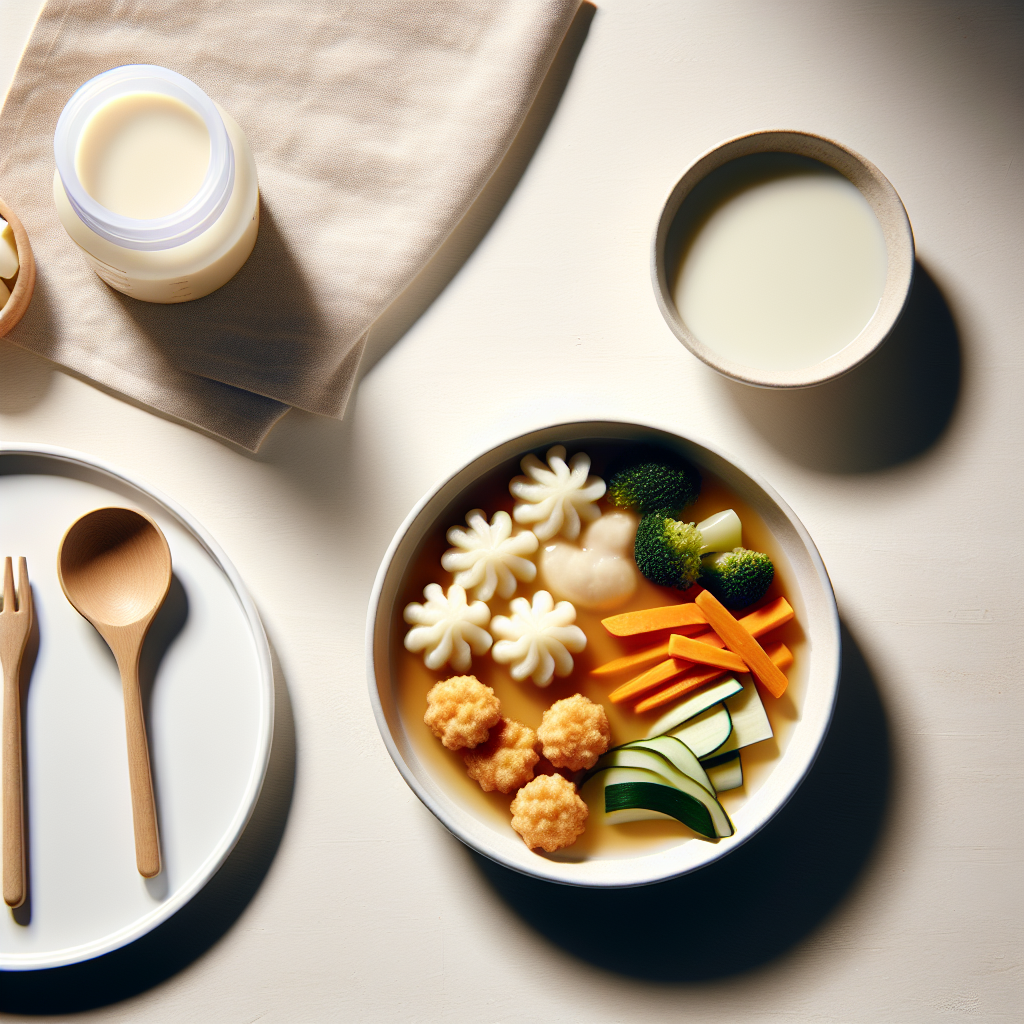
Toddlers can enjoy miso-flavoured soups with a wider variety of textures, including small pieces of cooked vegetables, grains, and proteins. Continue to use miso in very small amounts to keep sodium levels appropriate, and serve the soup in a bowl with a spoon for self-feeding practice. As your child's eating skills improve, they can manage chunkier soups and drink the broth more independently.
Nutrition highlights
Miso is a fermented food that provides beneficial probiotics to support gut health, which is important for digestion and immune function in babies. It also contains small amounts of iron, B vitamins, and protein, though these nutrients are present in minimal quantities when miso is used as a trace flavouring. Because miso is very high in sodium, it should be used sparingly to avoid exceeding recommended salt limits for babies.
Lower-risk serving reminders
Soup with a trace of miso presents a low choking risk because it is a liquid or semi-liquid food that babies can sip, slurp, or drink from a cup. As long as any solid ingredients in the soup are appropriately prepared for your baby's age and skill level, miso-flavoured broth itself poses minimal choking concern.
Allergen information
Miso contains soy, which is a common allergen. When introducing miso to your baby for the first time, offer a small amount and watch for signs of an allergic reaction, such as hives, swelling, vomiting, or difficulty breathing.
Soy
Common questions
Is miso soup too salty for babies?
Traditional miso soup is often too high in sodium for babies, but when miso is used in trace amounts to flavour homemade broth or soup, it can be appropriate from 6 months. Always use miso very sparingly and avoid adding extra salt to baby's portions.
Can I give my baby shop-bought miso soup?
Most shop-bought miso soups are too high in sodium for babies and may contain additives or ingredients not suitable for young children. It's best to prepare homemade soups with just a trace of miso paste to control the salt content.
What type of miso is best for babies?
White or yellow miso tends to be milder and slightly lower in sodium than darker varieties, making it a better choice for babies when used in very small amounts. Always check the ingredient list and choose miso without added MSG or unnecessary additives.
General feeding checklist
- Seat baby upright and stable for all meals.
- Model slow chewing and allow baby to control pace.
- Stop and reset if baby is upset, tired, or over-stuffed.
Readiness signs to check
- Baby can sit upright with minimal support during meals.
- Hands and mouth coordinate for bringing food to the mouth.
- Tongue-thrust reflex is reduced, so food is not immediately pushed out.
- Interest in self-feeding and opening mouth for food cues is visible.
Pause and seek advice if
- Coughing is persistent or distress does not settle quickly during meals.
- You notice repeated vomiting, rash, swelling, wheeze, or breathing changes after a food.
- Baby struggles with swallowing progression over multiple meals despite texture adjustments.
- There is a known medical condition affecting feeding, growth, or airway safety.
Other ages: 6–8 months · 9–11 months