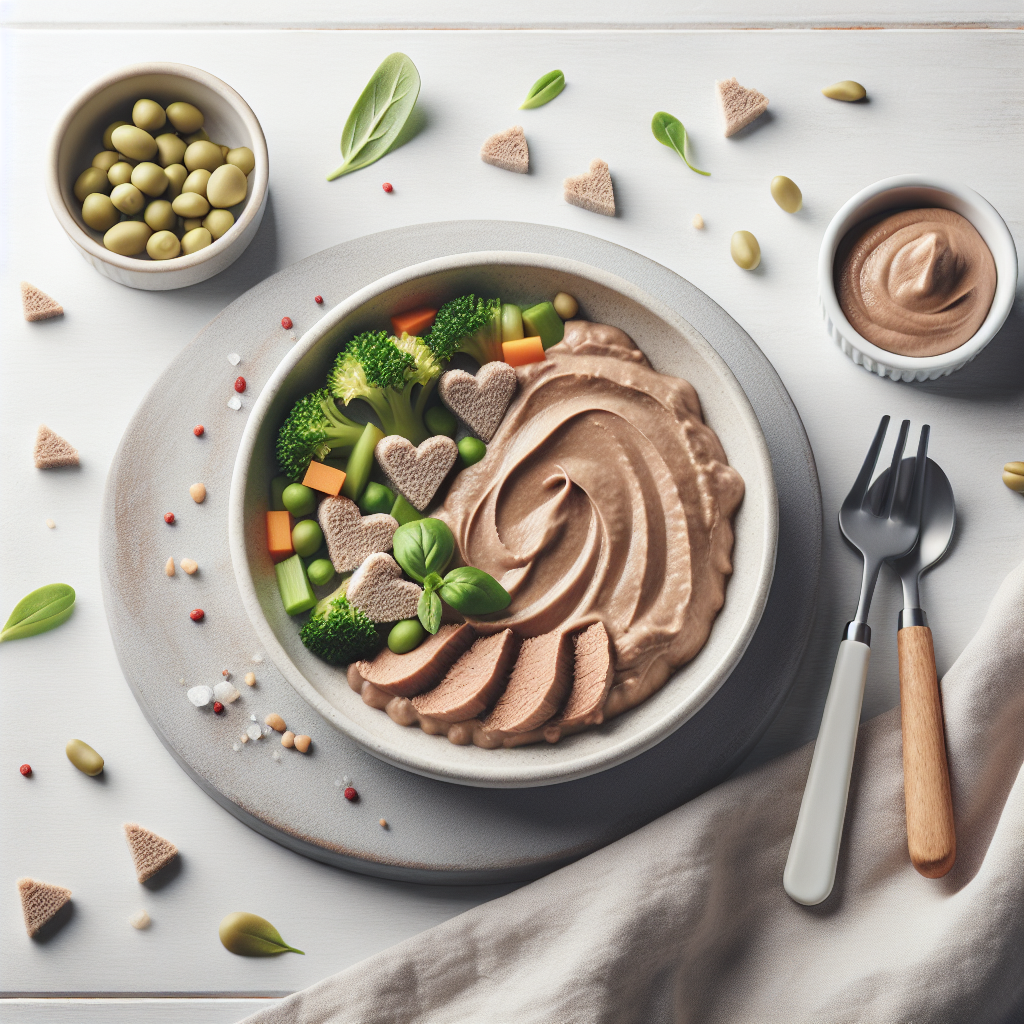
Liver pâté designed for infants with low salt content can be introduced from six months of age, as soon as your baby is ready to start solid foods. Choose pâté specifically labelled as suitable for infants, as regular pâté contains too much salt and vitamin A for babies. Always check the label to ensure the product is appropriate for your baby's age.
Is Liver pate infant low salt healthy for babies?
Liver pâté is exceptionally rich in iron, which supports healthy brain development and helps prevent iron deficiency anaemia in babies. It also provides high-quality protein, vitamin A for vision and immune function, and B vitamins including B12 for energy and growth. The nutrient density of liver makes even small servings valuable for meeting your baby's nutritional needs.
Lower-risk serving reminders
Liver pâté has a smooth, spreadable texture that does not pose a choking risk when offered appropriately. Its soft consistency allows babies to easily manage it in their mouths without the risk of pieces breaking off or getting stuck.
Allergen introduction checklist
Liver pâté is not typically considered a common allergen. However, always check the ingredient list, as some versions may contain eggs, milk, or other allergens depending on the recipe or manufacturing process.
General feeding checklist
Seat baby upright and stable for all meals.
Model slow chewing and allow baby to control pace.
Stop and reset if baby is upset, tired, or over-stuffed.
Readiness signs to check
Baby can sit upright with minimal support during meals.
Hands and mouth coordinate for bringing food to the mouth.
Tongue-thrust reflex is reduced, so food is not immediately pushed out.
Interest in self-feeding and opening mouth for food cues is visible.
Pause and seek advice if
Coughing is persistent or distress does not settle quickly during meals.
You notice repeated vomiting, rash, swelling, wheeze, or breathing changes after a food.
Baby struggles with swallowing progression over multiple meals despite texture adjustments.
There is a known medical condition affecting feeding, growth, or airway safety.
Spread a thin layer of infant liver pâté onto a finger of lightly toasted bread, ensuring the toast is soft enough for gums to mash. Alternatively, mix a small amount into mashed vegetables or well-cooked porridge to add iron-rich nutrition. The spreadable texture makes it easy for babies to taste and explore without needing to chew, and the toast provides a graspable surface for early self-feeding.
9–11 months
Continue offering liver pâté spread on toast fingers or crackers that your baby can hold independently. You can also mix it into soft finger foods like cooked pasta shapes, mashed potato formed into small patties, or spread it inside a sandwich cut into strips. At this age, babies can handle slightly firmer textures, so the toast base can be a bit less soft than before.
12–24 months
Serve liver pâté as you would for older family members, spread on toast, crackers, or breadsticks. You can also offer it as a dip for vegetable sticks or mix it into dishes like shepherd's pie or Bolognese sauce to boost iron content. As your toddler's chewing skills improve, they can manage chunkier accompaniments, though pâté itself remains soft and easy to swallow.
Common questions about Liver pate infant low salt
How much liver pâté can I give my baby?
Offer liver pâté once or twice a week rather than daily, as liver is very high in vitamin A. A thin spread or one to two teaspoons mixed into other foods is an appropriate serving size for babies.
Can I use regular pâté instead of infant low-salt versions?
No, regular pâté contains too much salt and vitamin A for babies and is not suitable for children under one year. Always choose pâté specifically formulated for infants.
What foods can I serve with liver pâté?
Spread infant liver pâté thinly on toast fingers, mix it into mashed potato or other vegetables, or stir it into well-cooked pasta. The soft texture pairs well with foods your baby can grasp and self-feed.