Ghee can be introduced from 6 months of age, as soon as your baby is ready to start solid foods. Because ghee is made from butter and contains milk proteins, it is a dairy allergen and should be introduced carefully, especially if your baby has a family history of allergies or eczema. Ghee is typically used in small amounts to cook foods or add moisture and flavour to meals.
Is Ghee trace healthy for babies?
Ghee is rich in fat, particularly saturated fat, which supports brain development and provides energy for active babies. It also contains fat-soluble vitamins A, D, E, and K, which are important for vision, bone health, immune function, and blood clotting. While ghee can add calories and flavour to meals, it should be used in moderation as part of a varied diet.
Lower-risk serving reminders
Ghee poses a low choking risk because it is a fat that melts when heated and coats or moistens food rather than being eaten on its own. When used in cooking or drizzled over soft foods, it does not present a choking hazard.
Allergen information
Ghee is a dairy product made from butter and contains milk proteins, making it a common allergen. While the clarification process removes most milk solids, trace amounts of milk protein may remain, so introduce ghee on its own at first and watch for signs of an allergic reaction such as hives, vomiting, or swelling.
Milk (dairy)
General feeding checklist
Seat baby upright and stable for all meals.
Model slow chewing and allow baby to control pace.
Stop and reset if baby is upset, tired, or over-stuffed.
Readiness signs to check
Baby can sit upright with minimal support during meals.
Hands and mouth coordinate for bringing food to the mouth.
Tongue-thrust reflex is reduced, so food is not immediately pushed out.
Interest in self-feeding and opening mouth for food cues is visible.
Pause and seek advice if
Coughing is persistent or distress does not settle quickly during meals.
You notice repeated vomiting, rash, swelling, wheeze, or breathing changes after a food.
Baby struggles with swallowing progression over multiple meals despite texture adjustments.
There is a known medical condition affecting feeding, growth, or airway safety.
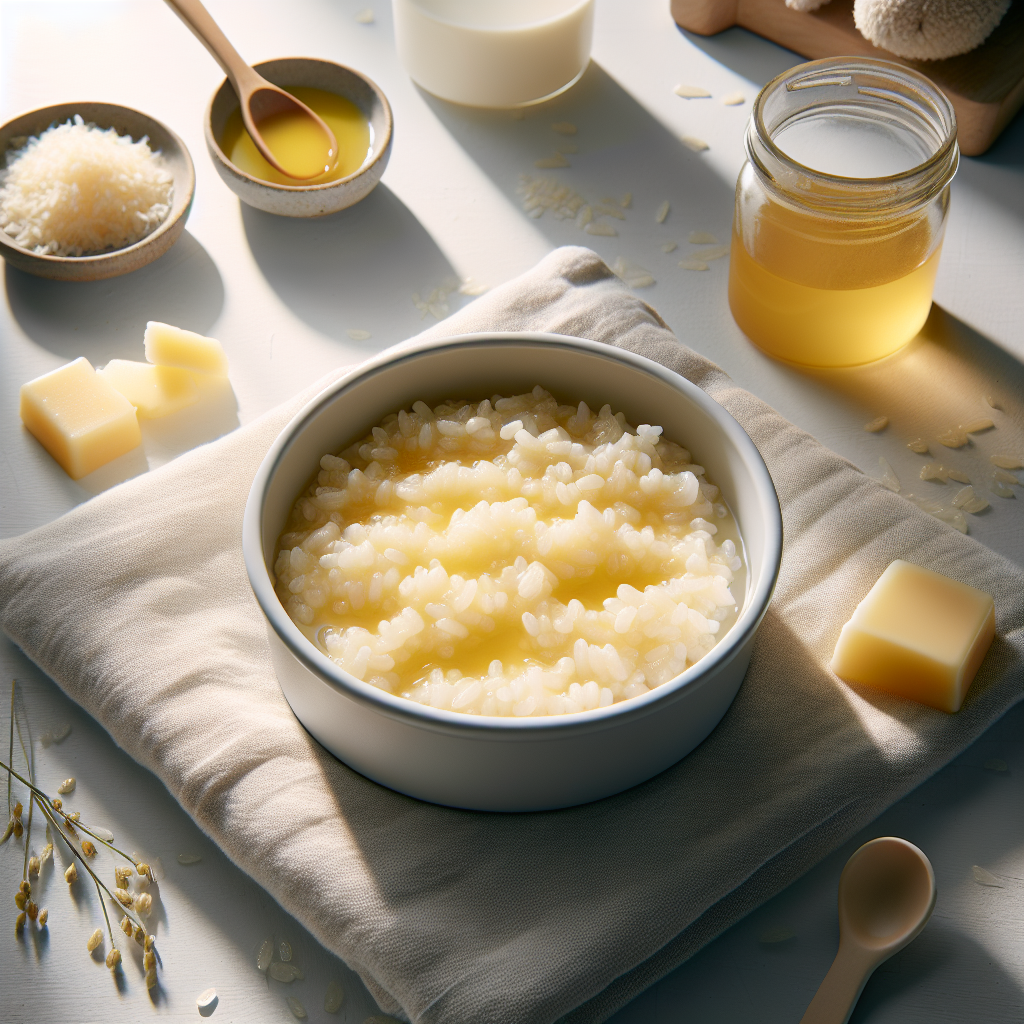
Use a small amount of ghee (about half a teaspoon) to cook soft vegetables like sweet potato, courgette, or broccoli, or to moisten grains such as rice or porridge. You can also stir a trace of ghee into mashed lentils or spread it lightly on soft toast strips to add moisture and make them easier to grip. Avoid offering ghee on its own; always combine it with age-appropriate foods.
9–11 months
Continue using ghee in small amounts to sauté bite-sized pieces of vegetables, scrambled eggs, or soft proteins like chicken or fish. You can also stir a trace of ghee into pasta, grains, or dhal to add richness and help foods stick together, making them easier for babies to self-feed. Keep portions modest, as babies at this age are still developing their palates and digestive systems.
12–24 months
Ghee can be used to cook family meals, such as roasted vegetables, rice dishes, or mild curries, in small amounts. Toddlers can enjoy ghee stirred into porridge, spread thinly on toast, or used to moisten drier foods like chapati or cooked grains. Continue to use ghee in moderation as part of a balanced diet that includes a variety of fats from different sources.
Common questions about Ghee trace
Is ghee safer than butter for babies with milk allergies?
Ghee may contain trace amounts of milk protein even after clarification, so it is not guaranteed safe for babies with a confirmed cow's milk protein allergy. Always consult your GP or paediatric dietitian before offering ghee if your baby has a known milk allergy.
How much ghee should I use when cooking for my baby?
Use ghee sparingly, typically a small amount (about half a teaspoon) to cook vegetables, grains, or proteins. This adds moisture and flavour without overwhelming your baby's meal with excess fat.
Can I use ghee instead of butter or oil for baby-led weaning?
Yes, ghee can be used in place of butter or oil when cooking for your baby. It has a high smoke point, making it suitable for sautéing and roasting, and adds a mild, slightly nutty flavour to foods.