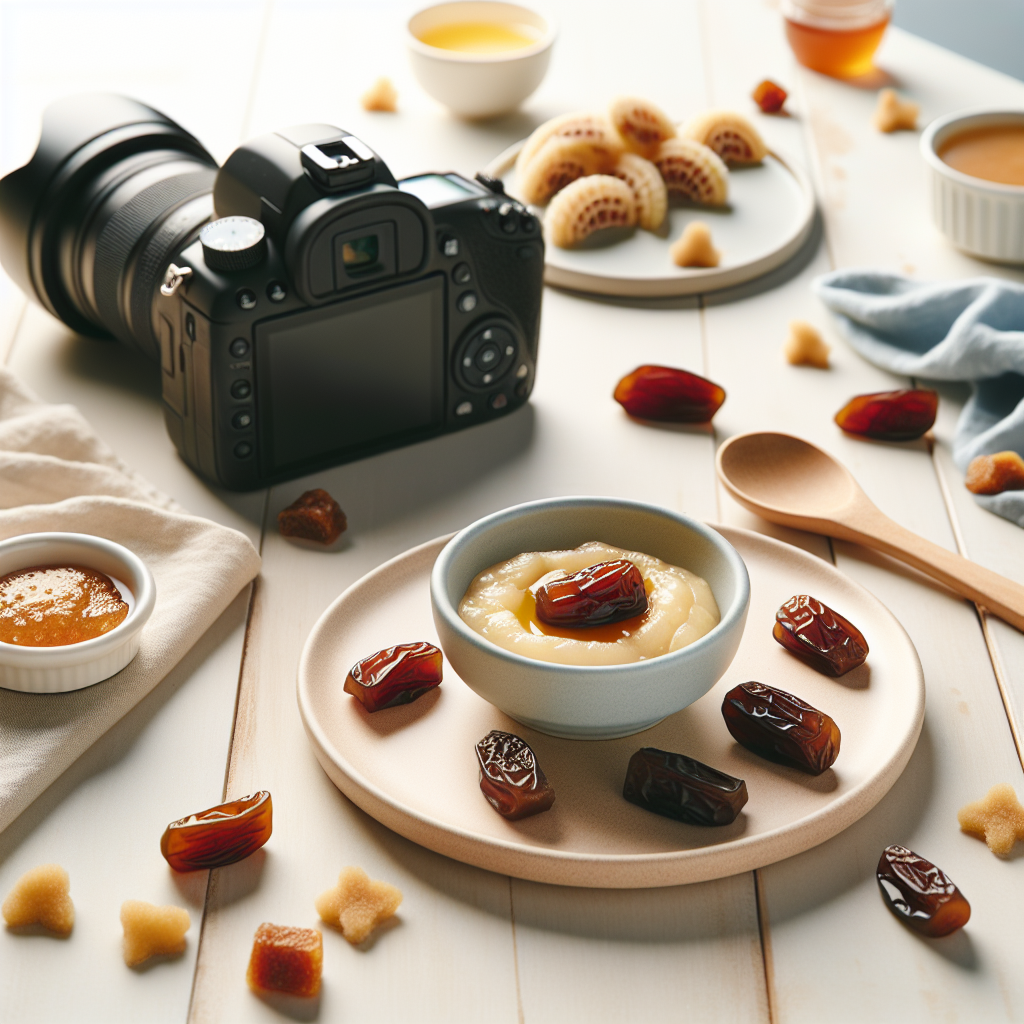
Date syrup can be offered in trace amounts from 6 months of age, once your baby is ready to start solids and shows signs of readiness for baby-led weaning. However, added sugars like date syrup are not necessary in a baby's diet and should be kept to an absolute minimum, as they can displace more nutrient-dense foods and contribute to a preference for sweet flavours. When used, it should only be as a trace amount to lightly coat or bind other wholesome ingredients rather than as a primary sweetener.
Is Date syrup trace healthy for babies?
Date syrup is high in natural sugars and provides small amounts of minerals like potassium and magnesium, though these nutrients are negligible when used in trace amounts. It does not offer significant nutritional value for babies and should not be relied upon as a source of nutrients. Offering whole fruits and vegetables will provide far more vitamins, minerals, and fibre to support your baby's growth and development.
Lower-risk serving reminders
Date syrup in trace amounts poses a low choking risk because it is a smooth, viscous liquid that easily coats foods rather than forming a solid piece that could block the airway. When used sparingly to bind ingredients or add moisture, it does not create a choking hazard on its own.
Allergen introduction checklist
Date syrup is not considered a common allergen and allergic reactions to date products are rare. If your baby has not yet been introduced to dates, you may wish to offer whole dates first before using date syrup, though trace amounts are unlikely to cause concern.
General feeding checklist
Seat baby upright and stable for all meals.
Model slow chewing and allow baby to control pace.
Stop and reset if baby is upset, tired, or over-stuffed.
Readiness signs to check
Baby can sit upright with minimal support during meals.
Hands and mouth coordinate for bringing food to the mouth.
Tongue-thrust reflex is reduced, so food is not immediately pushed out.
Interest in self-feeding and opening mouth for food cues is visible.
Pause and seek advice if
Coughing is persistent or distress does not settle quickly during meals.
You notice repeated vomiting, rash, swelling, wheeze, or breathing changes after a food.
Baby struggles with swallowing progression over multiple meals despite texture adjustments.
There is a known medical condition affecting feeding, growth, or airway safety.
Use only a trace amount of date syrup to lightly bind ingredients such as oat balls or to add moisture to dry finger foods like homemade oat bars. A small drizzle mixed through a mixture is sufficient—avoid using it as a topping or primary ingredient. Focus on offering whole fruits and vegetables rather than relying on added sweeteners to enhance flavour.
9–11 months
Continue to use date syrup sparingly, if at all, as a binding agent in homemade snacks like energy balls or to add slight moisture to baked goods. A trace amount stirred into a batch of pancakes or muffins can help bind ingredients without adding excessive sweetness. Prioritise offering naturally sweet whole foods to support healthy taste preferences.
12–24 months
Date syrup can be used in minimal amounts to lightly sweeten or bind family foods, such as a small drizzle in homemade granola bars or stirred into yoghurt alongside fresh fruit. Keep portions very small and continue to emphasise whole, unprocessed foods over anything with added sugars. Encourage your toddler to enjoy the natural flavours of foods without relying on sweeteners.
Common questions about Date syrup trace
How much date syrup can I give my baby?
Date syrup should only be used in trace amounts—a light drizzle or small quantity to bind ingredients together. It is best to avoid added sugars as much as possible in the first year and keep them minimal thereafter.
Is date syrup healthier than other sweeteners for babies?
Whilst date syrup contains small amounts of minerals, it is still a concentrated source of sugar and offers no significant nutritional advantage over other sweeteners. All added sugars should be minimised in a baby's diet.
Can I use date syrup to sweeten my baby's porridge?
It is best to avoid sweetening porridge and allow your baby to enjoy the natural flavours of wholegrains, or add mashed fruit like banana or berries for natural sweetness instead.