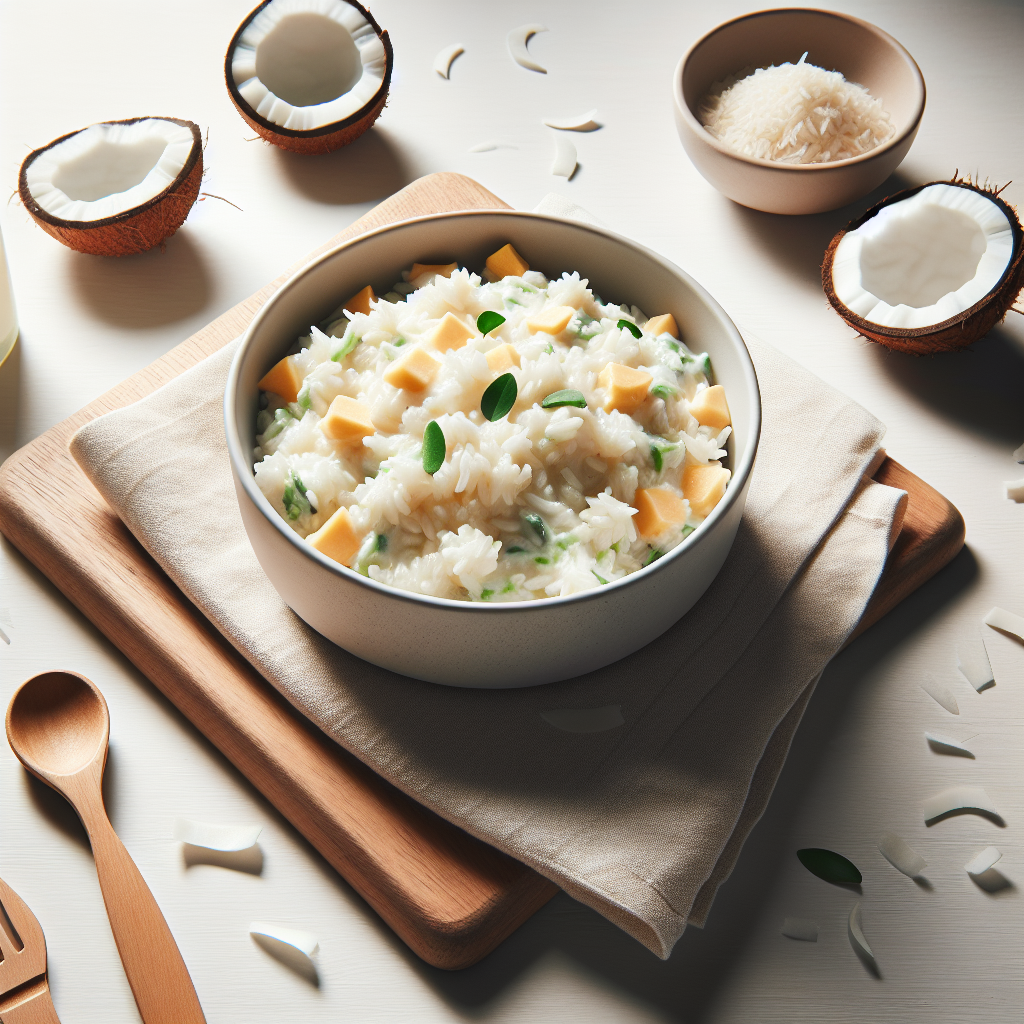
Coconut cream can be introduced from 6 months of age, once your baby is ready to start solid foods. When used in trace amounts as an ingredient in cooking or baking, it poses minimal concern and can add creaminess and flavour to baby-friendly dishes. Always ensure coconut cream is well-incorporated into recipes rather than served as a standalone food for young babies.
Is Coconut cream trace healthy for babies?
Coconut cream is high in healthy fats, particularly medium-chain triglycerides, which provide a concentrated source of energy to support your baby's rapid growth and brain development. It also contains small amounts of iron, magnesium, and potassium. However, coconut cream is calorie-dense and low in protein, so it's best used in moderation as part of a varied diet that includes other nutrient-rich foods.
Lower-risk serving reminders
Coconut cream in trace amounts carries a low choking risk because it is a smooth, liquid ingredient that blends into foods rather than presenting as a solid piece. When mixed into purées, curries, porridges, or baked goods, it becomes part of a soft, manageable texture that babies can easily swallow.
Allergen information
Coconut is classified as a tree nut allergen in some countries, though allergic reactions to coconut are relatively uncommon. If your baby has a diagnosed tree nut allergy or a family history of nut allergies, speak with your GP or allergist before introducing coconut cream, and watch for signs of an allergic reaction such as hives, vomiting, or difficulty breathing.
Milk (dairy)
General feeding checklist
Seat baby upright and stable for all meals.
Model slow chewing and allow baby to control pace.
Stop and reset if baby is upset, tired, or over-stuffed.
Readiness signs to check
Baby can sit upright with minimal support during meals.
Hands and mouth coordinate for bringing food to the mouth.
Tongue-thrust reflex is reduced, so food is not immediately pushed out.
Interest in self-feeding and opening mouth for food cues is visible.
Pause and seek advice if
Coughing is persistent or distress does not settle quickly during meals.
You notice repeated vomiting, rash, swelling, wheeze, or breathing changes after a food.
Baby struggles with swallowing progression over multiple meals despite texture adjustments.
There is a known medical condition affecting feeding, growth, or airway safety.
At this age, use coconut cream in small amounts stirred into soft, spoonable foods such as lentil dhal, vegetable curry, or porridge to add creaminess and healthy fats. You can also mix a teaspoon into mashed sweet potato, butternut squash, or other purées. Serve these dishes on a spoon for baby to self-feed or preload the spoon and place it on the tray for your baby to grasp.
9–11 months
Continue using coconut cream as an ingredient in soft, textured meals such as mild curries with rice, coconut-based soups with soft vegetables, or porridge with mashed fruit. You can also add a small amount to pancake or muffin batter to keep baked goods moist and tender. Serve these foods in bite-sized pieces or allow baby to self-feed with hands or utensils.
12–24 months
At this stage, coconut cream can be used more freely in family meals such as Thai-style curries, coconut rice, or pasta sauces, keeping portion sizes small due to its richness. It can also be stirred into oatmeal, smoothies, or used in baking to add moisture and flavour. Continue offering these foods as part of balanced meals that include protein, vegetables, and whole grains.
Common questions about Coconut cream trace
Is coconut cream a common allergen for babies?
Coconut is considered a tree nut allergen, though true coconut allergies are relatively rare. Introduce it in small amounts and watch for any signs of an allergic reaction.
Can I use coconut cream instead of dairy cream for my baby?
Yes, coconut cream can be a useful dairy-free alternative in cooking and baking, though it is higher in saturated fat and lower in protein than dairy cream.
How much coconut cream can I give my baby?
Use coconut cream in trace amounts as an ingredient in recipes rather than as a main food, as it is very high in fat and calories and low in other key nutrients babies need.