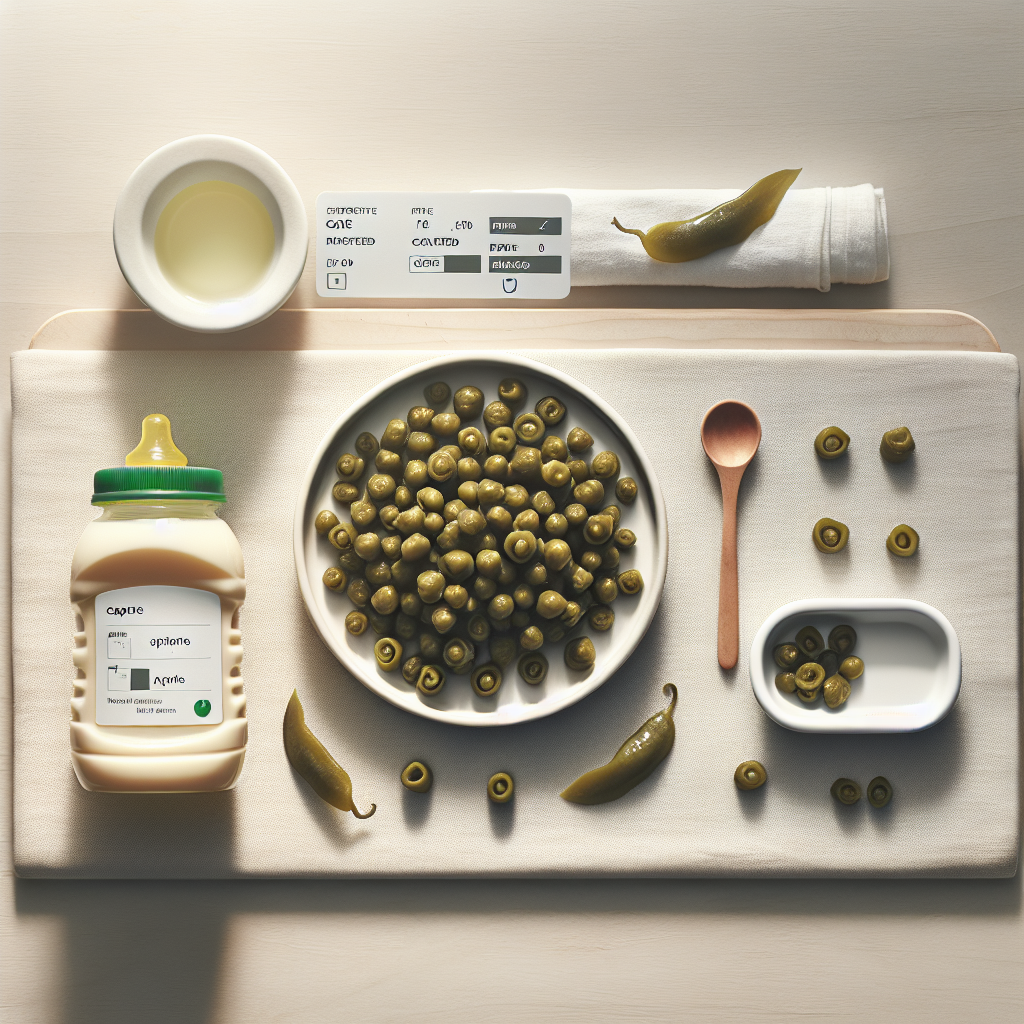
Capers (rinsed) may be introduced from around 12 months of age, once your baby is eating a variety of family foods and has developed some tolerance for stronger flavours. Before this age, capers are best avoided due to their high sodium content, even when rinsed. Rinsing capers thoroughly under running water helps to reduce the salt, but they should still be offered only occasionally and in very small amounts.
Is Caper rinsed healthy for babies?
Capers are rich in antioxidants, particularly quercetin and rutin, which support overall health and immune function. They also contain small amounts of vitamins K and A, along with beneficial plant compounds. However, capers are typically eaten in very small quantities, so they contribute more as a flavour enhancer than a significant source of nutrients in a baby's diet.
Lower-risk serving reminders
Rinsed capers pose a low choking risk because they are small, soft, and easily squashed between the gums or teeth. Their texture breaks down quickly in the mouth, making them manageable for babies who are eating a variety of textures.
Allergen introduction checklist
Capers are not a common allergen and are not among the major allergenic foods. As with any new food, introduce capers on their own at first and watch for any signs of an adverse reaction, though allergies to capers are rare.
General feeding checklist
Seat baby upright and stable for all meals.
Model slow chewing and allow baby to control pace.
Stop and reset if baby is upset, tired, or over-stuffed.
Readiness signs to check
Baby can sit upright with minimal support during meals.
Hands and mouth coordinate for bringing food to the mouth.
Tongue-thrust reflex is reduced, so food is not immediately pushed out.
Interest in self-feeding and opening mouth for food cues is visible.
Pause and seek advice if
Coughing is persistent or distress does not settle quickly during meals.
You notice repeated vomiting, rash, swelling, wheeze, or breathing changes after a food.
Baby struggles with swallowing progression over multiple meals despite texture adjustments.
There is a known medical condition affecting feeding, growth, or airway safety.
Hold off on offering capers to babies in this age group. The sodium content is too high for young babies, even after rinsing, and their developing kidneys are not yet ready to handle salty foods. Focus instead on naturally low-sodium whole foods like vegetables, fruits, grains, and unsalted proteins.
9–11 months
Continue to avoid capers at this age due to their high sodium content. Babies in this age range are still developing their ability to process salt, and there are many other nutritious finger foods that better support their growth and development. Wait until closer to 12 months before introducing capers in very small amounts.
12–24 months
From around 12 months, you may offer one or two rinsed capers, finely chopped and stirred into pasta, rice, or a grain salad to add a hint of briny flavour. You can also mash a rinsed caper into a sauce, egg dish, or fish cake to introduce the taste gradually. Always rinse thoroughly before use and keep portions very small, treating capers as an occasional flavour enhancer rather than a regular part of meals.
Common questions about Caper rinsed
Can I give capers to my baby before 12 months?
It's best to wait until around 12 months due to the high sodium content, even after rinsing. Before this age, your baby's kidneys are still developing and are more sensitive to salt.
How do I rinse capers for my baby?
Place the capers in a fine-mesh sieve and rinse thoroughly under cold running water for at least 30 seconds to remove as much brine or salt as possible. Pat them dry before serving.
How many capers can I give my baby?
Offer just one or two capers at a time, finely chopped and mixed into other foods. Capers should be used sparingly as a flavour accent rather than a main ingredient due to their sodium content.