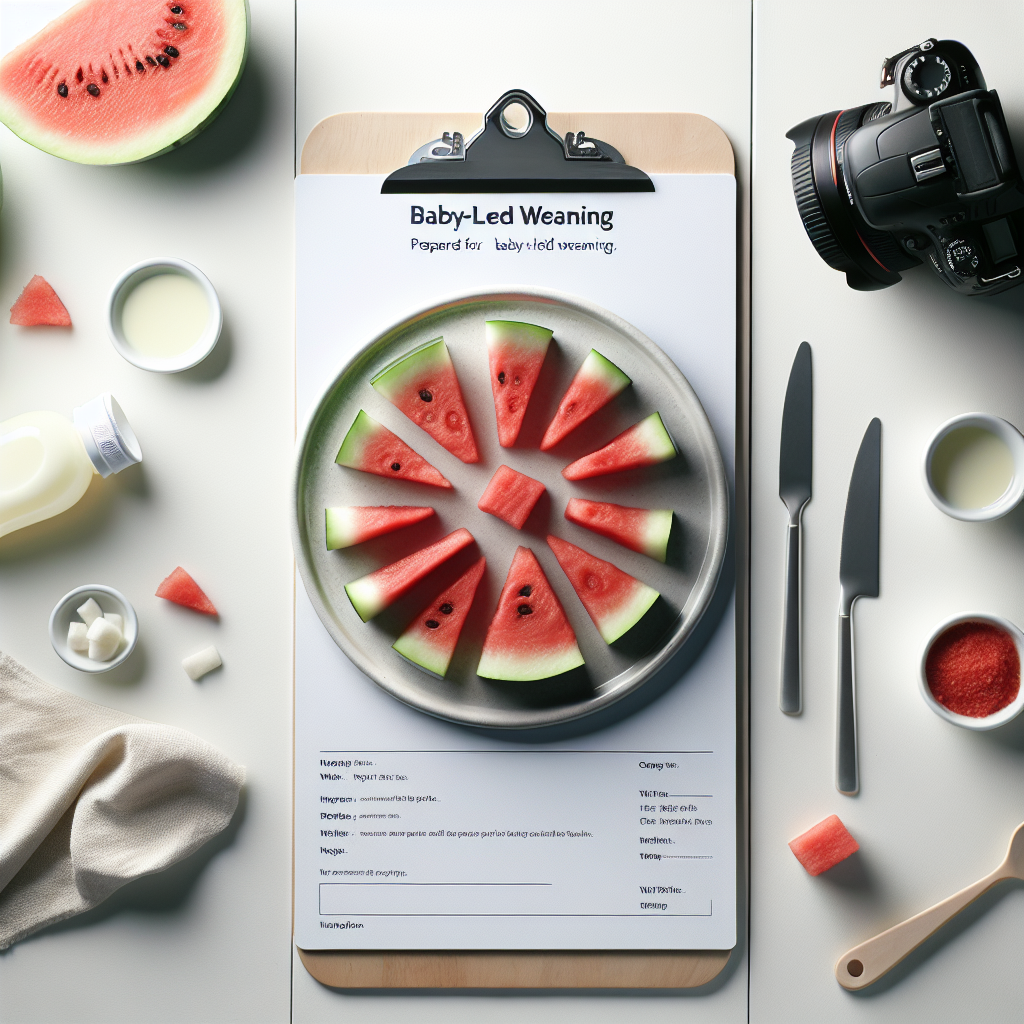
Baby-led weaning · age-specific guide
Watermelon for 12–24 months
Watermelon may be introduced as soon as your baby is ready to start solids, which is generally around 6 months of age. Choose very ripe, soft watermelon and serve it in an age-appropriate size that minimises choking risk. Always supervise your baby during meals and ensure they are seated upright.
How to serve at 12–24 months
Serve ripe watermelon in bite-sized pieces with all seeds removed, cut into cubes or chunks that are appropriate for your toddler's chewing ability. Continue to ensure the watermelon is soft and ripe, as harder pieces can still pose a risk. You can also serve watermelon as part of a fruit salad or alongside other foods at mealtimes.
Nutrition highlights
Watermelon is an excellent source of hydration due to its high water content, which can be helpful during warm weather or when babies are unwell. It contains vitamin C to support immune function and iron absorption, as well as lycopene, an antioxidant that supports overall health. Watermelon also provides small amounts of iron, making it a useful addition to a varied diet.
Lower-risk serving reminders
Watermelon has a low choking risk when served ripe and very soft, as it breaks down easily in the mouth and contains a high water content. However, hard or underripe watermelon can pose a risk, so always ensure the flesh is tender and yielding before serving.
Allergen introduction checklist
Watermelon is not a common allergen and allergic reactions are rare. As with all new foods, introduce watermelon on its own and watch for any signs of a reaction, though this is uncommon with this fruit.
Common questions
Do I need to remove watermelon seeds before serving to my baby?
Yes, remove all seeds including white seeds before serving watermelon to babies and toddlers. Alternatively, choose seedless varieties to make preparation easier.
Can watermelon cause nappy rash in babies?
Watermelon's high water content and natural sugars can sometimes contribute to looser stools or mild nappy rash in some babies. If you notice this, try serving smaller portions or pairing with other foods.
Should I remove the rind from watermelon for baby-led weaning?
For young babies aged 6 to 8 months, leaving a thin strip of rind on can provide a helpful handle for gripping. For older babies, remove the rind entirely and serve just the soft flesh.
General feeding checklist
- Seat baby upright and stable for all meals.
- Model slow chewing and allow baby to control pace.
- Stop and reset if baby is upset, tired, or over-stuffed.
Readiness signs to check
- Baby can sit upright with minimal support during meals.
- Hands and mouth coordinate for bringing food to the mouth.
- Tongue-thrust reflex is reduced, so food is not immediately pushed out.
- Interest in self-feeding and opening mouth for food cues is visible.
Pause and seek advice if
- Coughing is persistent or distress does not settle quickly during meals.
- You notice repeated vomiting, rash, swelling, wheeze, or breathing changes after a food.
- Baby struggles with swallowing progression over multiple meals despite texture adjustments.
- There is a known medical condition affecting feeding, growth, or airway safety.
Other ages: 6–8 months · 9–11 months