Baby-led weaning · age-specific guide
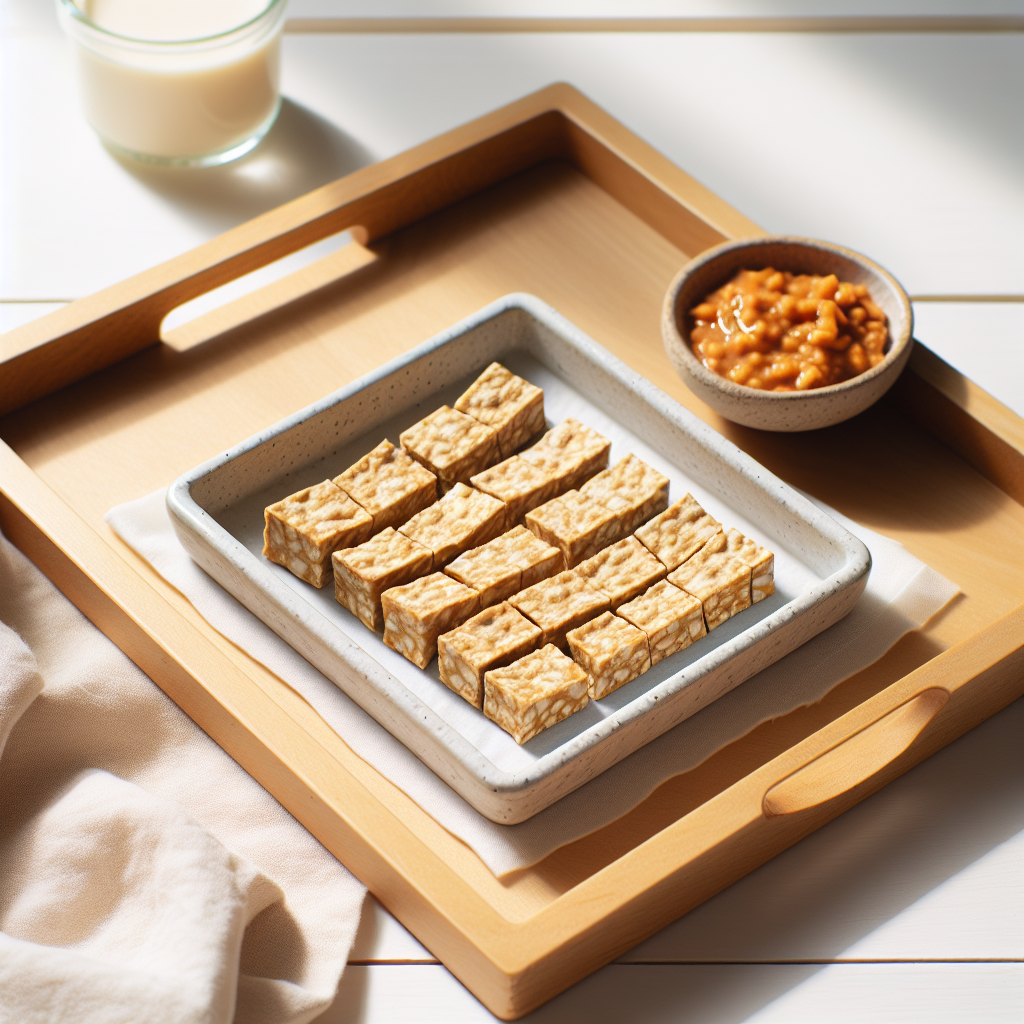
Tempeh strip for 9–11 months
Tempeh can be introduced as soon as your baby is ready to start solids, which is typically around 6 months of age. As tempeh contains soy, a common allergen, it's important to introduce it early and often, following current guidelines on allergen introduction. Always ensure tempeh is fully cooked and served in an age-appropriate size and texture.
How to serve at 9–11 months
Continue offering finger-length strips of fully cooked tempeh, or begin breaking it into smaller bite-sized pieces as your baby develops their pincer grasp. You can shred or flake cooked tempeh and mix it into grain bowls, mashed vegetables, or pasta dishes. Keep tempeh moist by serving it with sauces, dips, or mixed into foods with natural moisture.
Nutrition highlights
Tempeh is an excellent source of plant-based protein, which supports your baby's growth and development. It also provides important nutrients including calcium, B vitamins, and prebiotics from the fermentation process, which support gut health. Additionally, tempeh contains moderate amounts of iron, particularly when paired with vitamin C-rich foods to enhance absorption.
Lower-risk serving reminders
Tempeh strips present a low choking risk when prepared properly because they become soft and pliable when fully cooked. The fermented texture breaks down easily in the mouth, and strips are an ideal shape for babies to grasp and control whilst eating.
Allergen information
Tempeh is made from soya beans and is therefore a soy allergen, one of the common food allergens. When introducing tempeh, offer a small amount at first and watch for signs of an allergic reaction such as hives, swelling, vomiting, or difficulty breathing.
Soy
Common questions
Does tempeh need to be cooked before giving it to my baby?
Yes, tempeh should always be fully cooked before offering it to your baby. Steaming, baking, or pan-frying until tender ensures it's soft enough for safe eating and improves digestibility.
Can I remove the skin from tempeh before serving it to my baby?
You can remove any particularly tough outer edges if needed, but properly cooked tempeh generally has a soft enough texture throughout for babies to manage safely.
How should I season tempeh for my baby?
Season tempeh lightly with herbs and spices your family enjoys, avoiding added salt and sugar where possible. Marinating in unsalted vegetable stock or a small amount of unsweetened plant milk helps keep it moist and flavourful.
General feeding checklist
- Seat baby upright and stable for all meals.
- Model slow chewing and allow baby to control pace.
- Stop and reset if baby is upset, tired, or over-stuffed.
Readiness signs to check
- Baby can sit upright with minimal support during meals.
- Hands and mouth coordinate for bringing food to the mouth.
- Tongue-thrust reflex is reduced, so food is not immediately pushed out.
- Interest in self-feeding and opening mouth for food cues is visible.
Pause and seek advice if
- Coughing is persistent or distress does not settle quickly during meals.
- You notice repeated vomiting, rash, swelling, wheeze, or breathing changes after a food.
- Baby struggles with swallowing progression over multiple meals despite texture adjustments.
- There is a known medical condition affecting feeding, growth, or airway safety.
Other ages: 6–8 months · 12–24 months