Baby-led weaning · age-specific guide
Taro cooked for 9–11 months
Taro can be introduced as soon as your baby is ready to start solid foods, which is typically around 6 months of age. This starchy root vegetable is naturally free from common allergens and becomes wonderfully soft when cooked thoroughly, making it a safe and nutritious choice for early eaters. Always ensure taro is completely cooked through, as raw taro contains compounds that can irritate the mouth and throat.
How to serve at 9–11 months
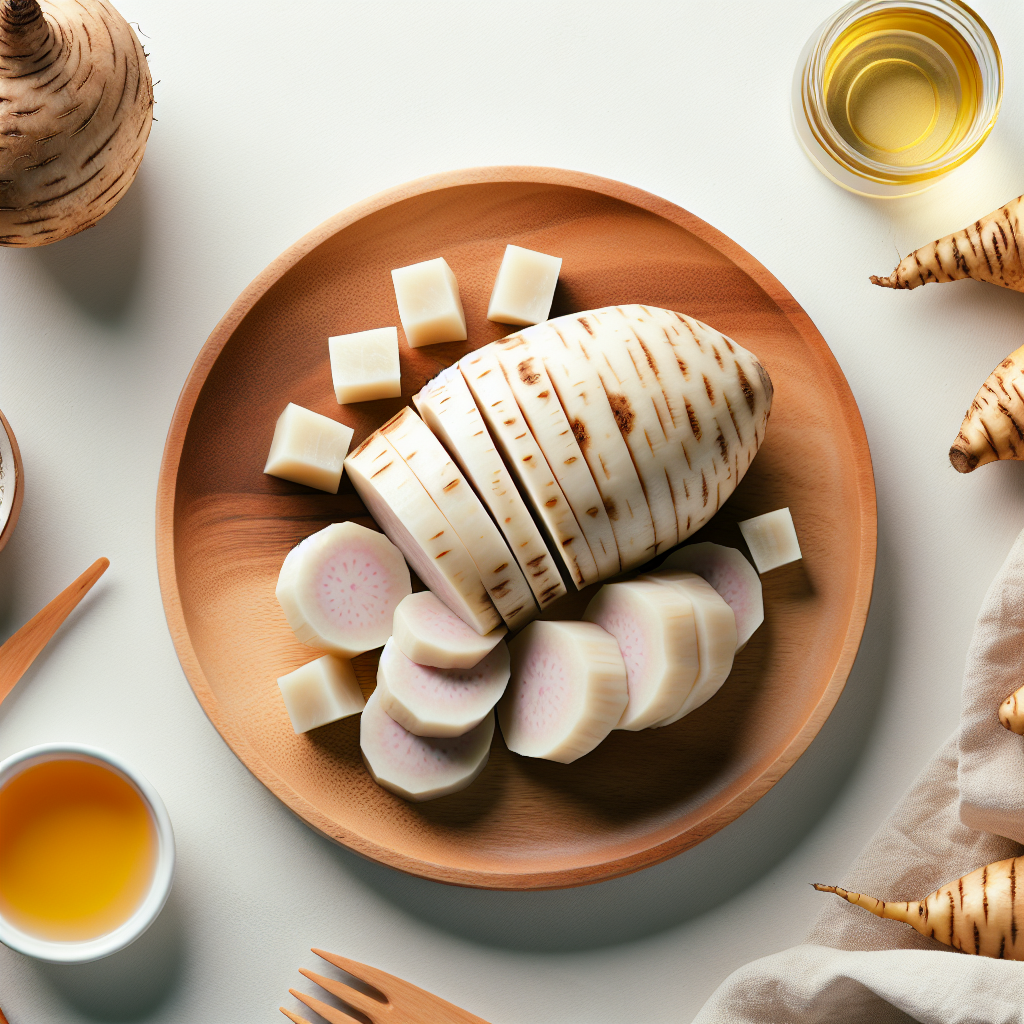
Continue offering taro cooked until very soft, now cut into smaller pieces such as thick coins or bite-sized chunks as your baby develops their pincer grasp. The pieces should still mash easily between your fingers but can be sized to encourage self-feeding with fingers. You can also offer taro mashed and mixed into other foods like lentils or served as small soft florets if roasted whole then broken apart.
Nutrition highlights
Taro is an excellent source of fibre, which supports healthy digestion and helps prevent constipation in babies. It also provides B vitamins, particularly B6, which aids brain development, as well as potassium and magnesium for growing muscles and bones. The resistant starch in taro can support gut health and provide sustained energy for active little ones.
Lower-risk serving reminders
When cooked until very soft, taro presents a low choking risk because it breaks down easily in the mouth and can be gummed or mashed by babies without teeth. The key is to ensure it is tender enough to squash between your fingers before offering it to your baby.
Allergen introduction checklist
Taro is not considered a common allergen and allergic reactions to it are rare. Parents can typically introduce taro without the same precautions needed for high-risk allergens like dairy, eggs, or peanuts.
Common questions
Does taro need to be peeled before cooking for babies?
Yes, taro should always be peeled before cooking as the skin is tough and fibrous. Remove all the brown outer layer to reveal the pale flesh underneath.
Can I serve taro raw to my baby?
No, taro must always be cooked thoroughly before serving to babies or adults. Raw taro contains calcium oxalate crystals that can cause irritation and itching in the mouth and throat.
How can I tell if taro is cooked enough for my baby?
Taro is ready when it is soft enough to easily squash between your thumb and forefinger, similar to the texture of a cooked potato. A fork should slide through it with no resistance.
General feeding checklist
- Seat baby upright and stable for all meals.
- Model slow chewing and allow baby to control pace.
- Stop and reset if baby is upset, tired, or over-stuffed.
Readiness signs to check
- Baby can sit upright with minimal support during meals.
- Hands and mouth coordinate for bringing food to the mouth.
- Tongue-thrust reflex is reduced, so food is not immediately pushed out.
- Interest in self-feeding and opening mouth for food cues is visible.
Pause and seek advice if
- Coughing is persistent or distress does not settle quickly during meals.
- You notice repeated vomiting, rash, swelling, wheeze, or breathing changes after a food.
- Baby struggles with swallowing progression over multiple meals despite texture adjustments.
- There is a known medical condition affecting feeding, growth, or airway safety.
Other ages: 6–8 months · 12–24 months