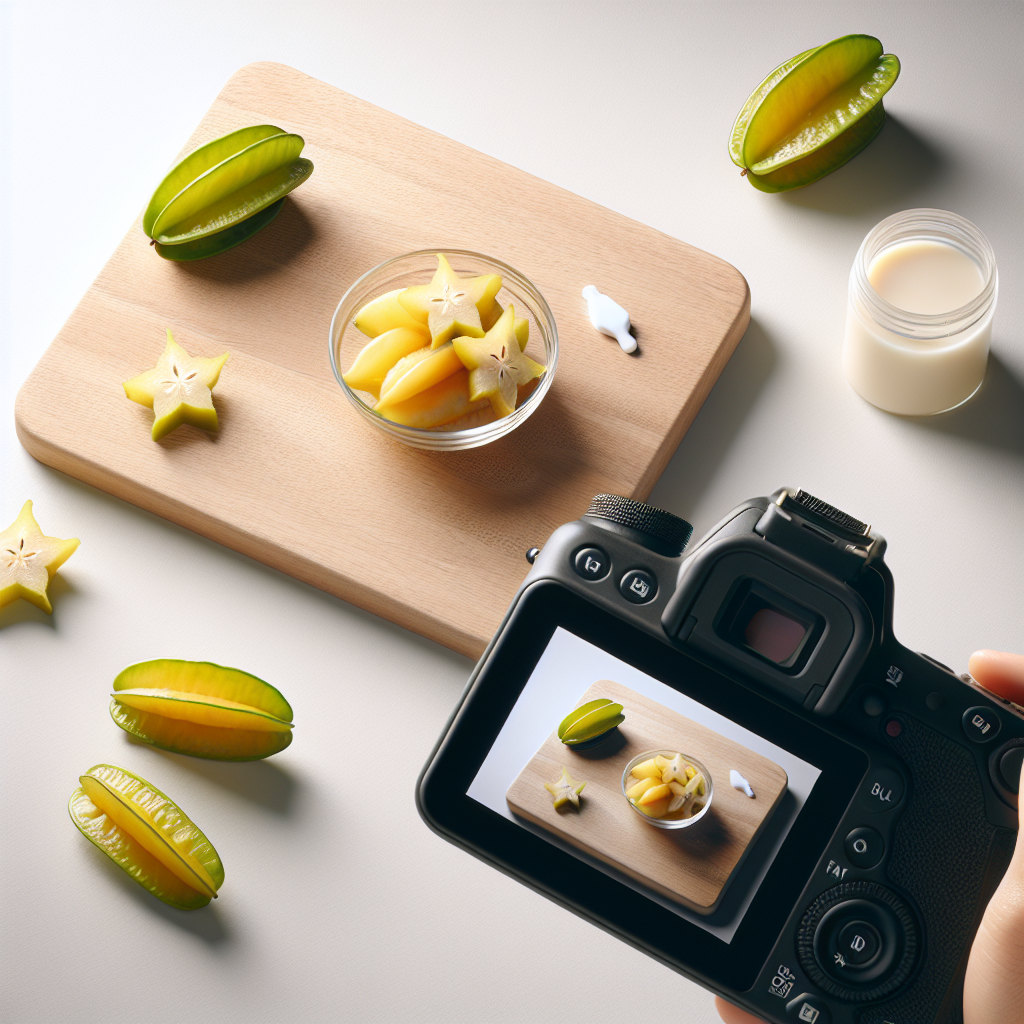
Baby-led weaning · age-specific guide
Starfruit for 6–8 months
Starfruit can be introduced as soon as your baby is ready to start solids, which is typically around 6 months of age. Choose starfruit that is fully ripe and very soft to ensure it is easy for your baby to chew and swallow. Always remove any tough skin and the fibrous edges along the ridges before serving.
How to serve at 6–8 months
Offer ripe, very soft starfruit cut into wide wedges or large stick-shaped pieces that your baby can hold in their fist with some sticking out to gnaw on. Trim away any tough skin from the ridges and remove the fibrous edges before serving. The large size allows your baby to practise their palmar grasp whilst safely exploring the soft, juicy fruit.
Nutrition highlights
Starfruit provides a good amount of vitamin C, which supports immune function and helps your baby's body absorb iron from other foods. It also contains fibre to support healthy digestion and a small amount of potassium. The fruit is quite low in natural sugars compared to many other fruits, making it a light and refreshing option for young eaters.
Lower-risk serving reminders
Starfruit has a low choking risk when prepared properly because ripe starfruit is soft and easy to mash with the gums. The fruit's natural moisture and tender flesh break down easily in the mouth, making it manageable for babies who are learning to chew.
Allergen introduction checklist
Starfruit is not a common allergen and allergic reactions are rare. As with any new food, introduce starfruit on its own and watch for signs of a reaction such as rash, hives, or digestive upset.
Common questions
Do I need to peel starfruit for my baby?
You do not need to peel ripe starfruit, but you should remove any tough skin along the ridges and discard the fibrous edges. The thin skin on the flatter surfaces is typically soft enough for babies to manage.
How do I know if starfruit is ripe enough for my baby?
Ripe starfruit should be yellow with slight brown edges along the ridges, and it should feel soft when gently squeezed. Avoid green or very firm starfruit, as it will be too hard and tart for your baby.
Can I serve starfruit raw to my baby?
Yes, ripe starfruit can be served raw as long as it is very soft. There is no need to cook it unless it is underripe or too firm.
General feeding checklist
- Seat baby upright and stable for all meals.
- Model slow chewing and allow baby to control pace.
- Stop and reset if baby is upset, tired, or over-stuffed.
Readiness signs to check
- Baby can sit upright with minimal support during meals.
- Hands and mouth coordinate for bringing food to the mouth.
- Tongue-thrust reflex is reduced, so food is not immediately pushed out.
- Interest in self-feeding and opening mouth for food cues is visible.
Pause and seek advice if
- Coughing is persistent or distress does not settle quickly during meals.
- You notice repeated vomiting, rash, swelling, wheeze, or breathing changes after a food.
- Baby struggles with swallowing progression over multiple meals despite texture adjustments.
- There is a known medical condition affecting feeding, growth, or airway safety.
Other ages: 9–11 months · 12–24 months