Baby-led weaning · age-specific guide
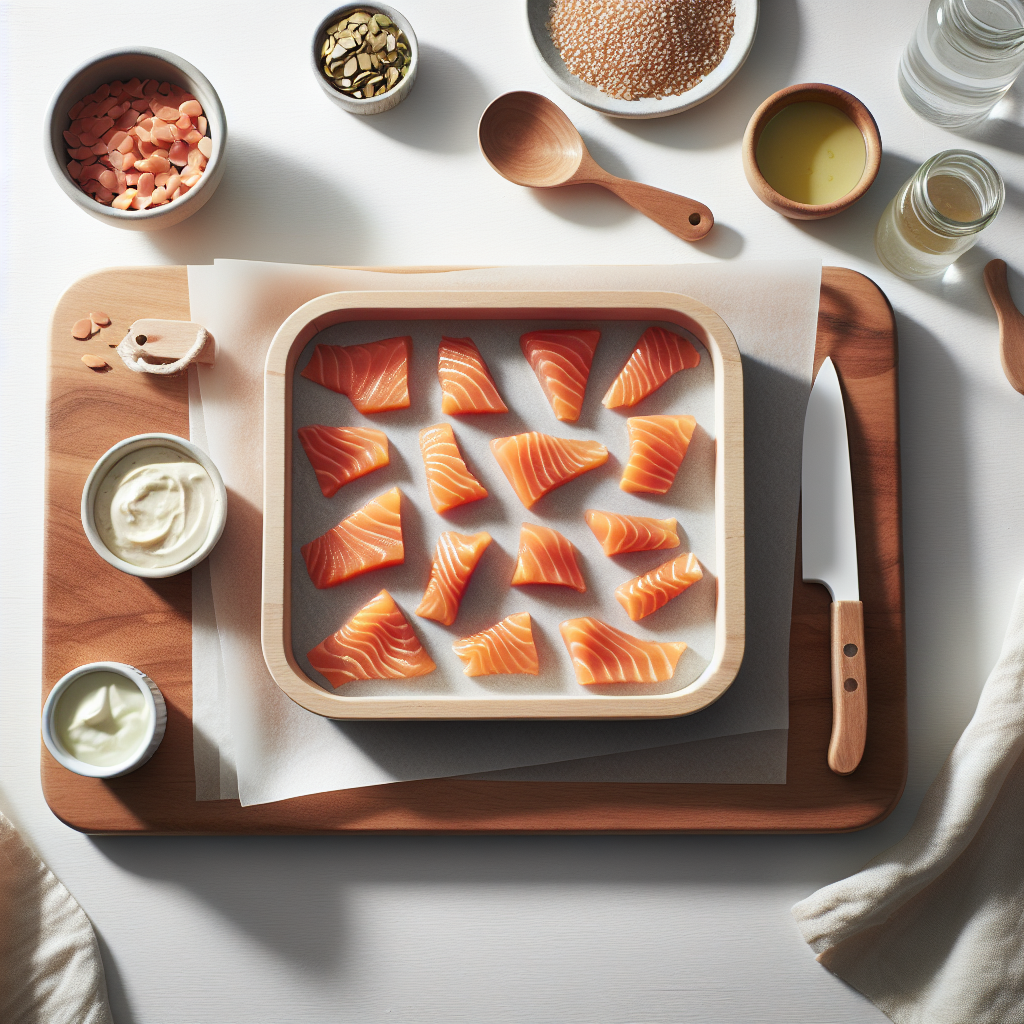
Smoked salmon trim for 6–8 months
Smoked salmon trim can be introduced from 6 months of age, as soon as your baby is ready to start solid foods. However, because smoked salmon is typically cured with salt, it should be offered only occasionally and in small amounts. Always ensure the fish is fully cooked until tender before serving to younger babies.
How to serve at 6–8 months
Cook the smoked salmon trim until fully tender, then shred it into fine flakes or offer as finger-length strips that are easy to grasp. Remove any tough skin or bones and ensure the fish is moist. You can serve it on its own or mixed into mashed avocado or yoghurt to help bind it together.
Nutrition highlights
Smoked salmon trim is rich in high-quality protein, which supports growth and development. It also provides omega-3 fatty acids, particularly DHA, which are important for brain and eye development. However, smoked salmon tends to be high in sodium, so it should be offered sparingly as part of a varied diet.
Lower-risk serving reminders
Smoked salmon trim has a low choking risk because it is naturally soft, breaks apart easily, and can be flaked or shredded into small, manageable pieces. Its moist texture helps it move safely through the mouth when prepared appropriately.
Allergen information
Fish is a common allergen, and smoked salmon trim should be introduced carefully as part of allergen exposure. Offer a small amount at first and watch for signs of a reaction, such as hives, vomiting, or difficulty breathing.
Fish
Common questions
Is smoked salmon safe for babies?
Smoked salmon can be offered from 6 months, but should be given only occasionally due to its high sodium content. Always ensure it is fully cooked for younger babies.
Does smoked salmon need to be cooked for babies?
For babies under 9 months, it is safest to cook smoked salmon until tender to reduce any potential risks. Older babies may have cold smoked salmon occasionally.
How much smoked salmon can I give my baby?
Offer smoked salmon in small amounts as an occasional food, not a daily staple, due to its sodium content. A portion the size of your baby's palm is a reasonable guide.
General feeding checklist
- Seat baby upright and stable for all meals.
- Model slow chewing and allow baby to control pace.
- Stop and reset if baby is upset, tired, or over-stuffed.
Readiness signs to check
- Baby can sit upright with minimal support during meals.
- Hands and mouth coordinate for bringing food to the mouth.
- Tongue-thrust reflex is reduced, so food is not immediately pushed out.
- Interest in self-feeding and opening mouth for food cues is visible.
Pause and seek advice if
- Coughing is persistent or distress does not settle quickly during meals.
- You notice repeated vomiting, rash, swelling, wheeze, or breathing changes after a food.
- Baby struggles with swallowing progression over multiple meals despite texture adjustments.
- There is a known medical condition affecting feeding, growth, or airway safety.
Other ages: 9–11 months · 12–24 months