Baby-led weaning · age-specific guide
Semolina porridge for 12–24 months
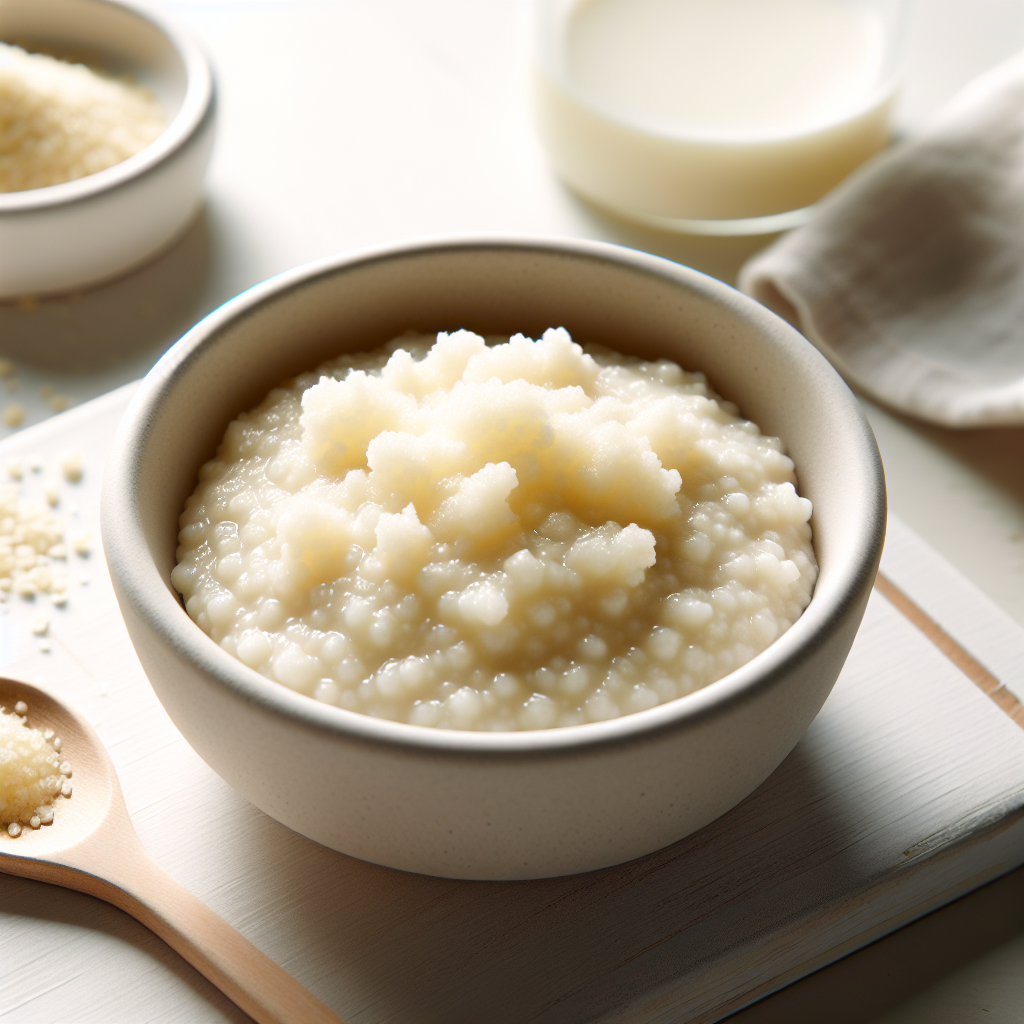
Semolina porridge may be introduced as soon as your baby is ready to start solids, which is generally around 6 months of age. As semolina is made from wheat, it contains gluten, so this food offers an opportunity to introduce this common allergen early and often. Ensure the porridge is cooked until very soft and adjust the consistency to suit your baby's developmental stage.
How to serve at 12–24 months
Serve semolina porridge at whatever consistency your toddler prefers, and encourage them to use a spoon independently. You can also try shaping chilled, thick porridge into fingers or small cakes and lightly toasting them in a dry pan for a portable snack. Continue to mix in fruit, yogurt, or a small amount of nut butter for added nutrition and flavour.
Nutrition highlights
Semolina porridge provides carbohydrates for energy and contains small amounts of B vitamins and iron, though it is not considered a rich source of either. It also offers some protein and fibre, which support digestion and growth. Mixing semolina with breast milk, formula, or full-fat yogurt can boost its nutritional value and provide healthy fats that support brain development.
Lower-risk serving reminders
Semolina porridge has a low choking risk because it is soft, smooth, and easy to swallow when properly prepared. The fine texture of cooked semolina breaks down readily in the mouth, making it a safe option for babies learning to eat.
Allergen information
Semolina is made from durum wheat and contains gluten, which is a common allergen. When introducing semolina porridge, offer a small amount at first and watch for signs of an allergic reaction, which may include hives, vomiting, or other symptoms.
Wheat / gluten
Common questions
Can I give my baby semolina porridge every day?
Yes, semolina porridge can be part of your baby's daily diet, but aim to offer a variety of grains such as oats, rice, and quinoa to provide a broader range of nutrients.
How thick should semolina porridge be for a 6-month-old?
For younger babies, aim for a thick, scoopable consistency that holds together on a spoon but is not too runny. You can thin it with breast milk, formula, or water if needed.
Does semolina porridge need to be sweetened for babies?
No, semolina porridge does not need added sugar or sweeteners. You can mix in mashed banana, stewed fruit, or a pinch of cinnamon for natural flavour if desired.
General feeding checklist
- Seat baby upright and stable for all meals.
- Model slow chewing and allow baby to control pace.
- Stop and reset if baby is upset, tired, or over-stuffed.
Readiness signs to check
- Baby can sit upright with minimal support during meals.
- Hands and mouth coordinate for bringing food to the mouth.
- Tongue-thrust reflex is reduced, so food is not immediately pushed out.
- Interest in self-feeding and opening mouth for food cues is visible.
Pause and seek advice if
- Coughing is persistent or distress does not settle quickly during meals.
- You notice repeated vomiting, rash, swelling, wheeze, or breathing changes after a food.
- Baby struggles with swallowing progression over multiple meals despite texture adjustments.
- There is a known medical condition affecting feeding, growth, or airway safety.
Other ages: 6–8 months · 9–11 months