Baby-led weaning · age-specific guide
Sauerkraut rinsed for 12–24 months
Sauerkraut rinsed can be introduced from around 6 months of age, as soon as your baby is ready to start solid foods. Rinsing reduces the sodium content significantly, making it more suitable for babies, though it should still be offered in small amounts as an occasional food rather than a daily staple. Always ensure the sauerkraut is soft and well-rinsed before serving.
How to serve at 12–24 months
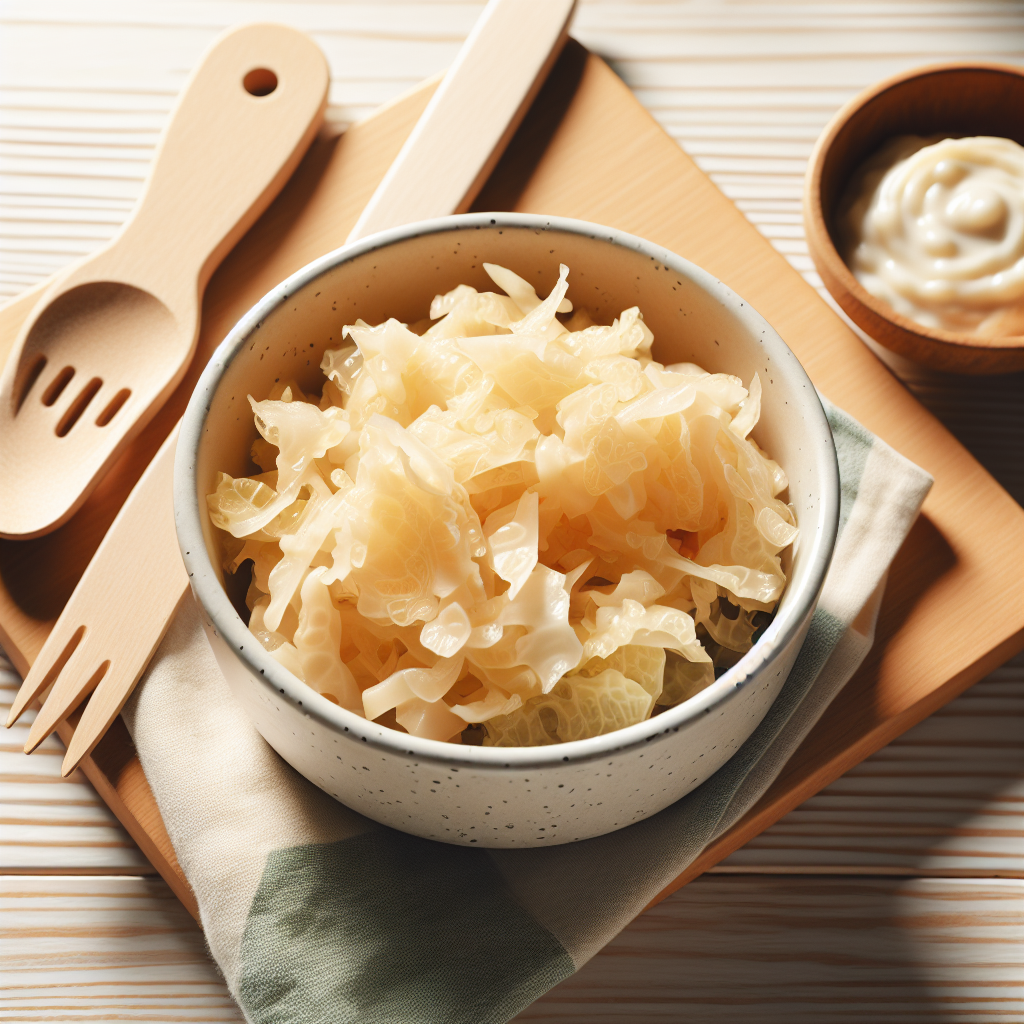
Rinse the sauerkraut and chop it to a size your toddler can manage comfortably, typically pea-sized or slightly larger depending on their chewing ability. At this age, you can offer it as a condiment alongside family meals such as mashed beans, in a wrap, or stirred into grains like rice or quinoa. Continue to offer it in moderation as part of a varied diet.
Nutrition highlights
Rinsed sauerkraut provides beneficial probiotics that support gut health and digestion, which can be particularly helpful as babies are developing their microbiome. It also contains vitamin C, vitamin K, and small amounts of fibre. While rinsing reduces sodium levels, sauerkraut should still be offered in moderation due to its naturally tangy, salty flavour and potential residual salt content.
Lower-risk serving reminders
Rinsed sauerkraut poses a low choking risk because the fermented cabbage strands are soft, slippery, and easily compressed in the mouth. The texture allows babies to gum and move the food safely, even before teeth emerge.
Allergen introduction checklist
Sauerkraut is not a common allergen and typically contains only cabbage, salt, and naturally occurring bacteria from fermentation. Check ingredient labels to ensure no allergens such as mustard seeds or other additions have been included in commercial varieties.
Common questions
Why should I rinse sauerkraut before giving it to my baby?
Rinsing sauerkraut removes much of the excess sodium, making it more appropriate for babies whose kidneys are still developing. It also softens the texture slightly and reduces the intensity of the sour, salty flavour.
Can sauerkraut cause tummy upset in babies?
Some babies may experience gas or changes in bowel movements when first trying fermented foods like sauerkraut due to the probiotics. Start with a small amount and observe how your baby tolerates it before offering more.
How much sauerkraut can I give my baby?
Offer sauerkraut in small amounts, such as a teaspoon or two alongside other foods, rather than as a main component of the meal. It's best treated as a flavourful addition rather than a primary food due to its sodium content, even when rinsed.
General feeding checklist
- Seat baby upright and stable for all meals.
- Model slow chewing and allow baby to control pace.
- Stop and reset if baby is upset, tired, or over-stuffed.
Readiness signs to check
- Baby can sit upright with minimal support during meals.
- Hands and mouth coordinate for bringing food to the mouth.
- Tongue-thrust reflex is reduced, so food is not immediately pushed out.
- Interest in self-feeding and opening mouth for food cues is visible.
Pause and seek advice if
- Coughing is persistent or distress does not settle quickly during meals.
- You notice repeated vomiting, rash, swelling, wheeze, or breathing changes after a food.
- Baby struggles with swallowing progression over multiple meals despite texture adjustments.
- There is a known medical condition affecting feeding, growth, or airway safety.
Other ages: 6–8 months · 9–11 months