Baby-led weaning · age-specific guide
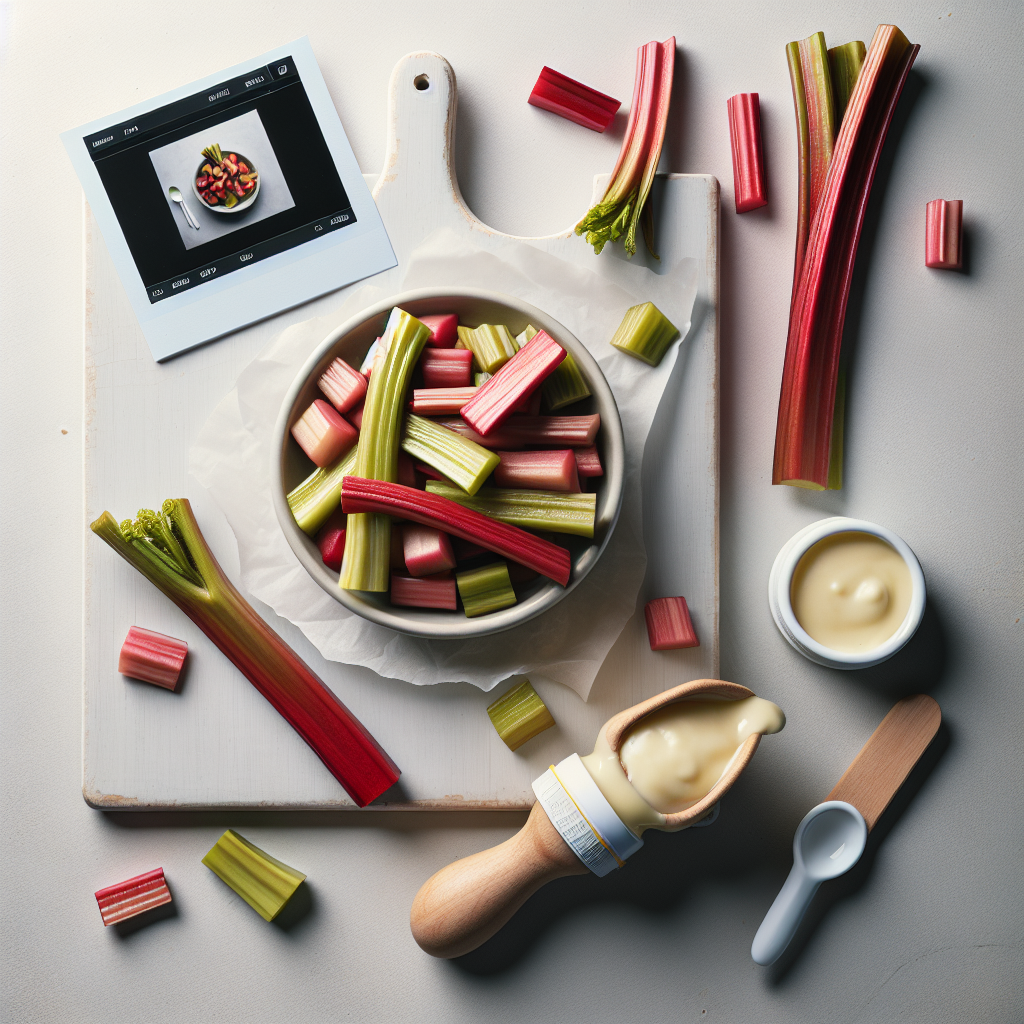
Rhubarb cooked for 6–8 months
Cooked rhubarb may be introduced as soon as your baby is ready to start solid foods, which is generally around 6 months of age. Always cook rhubarb thoroughly until very soft before offering it to babies, as raw rhubarb is too tart and fibrous for little ones. The leaves of the rhubarb plant are toxic and must never be served, though they are typically removed before purchase.
How to serve at 6–8 months
Cook rhubarb until completely soft and falling apart, ideally stewed with a naturally sweet fruit like apple or pear to reduce tartness. Serve thick strips or wedges about the length and width of two adult fingers placed together, ensuring the texture is very soft and mashable. You can also serve it as a compote spread thinly on toast strips or stirred into porridge for variety.
Nutrition highlights
Cooked rhubarb provides vitamin K, which supports healthy blood clotting and bone development in growing babies. It also contains calcium and fibre, which aid bone health and support healthy digestion. Rhubarb is naturally quite tart, so consider pairing it with naturally sweet fruits rather than adding sugar to keep it baby-friendly.
Lower-risk serving reminders
Cooked rhubarb has a low choking risk because it breaks down into a soft, stringy texture when properly prepared. The fibres can be easily mashed between the gums, making it manageable for babies learning to chew and swallow solid foods.
Allergen introduction checklist
Rhubarb is not a common allergen and reactions to it are rare. As with all new foods, introduce rhubarb on its own for the first few times and watch for any signs of an allergic reaction, such as hives, rash, or digestive upset.
Common questions
Do I need to add sugar to cooked rhubarb for my baby?
No, it's best to avoid adding sugar to rhubarb for babies. Instead, cook it with naturally sweet fruits like apple, pear, or banana to balance the tartness.
Can my baby eat the stringy bits of cooked rhubarb?
Yes, the soft fibrous strands of well-cooked rhubarb are safe for babies to eat. If the strings seem tough or chewy, continue cooking until the rhubarb breaks down completely.
How do I know when rhubarb is cooked enough for baby-led weaning?
Rhubarb is ready when it's completely soft and easily breaks apart with gentle pressure from a fork. It should have no firm or crunchy bits remaining.
General feeding checklist
- Seat baby upright and stable for all meals.
- Model slow chewing and allow baby to control pace.
- Stop and reset if baby is upset, tired, or over-stuffed.
Readiness signs to check
- Baby can sit upright with minimal support during meals.
- Hands and mouth coordinate for bringing food to the mouth.
- Tongue-thrust reflex is reduced, so food is not immediately pushed out.
- Interest in self-feeding and opening mouth for food cues is visible.
Pause and seek advice if
- Coughing is persistent or distress does not settle quickly during meals.
- You notice repeated vomiting, rash, swelling, wheeze, or breathing changes after a food.
- Baby struggles with swallowing progression over multiple meals despite texture adjustments.
- There is a known medical condition affecting feeding, growth, or airway safety.
Other ages: 9–11 months · 12–24 months