Baby-led weaning · age-specific guide
Pomelo for 9–11 months
Pomelo may be introduced as soon as your baby is ready to start solid foods, which is typically around 6 months of age. This large citrus fruit offers a mild, sweet flavour and soft, juicy segments that can be adapted to your baby's developing eating skills. As with all new foods, offer pomelo on its own at first to monitor for any signs of sensitivity.
How to serve at 9–11 months
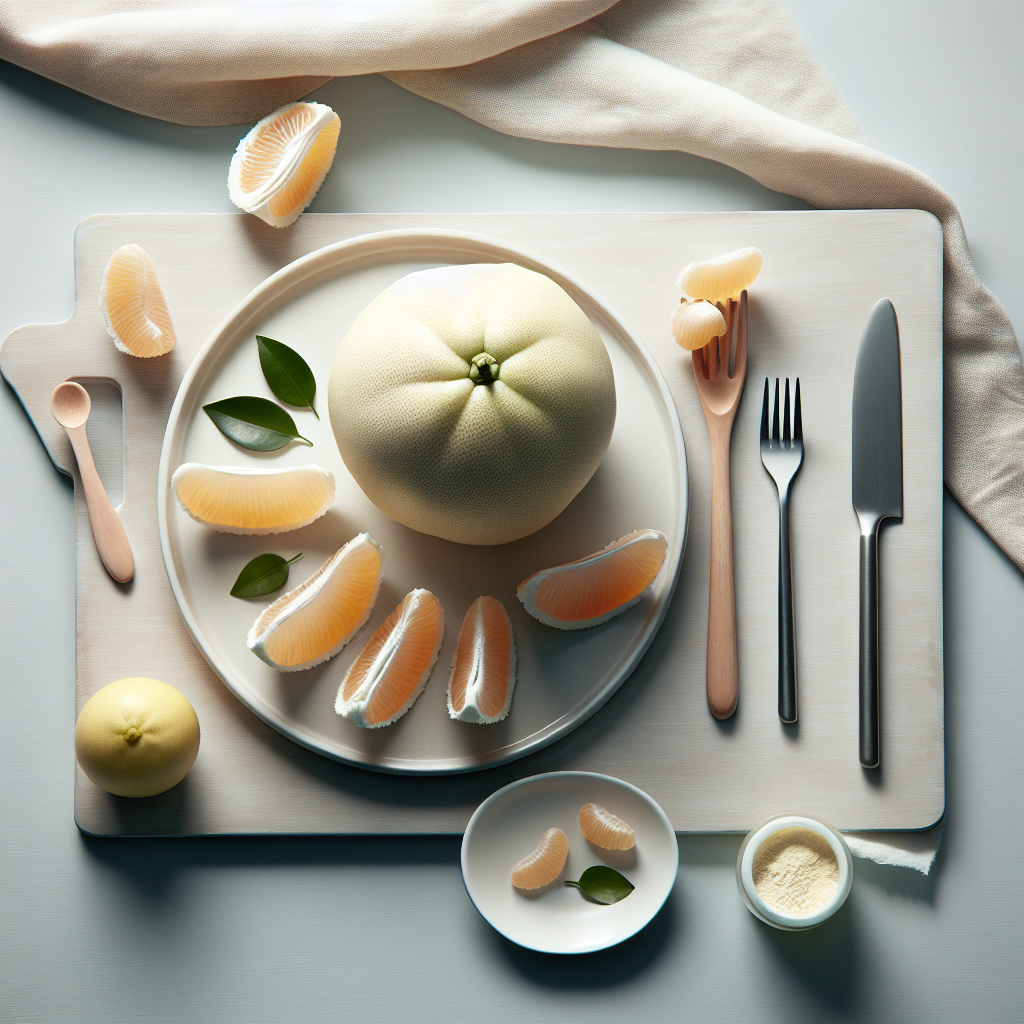
Continue to peel away the membrane from pomelo segments and offer them as soft strips or smaller pieces that your baby can pick up with their developing pincer grasp. You can cut larger segments in half lengthwise to create manageable pieces. At this age, babies often enjoy feeding themselves bite-sized pieces, so adjust the size based on your baby's ability to pick up and manage smaller foods.
Nutrition highlights
Pomelo is an excellent source of vitamin C, which supports immune function and helps your baby absorb iron from plant-based foods. It also provides fibre to support healthy digestion and contains potassium, which is important for heart and muscle function. The high water content of pomelo helps keep babies hydrated whilst they explore new tastes and textures.
Lower-risk serving reminders
Pomelo presents a low choking risk when prepared appropriately because its segments are naturally soft and juicy, breaking down easily in the mouth. The membrane surrounding each segment should be removed for younger babies, as it can be tough and more difficult to manage.
Allergen introduction checklist
Pomelo is not a common allergen and is generally well tolerated by most babies. As a citrus fruit, it may occasionally cause a harmless rash around the mouth due to its acidity, but this is not an allergic reaction.
Common questions
Do I need to remove the membrane from pomelo segments?
Yes, remove the thick membrane surrounding each segment for babies under 12 months, as it can be tough and difficult to chew. Older toddlers may manage the membrane more easily.
Can pomelo cause nappy rash in babies?
Citrus fruits like pomelo can occasionally contribute to nappy rash due to their acidity, but this varies between babies. If you notice irritation, you may wish to offer pomelo less frequently or wait a few weeks before trying again.
How do I know if a pomelo is ripe enough for my baby?
A ripe pomelo should feel heavy for its size and give slightly when pressed. The segments inside should be juicy and easily break apart when squeezed gently between your fingers.
General feeding checklist
- Seat baby upright and stable for all meals.
- Model slow chewing and allow baby to control pace.
- Stop and reset if baby is upset, tired, or over-stuffed.
Readiness signs to check
- Baby can sit upright with minimal support during meals.
- Hands and mouth coordinate for bringing food to the mouth.
- Tongue-thrust reflex is reduced, so food is not immediately pushed out.
- Interest in self-feeding and opening mouth for food cues is visible.
Pause and seek advice if
- Coughing is persistent or distress does not settle quickly during meals.
- You notice repeated vomiting, rash, swelling, wheeze, or breathing changes after a food.
- Baby struggles with swallowing progression over multiple meals despite texture adjustments.
- There is a known medical condition affecting feeding, growth, or airway safety.
Other ages: 6–8 months · 12–24 months