Baby-led weaning · age-specific guide
Pollock fillet for 12–24 months
Pollock fillet can be introduced as soon as your baby is ready to start solids, which is typically around 6 months of age. As with all fish, ensure it is thoroughly cooked until it flakes easily and reaches an internal temperature of 63°C (145°F). Always check carefully for bones before serving, even if you have purchased a boneless fillet.
How to serve at 12–24 months
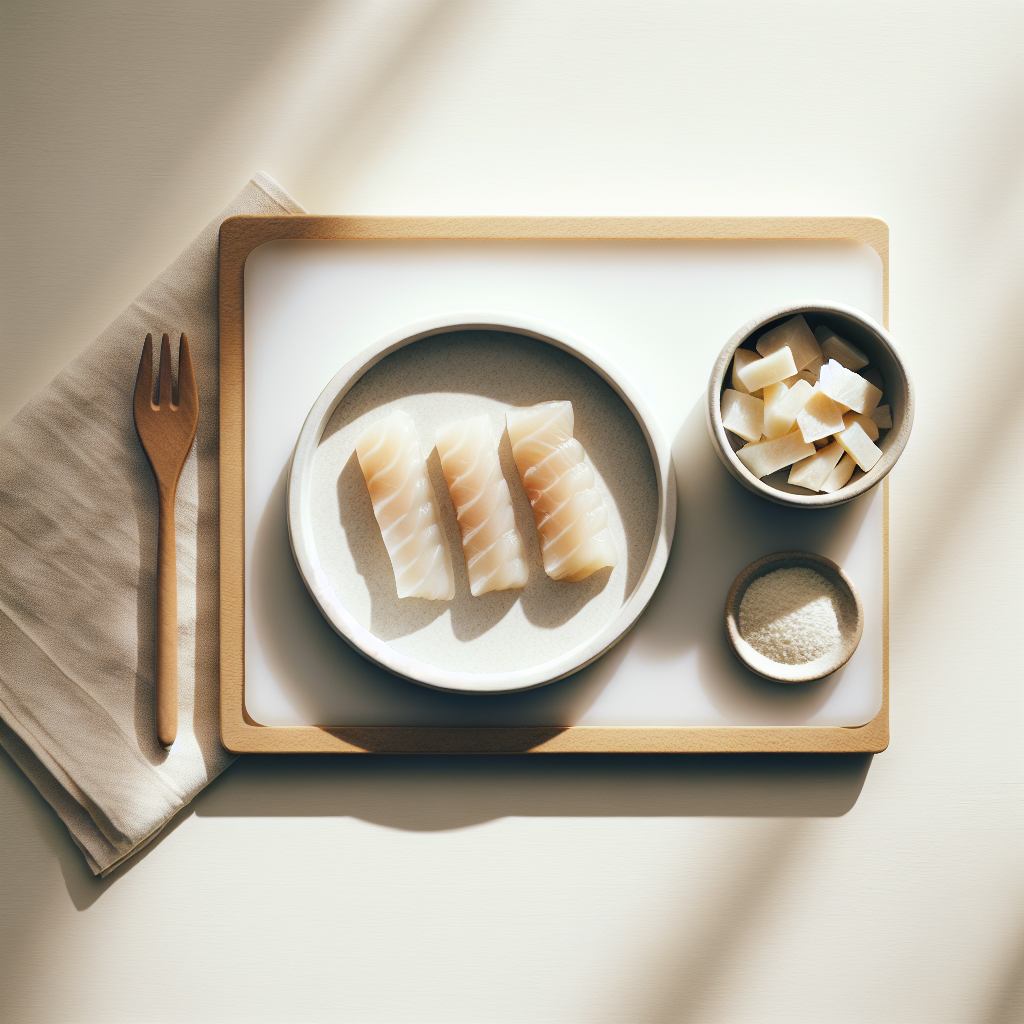
Serve pollock in small, moist pieces or short strips that your toddler can manage with a fork or their fingers. Keep portions tender by avoiding overcooking, and consider serving alongside sauces, yoghurt, or mashed vegetables to maintain moisture. Continue checking for bones and remove any dry or overcooked edges that may be harder to chew.
Nutrition highlights
Pollock is an excellent source of high-quality protein, which supports growth and development in babies. It also provides omega-3 fatty acids, which are important for brain and eye health, as well as B vitamins that help with energy metabolism. Additionally, pollock offers selenium, a mineral that supports immune function.
Lower-risk serving reminders
Pollock has a low choking risk because its flesh is naturally soft and flaky when cooked, breaking apart easily in the mouth. The tender texture allows babies to mash it with their gums, even before they have developed strong chewing skills.
Allergen introduction checklist
Pollock is a type of finned fish and is not considered a common allergen in the UK. However, fish is recognised as one of the top allergens globally, so it is important to introduce pollock on its own initially and watch for any signs of a reaction.
Common questions
Can I use frozen pollock for baby-led weaning?
Yes, frozen pollock is perfectly suitable for babies and is often fresher than some fresh fish. Simply defrost it thoroughly in the fridge before cooking and check carefully for any small bones.
How do I keep pollock moist for my baby?
Cook pollock gently by steaming, poaching, or baking with a small amount of liquid or fat to prevent it from drying out. Avoid overcooking, as this can make the fish tough and harder for babies to manage.
Do I need to remove the skin from pollock before serving?
Yes, it is best to remove the skin from pollock for babies, especially in the early months, as it can be tough and difficult to chew. Once your baby is confidently managing textures around 12 months, you may leave it on if it is soft and well-cooked.
General feeding checklist
- Seat baby upright and stable for all meals.
- Model slow chewing and allow baby to control pace.
- Stop and reset if baby is upset, tired, or over-stuffed.
Readiness signs to check
- Baby can sit upright with minimal support during meals.
- Hands and mouth coordinate for bringing food to the mouth.
- Tongue-thrust reflex is reduced, so food is not immediately pushed out.
- Interest in self-feeding and opening mouth for food cues is visible.
Pause and seek advice if
- Coughing is persistent or distress does not settle quickly during meals.
- You notice repeated vomiting, rash, swelling, wheeze, or breathing changes after a food.
- Baby struggles with swallowing progression over multiple meals despite texture adjustments.
- There is a known medical condition affecting feeding, growth, or airway safety.
Other ages: 6–8 months · 9–11 months