Baby-led weaning · age-specific guide
Pickle mild rinsed for 6–8 months
Rinsed mild pickles can be introduced from around 12 months of age, once your baby is accustomed to a variety of flavours and textures. Even mild pickles contain significant amounts of sodium, so it's best to wait until after the first year when babies' kidneys are more mature. Always rinse pickles thoroughly under cold running water to reduce the salt content before offering.
How to serve at 6–8 months
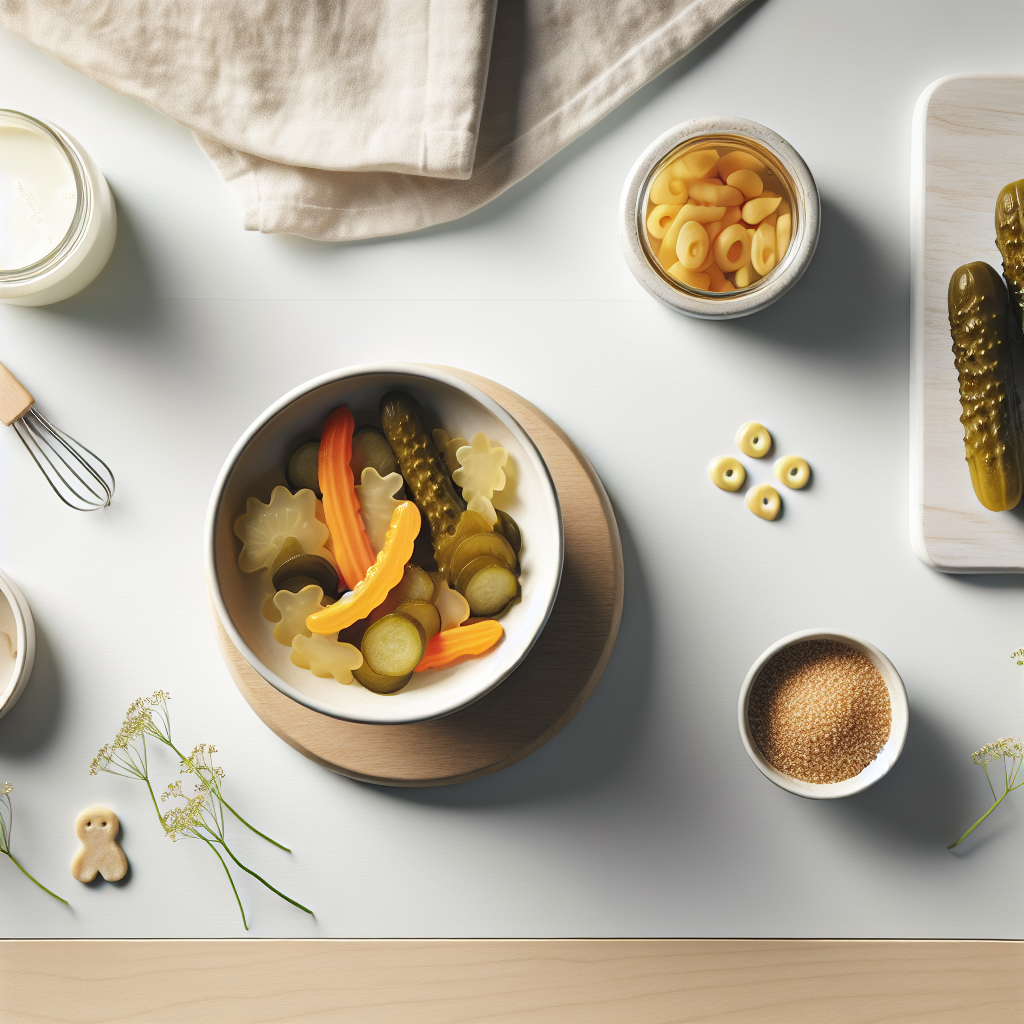
It's best to wait until after 12 months to introduce pickles due to their sodium content. If you choose to offer a small taste at this age, rinse very thoroughly and offer only a thin, soft strip about the length of your finger. The slippery texture means baby can suck and gum it safely, but the salt load is not ideal for this young age.
Nutrition highlights
Rinsed mild pickles offer small amounts of vitamin K and some beneficial probiotics if they are naturally fermented. However, they are very low in calories, protein, and iron, and should be considered a flavourful addition rather than a nutritious staple. Even after rinsing, pickles still contain sodium, so offer them only occasionally and in small amounts.
Lower-risk serving reminders
Rinsed mild pickles have a low choking risk because they tend to be soft and slippery, making them difficult for babies to bite off hard chunks. Their moist texture also means they're unlikely to present the same hazards as firm, round, or hard foods.
Allergen introduction checklist
Pickles are not a common allergen and the pickling process typically uses vinegar, salt, and spices rather than allergenic ingredients. However, always check the ingredient list for mustard seeds, celery, or other potential allergens that may be included in some pickle recipes.
Common questions
Can I give my baby pickles before 12 months?
It's best to wait until 12 months because even mild pickles contain high levels of sodium, which can be hard on young babies' developing kidneys. Rinsing helps, but doesn't remove all the salt.
How do I rinse pickles for my baby?
Hold the pickle under cold running water for 15 to 30 seconds, rubbing gently to wash away as much brine as possible. Pat dry before serving.
Are pickles healthy for babies?
Pickles are low in nutrients and high in sodium, so they're best offered as an occasional flavourful addition rather than a regular part of your baby's diet.
General feeding checklist
- Seat baby upright and stable for all meals.
- Model slow chewing and allow baby to control pace.
- Stop and reset if baby is upset, tired, or over-stuffed.
Readiness signs to check
- Baby can sit upright with minimal support during meals.
- Hands and mouth coordinate for bringing food to the mouth.
- Tongue-thrust reflex is reduced, so food is not immediately pushed out.
- Interest in self-feeding and opening mouth for food cues is visible.
Pause and seek advice if
- Coughing is persistent or distress does not settle quickly during meals.
- You notice repeated vomiting, rash, swelling, wheeze, or breathing changes after a food.
- Baby struggles with swallowing progression over multiple meals despite texture adjustments.
- There is a known medical condition affecting feeding, growth, or airway safety.
Other ages: 9–11 months · 12–24 months