Baby-led weaning · age-specific guide
Pear for 12–24 months
Pear can be introduced as soon as your baby is ready to start solid foods, which is typically around 6 months of age. Like all fruits, pear should be prepared appropriately for your baby's age and stage to minimise choking risk. Choose ripe, soft pears and adjust the texture as your baby's eating skills develop.
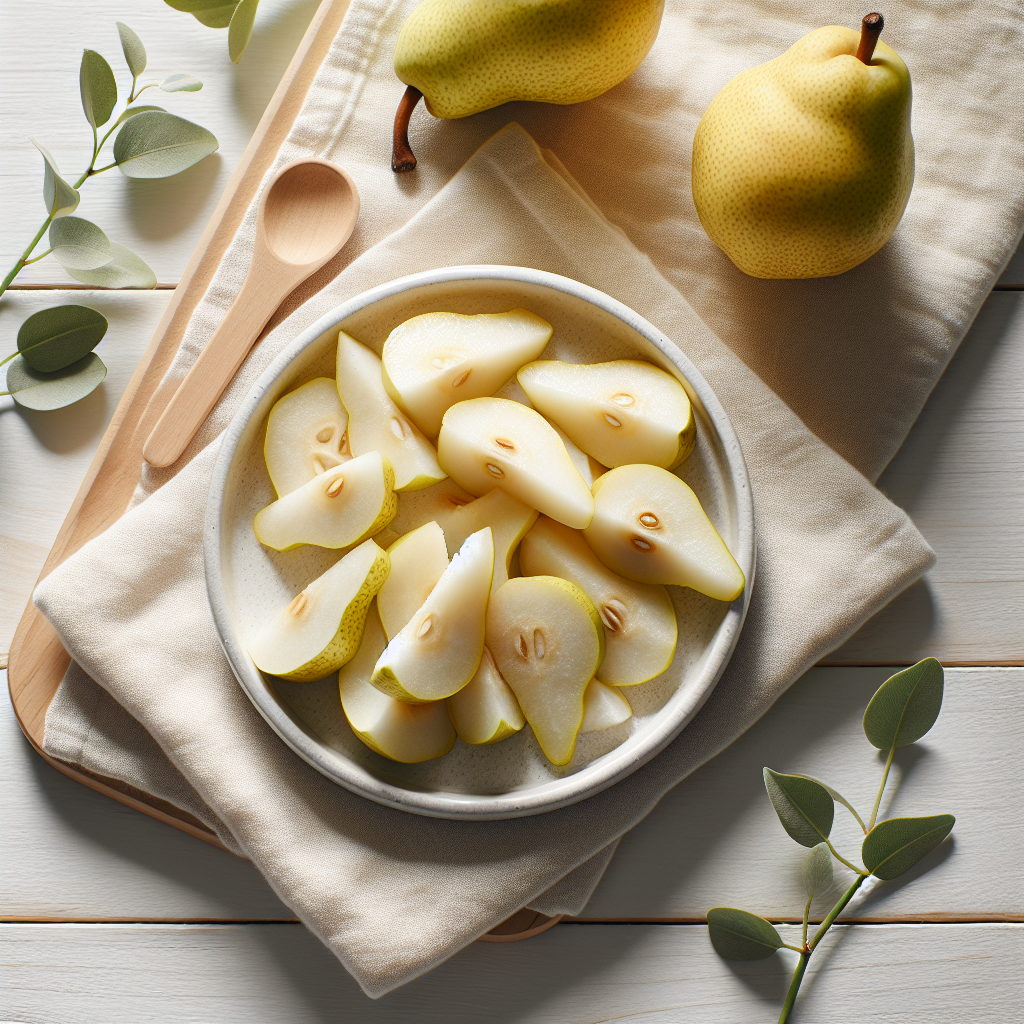
How to serve at 12–24 months
Serve ripe, soft pear cut into bite-sized pieces, ensuring they're small enough to be safe but large enough for your toddler to pick up easily. Continue to halve or quarter round pieces lengthwise for safety. At this age, most toddlers can manage pear with the skin on, provided it's ripe and soft.
Nutrition highlights
Pears provide fibre, which supports healthy digestion and can help prevent constipation in babies. They contain vitamin C, which aids iron absorption and supports immune function, as well as small amounts of potassium and copper. The natural sweetness of pears makes them an appealing early food that can help babies explore different flavours and textures.
Medium-risk prep checks
Pear presents a medium choking risk because firm or underripe varieties can be difficult for babies to chew and may break into hard chunks. Slippery pear pieces can also slide to the back of the mouth before being adequately chewed, particularly as babies transition to bite-sized pieces.
Allergen introduction checklist
Pear is not a common allergen and is generally well tolerated by babies. Some babies with birch pollen allergy may develop oral allergy syndrome to pear, though this is uncommon in infants.
Common questions
Do I need to cook pear for baby-led weaning
If the pear is ripe and very soft, you can offer it raw. For firmer pears, lightly steaming or poaching softens the flesh and makes it safer for young babies to manage.
Should I remove the skin from pear
For younger babies, remove the skin if it's tough or leathery, as it can be difficult to chew. Once your baby is more experienced with textures, soft pear skin can usually be left on.
Can pear cause constipation in babies
No, pear is actually helpful for digestion due to its fibre content and can support regular bowel movements. It's often recommended as a gentle first fruit for babies.
General feeding checklist
- Seat baby upright and stable for all meals.
- Model slow chewing and allow baby to control pace.
- Stop and reset if baby is upset, tired, or over-stuffed.
Readiness signs to check
- Baby can sit upright with minimal support during meals.
- Hands and mouth coordinate for bringing food to the mouth.
- Tongue-thrust reflex is reduced, so food is not immediately pushed out.
- Interest in self-feeding and opening mouth for food cues is visible.
Pause and seek advice if
- Coughing is persistent or distress does not settle quickly during meals.
- You notice repeated vomiting, rash, swelling, wheeze, or breathing changes after a food.
- Baby struggles with swallowing progression over multiple meals despite texture adjustments.
- There is a known medical condition affecting feeding, growth, or airway safety.
Other ages: 6–8 months · 9–11 months