Baby-led weaning · age-specific guide
Pear compote for 12–24 months
Pear compote can be introduced as soon as your baby is ready to start solids, which is typically around 6 months of age. Because it is smooth and soft, it can be one of the easier foods to manage for babies who are just beginning baby-led weaning. Always ensure the compote is unsweetened and does not contain added sugar, honey, or other sweeteners.
How to serve at 12–24 months
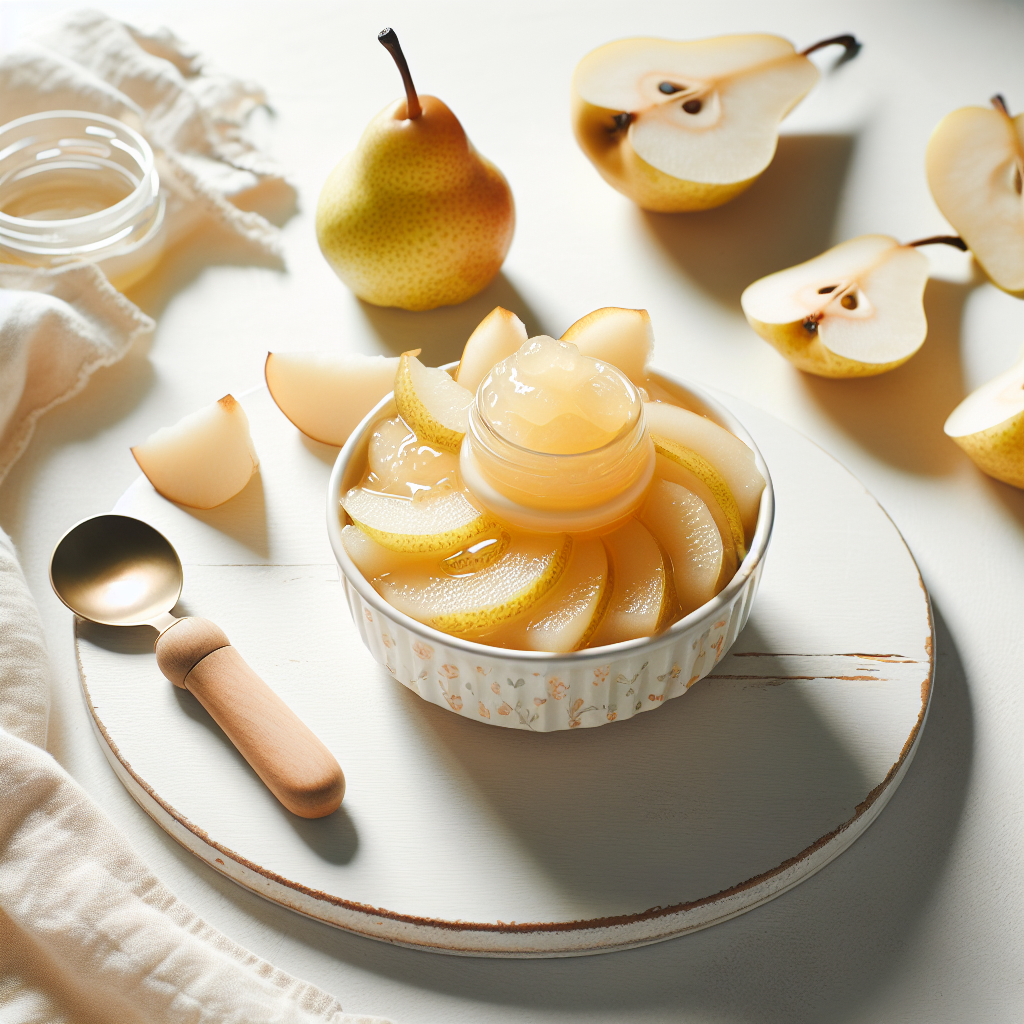
At this age, pear compote can be served in a small bowl for your toddler to eat with a spoon, helping to develop self-feeding skills. It works well as a topping for pancakes, porridge, or toast, or stirred into plain yoghurt or cottage cheese. Continue to choose unsweetened varieties and serve it alongside whole fruits to encourage chewing and texture variety.
Nutrition highlights
Pear compote provides dietary fibre, which supports healthy digestion and can help prevent constipation in babies. It also contains vitamin C, which aids iron absorption and supports the immune system. While it offers these benefits, compote is naturally higher in sugars than whole fruit due to the cooking and concentration process, so it is best offered in moderation alongside whole fruits and vegetables.
Lower-risk serving reminders
Pear compote has a low choking risk because it is smooth, soft, and easy to swallow without requiring much chewing. Its pureed or mashed texture breaks down easily in the mouth, making it a safe choice for babies at all stages of solid food introduction.
Allergen introduction checklist
Pears are not a common allergen and allergic reactions to pear compote are rare. As with any new food, introduce it on its own and watch for any signs of an adverse reaction, though they are uncommon with pears.
Common questions
Can I give my baby pear compote from a pouch
Yes, you can offer pear compote from a pouch, but it is better to serve it on a preloaded spoon or mixed into other foods so your baby practises self-feeding skills rather than sucking from the pouch.
Should I make pear compote at home or buy it
Homemade pear compote allows you to control the ingredients and avoid added sugars, but unsweetened shop-bought versions with no added sugar or salt are convenient and safe options.
Can I mix pear compote with other foods
Yes, pear compote works well mixed into porridge, yoghurt, or mashed vegetables to add natural sweetness and moisture, making meals easier to swallow for younger babies.
General feeding checklist
- Seat baby upright and stable for all meals.
- Model slow chewing and allow baby to control pace.
- Stop and reset if baby is upset, tired, or over-stuffed.
Readiness signs to check
- Baby can sit upright with minimal support during meals.
- Hands and mouth coordinate for bringing food to the mouth.
- Tongue-thrust reflex is reduced, so food is not immediately pushed out.
- Interest in self-feeding and opening mouth for food cues is visible.
Pause and seek advice if
- Coughing is persistent or distress does not settle quickly during meals.
- You notice repeated vomiting, rash, swelling, wheeze, or breathing changes after a food.
- Baby struggles with swallowing progression over multiple meals despite texture adjustments.
- There is a known medical condition affecting feeding, growth, or airway safety.
Other ages: 6–8 months · 9–11 months