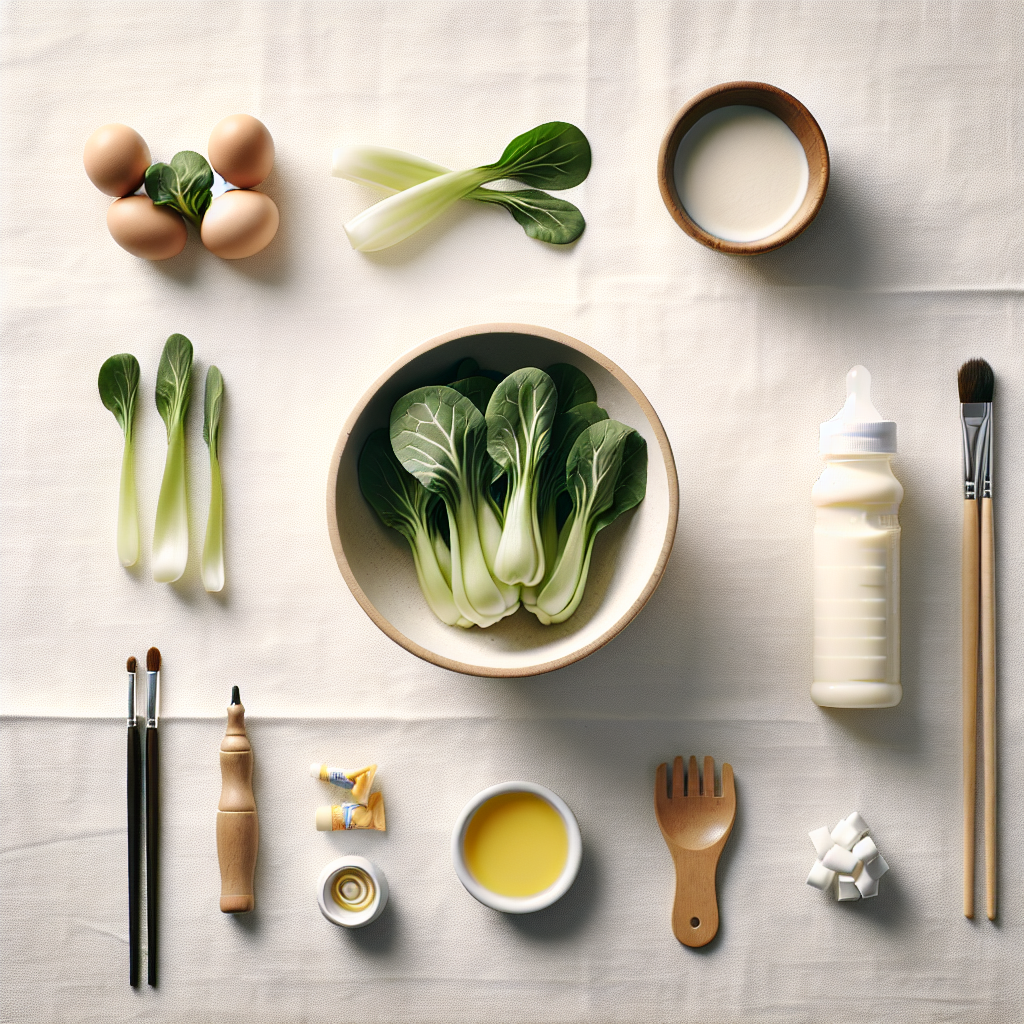
Baby-led weaning · age-specific guide
Pak choi for 6–8 months
Pak choi may be introduced as soon as your baby is ready to start solid foods, which is generally around 6 months of age. When cooked until very soft, pak choi is easy for babies to gum and swallow safely. As with all new foods, offer pak choi on its own at first to monitor for any sensitivity.
How to serve at 6–8 months
Steam or roast pak choi until the stems are very soft and can be easily squashed between your fingers. Serve whole baby pak choi (with the base intact so leaves stay together) or cut larger heads into finger-length wedges that include both stem and leaves. The thick white stem acts as a natural handle whilst baby gums the soft green leaves.
Nutrition highlights
Pak choi is rich in vitamins A, C, and K, which support vision, immune function, and healthy blood clotting. It also provides folate and calcium, important for cell growth and bone development. This leafy green vegetable offers valuable antioxidants and is naturally low in calories whilst being high in water content, making it a hydrating choice for babies.
Lower-risk serving reminders
When cooked until very soft, pak choi presents a low choking risk because the leaves and stems become tender and easy to mash with the gums. The fibrous texture breaks down well during cooking, making it manageable for babies who are still developing their chewing skills.
Allergen introduction checklist
Pak choi is not a common allergen and is generally well tolerated by babies. As with introducing any new food, start with a small portion and watch for any signs of sensitivity such as unusual fussiness, rash, or changes in stool.
Common questions
Do I need to remove the stems from pak choi for my baby?
No, the stems are perfectly safe when cooked until very soft. The stems actually make excellent handles for babies to grip whilst they chew on the tender leaves.
Should I wash pak choi thoroughly before cooking?
Yes, rinse pak choi well under running water, separating the leaves to remove any dirt or grit that may be trapped between the stalks. Pat dry before cooking.
Can I serve pak choi raw to my baby?
No, raw pak choi is too firm and fibrous for babies. Always cook pak choi until very soft before offering it to ensure it's safe and easy to gum and swallow.
General feeding checklist
- Seat baby upright and stable for all meals.
- Model slow chewing and allow baby to control pace.
- Stop and reset if baby is upset, tired, or over-stuffed.
Readiness signs to check
- Baby can sit upright with minimal support during meals.
- Hands and mouth coordinate for bringing food to the mouth.
- Tongue-thrust reflex is reduced, so food is not immediately pushed out.
- Interest in self-feeding and opening mouth for food cues is visible.
Pause and seek advice if
- Coughing is persistent or distress does not settle quickly during meals.
- You notice repeated vomiting, rash, swelling, wheeze, or breathing changes after a food.
- Baby struggles with swallowing progression over multiple meals despite texture adjustments.
- There is a known medical condition affecting feeding, growth, or airway safety.
Other ages: 9–11 months · 12–24 months