Baby-led weaning · age-specific guide
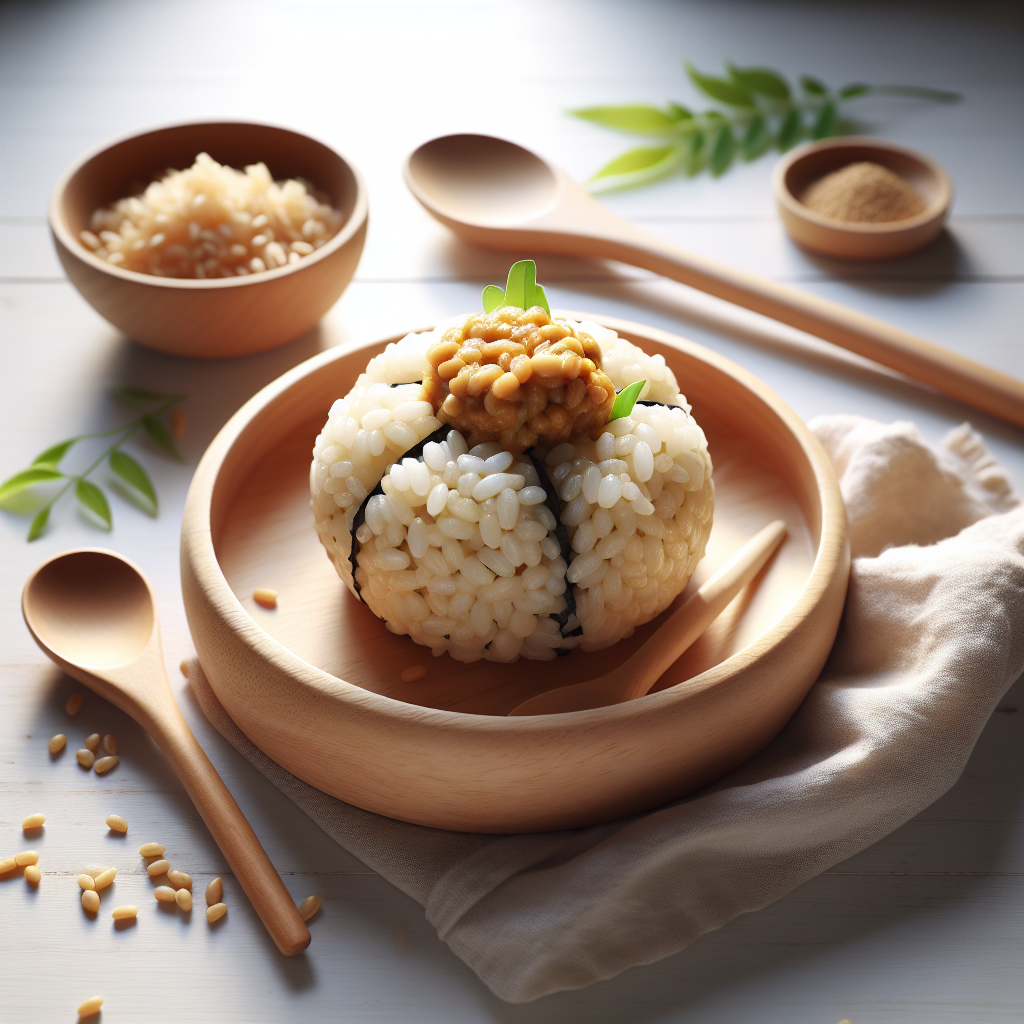
Natto rice ball for 9–11 months
Natto rice balls can be introduced as soon as your baby is ready to start solids, which is typically around 6 months of age. As natto contains soy, a common allergen, introduce it early and often in age-appropriate portions as part of a varied diet. Ensure the rice is soft and sticky enough to hold together, and serve the rice ball in a size and shape your baby can safely manage.
How to serve at 9–11 months
Continue offering natto rice balls in a log shape, or form them into smaller rounds about the size of a large grape that your baby can pick up with their developing pincer grasp. Ensure the rice remains soft and sticky, as babies at this age are still developing their chewing skills. You can also serve the natto rice mixture in a small mound on a plate for your baby to scoop with their fingers.
Nutrition highlights
Natto is an excellent source of plant-based protein and iron, both essential for your baby's growth and development. It also provides vitamin K2, which supports bone health, and probiotics that promote a healthy gut microbiome. The fermented soybeans in natto are easier to digest than many other soy products, making it a nutrient-dense choice for young eaters.
Lower-risk serving reminders
Natto rice balls present a low choking risk when prepared correctly because the sticky rice and natto bind together into a soft, cohesive mass that breaks apart easily in the mouth. The texture is moist and tender, making it manageable for babies learning to chew.
Allergen information
Natto rice balls contain soy, which is a common allergen. Introduce soy early and in small amounts, watching for signs of an allergic reaction such as hives, vomiting, or difficulty breathing.
Soy
Common questions
Is natto safe for babies?
Yes, natto is safe for babies from 6 months when prepared appropriately. Its sticky texture and soft consistency make it suitable for early eaters, though it contains soy, a common allergen.
Why does natto smell so strong?
Natto has a distinctive pungent smell due to fermentation by beneficial bacteria. This is completely normal and safe, though some babies may need time to accept the flavour and aroma.
Can I freeze natto rice balls?
Yes, you can freeze natto rice balls for up to one month. Thaw them in the fridge and serve at room temperature, ensuring the rice remains soft and sticky.
General feeding checklist
- Seat baby upright and stable for all meals.
- Model slow chewing and allow baby to control pace.
- Stop and reset if baby is upset, tired, or over-stuffed.
Readiness signs to check
- Baby can sit upright with minimal support during meals.
- Hands and mouth coordinate for bringing food to the mouth.
- Tongue-thrust reflex is reduced, so food is not immediately pushed out.
- Interest in self-feeding and opening mouth for food cues is visible.
Pause and seek advice if
- Coughing is persistent or distress does not settle quickly during meals.
- You notice repeated vomiting, rash, swelling, wheeze, or breathing changes after a food.
- Baby struggles with swallowing progression over multiple meals despite texture adjustments.
- There is a known medical condition affecting feeding, growth, or airway safety.
Other ages: 6–8 months · 12–24 months