Baby-led weaning · age-specific guide
Millet porridge for 9–11 months
Millet porridge may be introduced as soon as your baby is ready to start solids, which is generally around 6 months of age. This ancient grain is naturally gluten-free and gentle on developing digestive systems, making it a suitable choice for early feeding. As with all new foods, offer millet porridge when your baby is alert and able to sit upright with support.
How to serve at 9–11 months
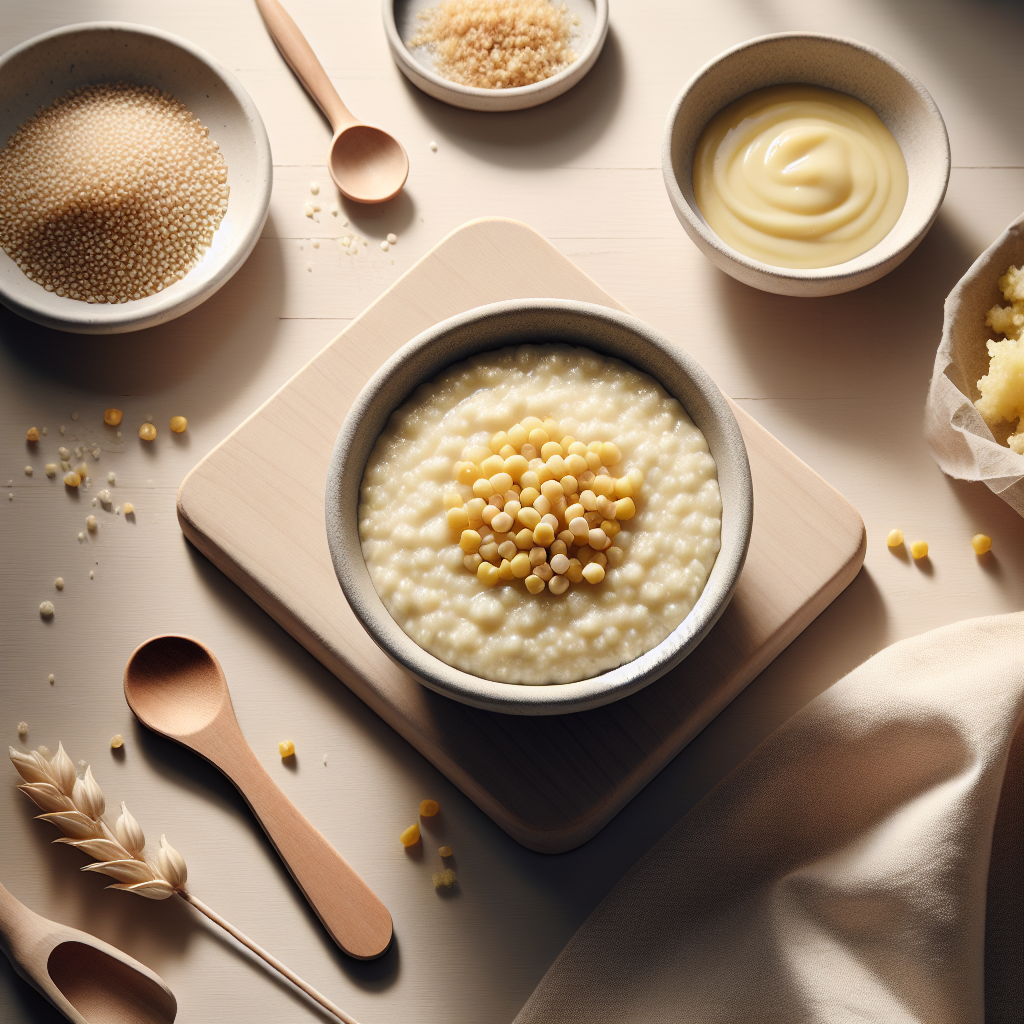
Continue offering millet porridge at a scoopable consistency, allowing your baby to practise self-feeding with their hands or a spoon. You can also form the cooked millet into soft patties or balls that are easy to grasp, or serve it slightly looser as your baby's pincer grasp develops. Mix in mashed vegetables, nut or seed butters, or ground meat to add variety and nutrition.
Nutrition highlights
Millet is a good source of iron, an essential nutrient that supports healthy brain development and helps prevent anaemia in babies. It also provides B vitamins, magnesium, and phosphorus, which support energy metabolism and bone health. The grain contains small amounts of protein and fibre, contributing to a balanced diet as your baby explores solid foods.
Lower-risk serving reminders
Millet porridge presents a low choking risk when prepared to a soft, well-cooked consistency. The small grains bind together when mixed with liquid, creating a smooth texture that is easy for babies to manage and swallow safely.
Allergen introduction checklist
Millet is not a common allergen and does not contain gluten, making it a safe choice for babies with coeliac disease or gluten sensitivity. While allergic reactions to millet are rare, introduce it as you would any new food and watch for signs of an adverse reaction.
Common questions
Does millet porridge need to be mixed with anything for babies?
Mixing millet porridge with breast milk, formula, or plain yogurt helps bind the grains and creates a creamier texture that's easier for young babies to scoop and swallow. This also adds familiar flavours and extra nutrients.
Can I make millet porridge in advance for my baby?
Yes, cooked millet porridge can be refrigerated in an airtight container for up to 3 days or frozen for up to 3 months. Reheat thoroughly and add a splash of liquid to restore the desired consistency before serving.
How do I make millet porridge the right consistency for baby-led weaning?
Cook millet with plenty of liquid until very soft and the grains burst open, then mix in breast milk, formula, or yogurt to achieve a thick, scoopable texture that holds together on a spoon. The porridge should be smooth enough to swallow but thick enough for your baby to practise self-feeding.
General feeding checklist
- Seat baby upright and stable for all meals.
- Model slow chewing and allow baby to control pace.
- Stop and reset if baby is upset, tired, or over-stuffed.
Readiness signs to check
- Baby can sit upright with minimal support during meals.
- Hands and mouth coordinate for bringing food to the mouth.
- Tongue-thrust reflex is reduced, so food is not immediately pushed out.
- Interest in self-feeding and opening mouth for food cues is visible.
Pause and seek advice if
- Coughing is persistent or distress does not settle quickly during meals.
- You notice repeated vomiting, rash, swelling, wheeze, or breathing changes after a food.
- Baby struggles with swallowing progression over multiple meals despite texture adjustments.
- There is a known medical condition affecting feeding, growth, or airway safety.
Other ages: 6–8 months · 12–24 months