Baby-led weaning · age-specific guide
Malt-o-meal for 9–11 months
Malt-o-meal can be introduced as soon as your baby is ready to start solids, which is typically around 6 months of age. As a hot cereal made from wheat, it becomes soft and smooth when cooked, making it suitable for early eaters. Always ensure it is thoroughly cooked and served at a safe temperature for your baby.
How to serve at 9–11 months
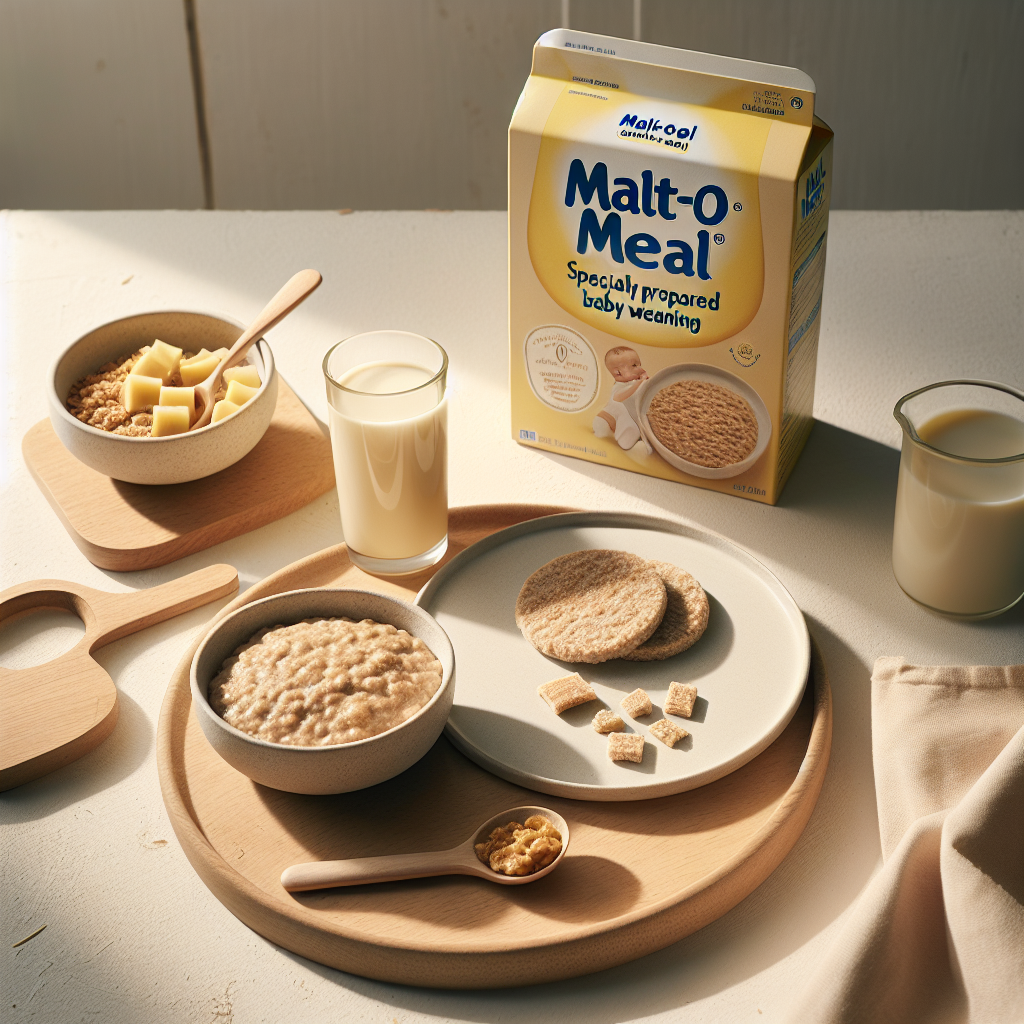
Continue offering Malt-o-meal as a thick porridge that your baby can scoop with their hands or a pre-loaded spoon. As their pincer grasp develops, you can shape cooled, cooked Malt-o-meal into soft patties or balls that are easy to pick up and self-feed. Let the texture remain soft enough to squash easily between your fingers.
Nutrition highlights
Malt-o-meal is often fortified with iron, an essential mineral that supports brain development and helps prevent iron deficiency anaemia in babies. It also provides carbohydrates for energy and some B vitamins. Pairing it with iron-absorption boosters like fruits rich in vitamin C can enhance the nutritional benefits.
Lower-risk serving reminders
When properly prepared, Malt-o-meal has a low choking risk because it is soft, smooth, and easily dissolves in the mouth. Its porridge-like consistency does not form firm pieces that could block the airway.
Allergen introduction checklist
Malt-o-meal is made from wheat, which is a common allergen. If your baby has not yet been introduced to wheat, offer a small amount at first and watch for signs of an allergic reaction such as hives, vomiting, or difficulty breathing.
Common questions
Is Malt-o-meal safe for babies under 6 months?
No, Malt-o-meal should only be introduced once your baby is around 6 months old and showing signs of readiness for solid foods.
Can I add sugar or honey to Malt-o-meal for my baby?
Avoid adding sugar or honey to Malt-o-meal, as babies do not need added sweeteners and honey poses a risk of botulism for infants under 12 months.
Does Malt-o-meal contain gluten?
Yes, Malt-o-meal is made from wheat and contains gluten, so it should be introduced carefully if your baby has not yet tried wheat.
General feeding checklist
- Seat baby upright and stable for all meals.
- Model slow chewing and allow baby to control pace.
- Stop and reset if baby is upset, tired, or over-stuffed.
Readiness signs to check
- Baby can sit upright with minimal support during meals.
- Hands and mouth coordinate for bringing food to the mouth.
- Tongue-thrust reflex is reduced, so food is not immediately pushed out.
- Interest in self-feeding and opening mouth for food cues is visible.
Pause and seek advice if
- Coughing is persistent or distress does not settle quickly during meals.
- You notice repeated vomiting, rash, swelling, wheeze, or breathing changes after a food.
- Baby struggles with swallowing progression over multiple meals despite texture adjustments.
- There is a known medical condition affecting feeding, growth, or airway safety.
Other ages: 6–8 months · 12–24 months