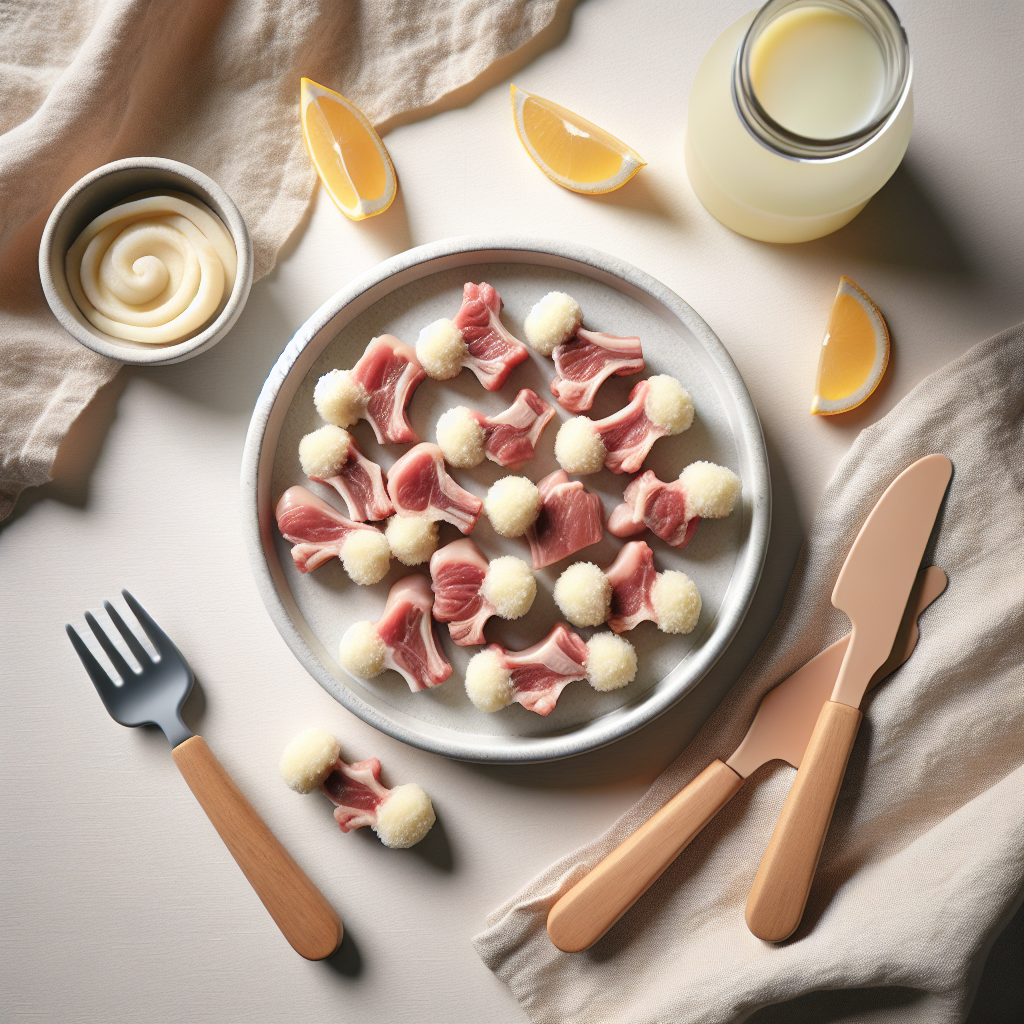
Baby-led weaning · age-specific guide
Lamb chop trimmed for 9–11 months
Lamb chop trimmed can be introduced as soon as your baby is ready to start solid foods, which is typically around 6 months of age. Ensure the lamb is fully cooked to an internal temperature of at least 63°C and served in an age-appropriate size and texture. Trim away any excess fat, gristle, and remove the bone before serving to young eaters.
How to serve at 9–11 months
Continue to cook lamb chop until tender, then remove the bone and trim away fat and gristle. Shred the meat into smaller, bite-sized pieces or offer slightly thicker strips that baby can bite pieces from as their jaw strength develops. You can also serve small, soft chunks of lamb mixed into grains, pasta, or vegetable dishes to encourage developing pincer grasp, ensuring all pieces remain moist and easy to chew.
Nutrition highlights
Lamb chop is an excellent source of highly bioavailable haem iron, which is essential for healthy brain development and preventing iron deficiency anaemia in babies. It also provides high-quality complete protein, vitamin B12, zinc, and selenium, all of which support growth, immune function, and energy metabolism. The fat naturally present in lamb, even when trimmed, provides important calories and fat-soluble vitamins for rapid infant development.
Lower-risk serving reminders
Trimmed lamb chop has a low choking risk when properly prepared because the meat becomes tender when cooked correctly and can be easily shredded or cut into manageable pieces. The soft, moist texture is easier for babies to manage than tough or dry cuts of meat.
Allergen introduction checklist
Lamb is not classified as a common allergen and allergic reactions to lamb are rare. Mammalian meat allergies do exist but are uncommon in infants, though if your baby has a known tick-borne meat allergy or family history of such allergies, consult your healthcare provider before introducing lamb.
Common questions
How do I make lamb chop tender enough for my baby?
Cook lamb chop using moist cooking methods such as braising, slow roasting, or stewing until the meat is very tender and can be easily shredded with a fork. Avoid grilling or pan-frying alone, as these methods can create tough, dry meat that is difficult for babies to manage.
Should I remove all the fat from lamb chop before serving?
Trim away large pieces of external fat and any gristle, but leaving some fat is beneficial as it provides calories and keeps the meat moist and easier to chew. A small amount of natural fat also helps babies absorb fat-soluble vitamins.
Can I serve lamb chop on the bone to my baby?
For babies under 12 months, always remove the bone and serve only the tender meat in shreds or strips. Older toddlers with more developed chewing skills may gnaw on a large lamb chop bone under close supervision, but the bone itself should never be small enough to fit entirely in the mouth.
General feeding checklist
- Seat baby upright and stable for all meals.
- Model slow chewing and allow baby to control pace.
- Stop and reset if baby is upset, tired, or over-stuffed.
Readiness signs to check
- Baby can sit upright with minimal support during meals.
- Hands and mouth coordinate for bringing food to the mouth.
- Tongue-thrust reflex is reduced, so food is not immediately pushed out.
- Interest in self-feeding and opening mouth for food cues is visible.
Pause and seek advice if
- Coughing is persistent or distress does not settle quickly during meals.
- You notice repeated vomiting, rash, swelling, wheeze, or breathing changes after a food.
- Baby struggles with swallowing progression over multiple meals despite texture adjustments.
- There is a known medical condition affecting feeding, growth, or airway safety.
Other ages: 6–8 months · 12–24 months