Baby-led weaning · age-specific guide
Kiwi for 12–24 months
Kiwi can be introduced as soon as your baby is ready to start solid foods, which is typically around 6 months of age. Choose ripe, soft kiwis to ensure the texture is gentle on new eaters and easy to manage. The fruit's smooth flesh and small, edible seeds make it a manageable option for early self-feeding when prepared appropriately.
How to serve at 12–24 months
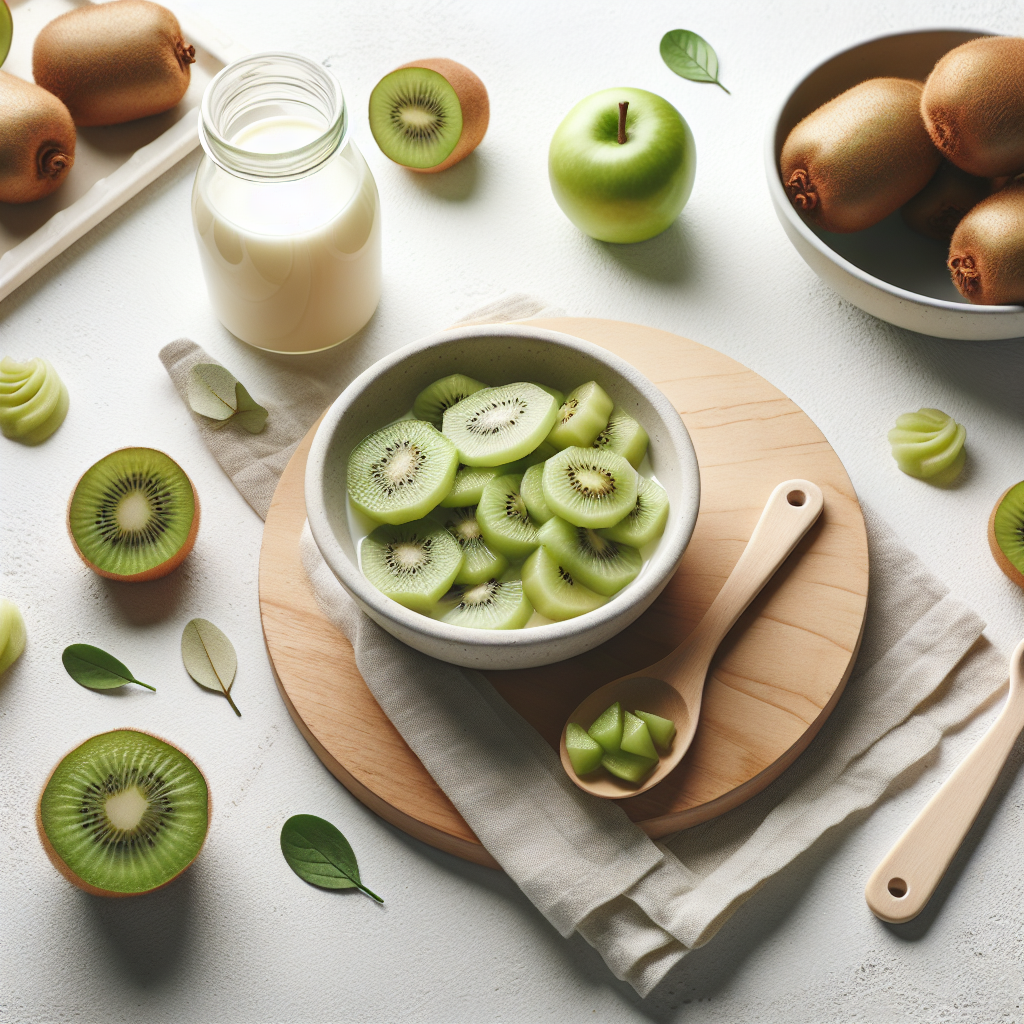
Offer bite-sized pieces of ripe kiwi, either peeled or with skin on if it is soft and your toddler can manage it. You can slice the fruit into rounds and then quarter them, or cut into small cubes. Continue to ensure the kiwi is ripe and soft, and supervise closely as toddlers sometimes try to take large bites.
Nutrition highlights
Kiwi is exceptionally rich in vitamin C, providing more per serving than many citrus fruits, which supports immune function and helps with the absorption of iron from plant-based foods. It also contains fibre to support healthy digestion, vitamin K for blood clotting and bone health, and potassium for heart and muscle function. The small black seeds provide a mild source of omega-3 fatty acids.
Lower-risk serving reminders
Kiwi presents a low choking risk when served ripe and soft, as the flesh breaks down easily in the mouth and does not form firm pieces that could block the airway. Its naturally smooth, yielding texture allows babies to mash it with their gums without difficulty.
Allergen introduction checklist
Kiwi is not considered a common allergen, though rare cases of oral allergy syndrome or sensitivity have been reported, particularly in individuals with birch pollen or latex allergies. If you notice any redness around the mouth, swelling, or digestive upset after introducing kiwi, speak with your healthcare provider.
Common questions
Do I need to peel kiwi for my baby?
You can leave the skin on if the kiwi is gold or very soft, but remove the fuzzy skin from green kiwis for babies under 12 months as it can be tough to manage. After 12 months, well-washed skin is safe and adds extra fibre.
How do I know if a kiwi is ripe enough for my baby?
A ripe kiwi should yield gently to pressure when squeezed and feel soft but not mushy. If the kiwi is firm, leave it at room temperature for a few days to ripen before serving.
Can kiwi cause nappy rash in babies?
Kiwi is acidic and can occasionally cause temporary nappy rash or redness around the mouth in sensitive babies. If this occurs, you can wait a few weeks and try again, as tolerance often improves with time.
General feeding checklist
- Seat baby upright and stable for all meals.
- Model slow chewing and allow baby to control pace.
- Stop and reset if baby is upset, tired, or over-stuffed.
Readiness signs to check
- Baby can sit upright with minimal support during meals.
- Hands and mouth coordinate for bringing food to the mouth.
- Tongue-thrust reflex is reduced, so food is not immediately pushed out.
- Interest in self-feeding and opening mouth for food cues is visible.
Pause and seek advice if
- Coughing is persistent or distress does not settle quickly during meals.
- You notice repeated vomiting, rash, swelling, wheeze, or breathing changes after a food.
- Baby struggles with swallowing progression over multiple meals despite texture adjustments.
- There is a known medical condition affecting feeding, growth, or airway safety.
Other ages: 6–8 months · 9–11 months