Baby-led weaning · age-specific guide
Jujube for 12–24 months
Jujube may be introduced as soon as your baby is ready to start solids, which is generally around 6 months of age. When selecting jujube for babies, choose fruit that is fully ripe and very soft to the touch, as under-ripe jujube can be quite firm and less suitable for young eaters. Fresh jujube should yield easily to gentle pressure and have a tender, almost date-like texture when ready.
How to serve at 12–24 months
Offer bite-sized pieces of soft, ripe jujube for toddlers who are practising self-feeding with utensils or fingers. Continue to halve or quarter round fruits to maintain safety as your child refines their chewing skills. At this age, most children can manage soft jujube skin, but always supervise closely and ensure the fruit is very ripe and tender.
Nutrition highlights
Jujube offers a good source of vitamin C, which supports immune function and helps the body absorb iron from plant-based foods. The fruit also contains fibre, which aids digestion and helps establish healthy bowel movements in babies. Additionally, jujube provides small amounts of potassium and antioxidants that support overall growth and development.
Lower-risk serving reminders
Jujube presents a low choking risk when it is fully ripe and soft, and when prepared appropriately for your baby's age and eating skills. The soft, yielding texture of ripe jujube allows babies to mash it between their gums, and serving it in age-appropriate sizes further reduces risk.
Allergen introduction checklist
Jujube is not a common allergen and is generally well tolerated by babies. As with any new food, it is sensible to introduce jujube on its own and watch for any signs of an adverse reaction, though allergies to jujube are rare.
Common questions
What does ripe jujube look like?
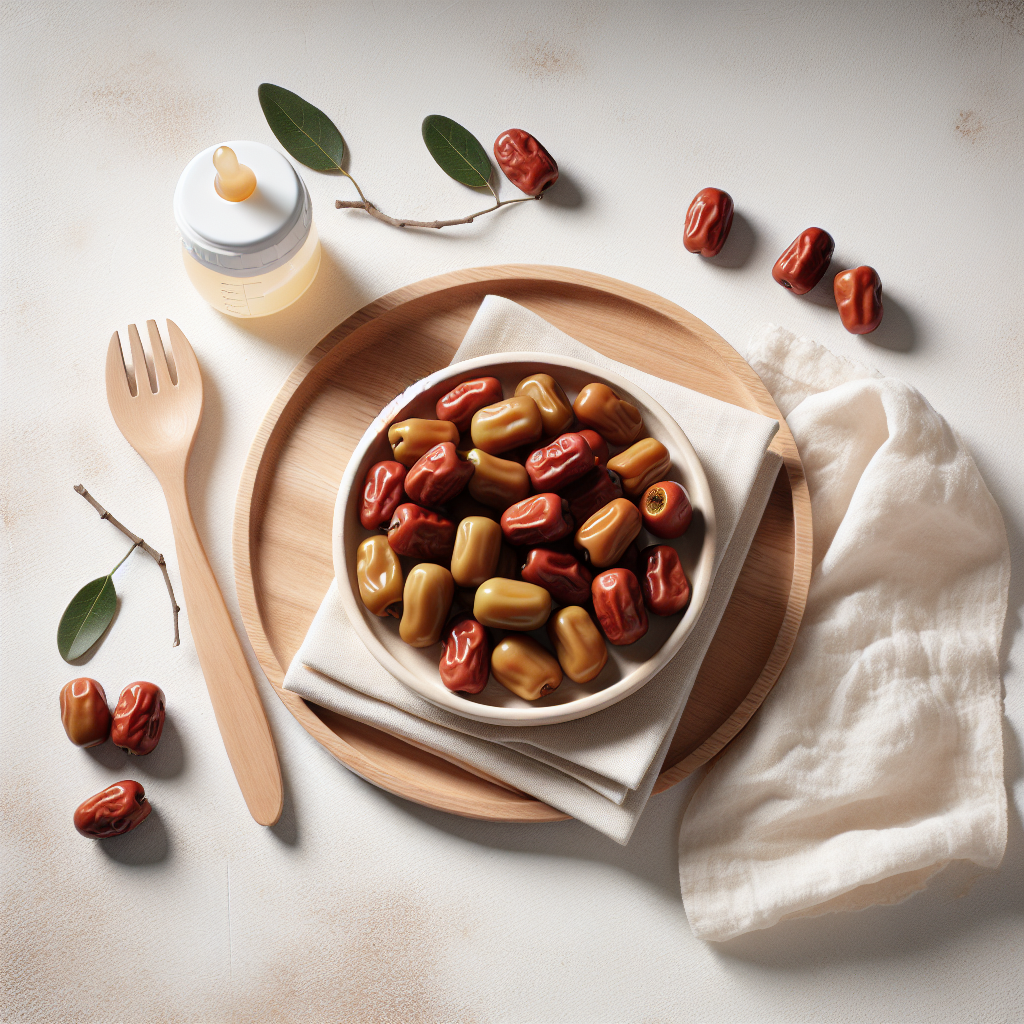
Ripe jujube ranges from yellow-green to reddish-brown in colour and yields easily to gentle pressure, with a soft, tender texture similar to a date. Unripe jujube is very firm and should be avoided for babies.
Can I serve dried jujube to my baby?
Dried jujube is very sticky and chewy, which increases choking risk, so it is best to wait until your child is older and has mature chewing skills before offering dried varieties.
Do I need to remove the jujube skin?
If the skin is tough or leathery, it is safer to peel it off for babies under 12 months. Soft, ripe jujube with tender skin can be offered with the skin on, provided it is prepared in age-appropriate sizes.
General feeding checklist
- Seat baby upright and stable for all meals.
- Model slow chewing and allow baby to control pace.
- Stop and reset if baby is upset, tired, or over-stuffed.
Readiness signs to check
- Baby can sit upright with minimal support during meals.
- Hands and mouth coordinate for bringing food to the mouth.
- Tongue-thrust reflex is reduced, so food is not immediately pushed out.
- Interest in self-feeding and opening mouth for food cues is visible.
Pause and seek advice if
- Coughing is persistent or distress does not settle quickly during meals.
- You notice repeated vomiting, rash, swelling, wheeze, or breathing changes after a food.
- Baby struggles with swallowing progression over multiple meals despite texture adjustments.
- There is a known medical condition affecting feeding, growth, or airway safety.
Other ages: 6–8 months · 9–11 months