Baby-led weaning · age-specific guide
Jackfruit for 12–24 months
Jackfruit may be introduced as soon as your baby is ready to start solid foods, which is generally around 6 months of age. Only offer ripe jackfruit that is very soft and easy to squash between your fingers, as unripe jackfruit is firm and starchy and poses a greater choking risk. Always remove any seeds and tough fibrous strings before serving to your baby.
How to serve at 12–24 months
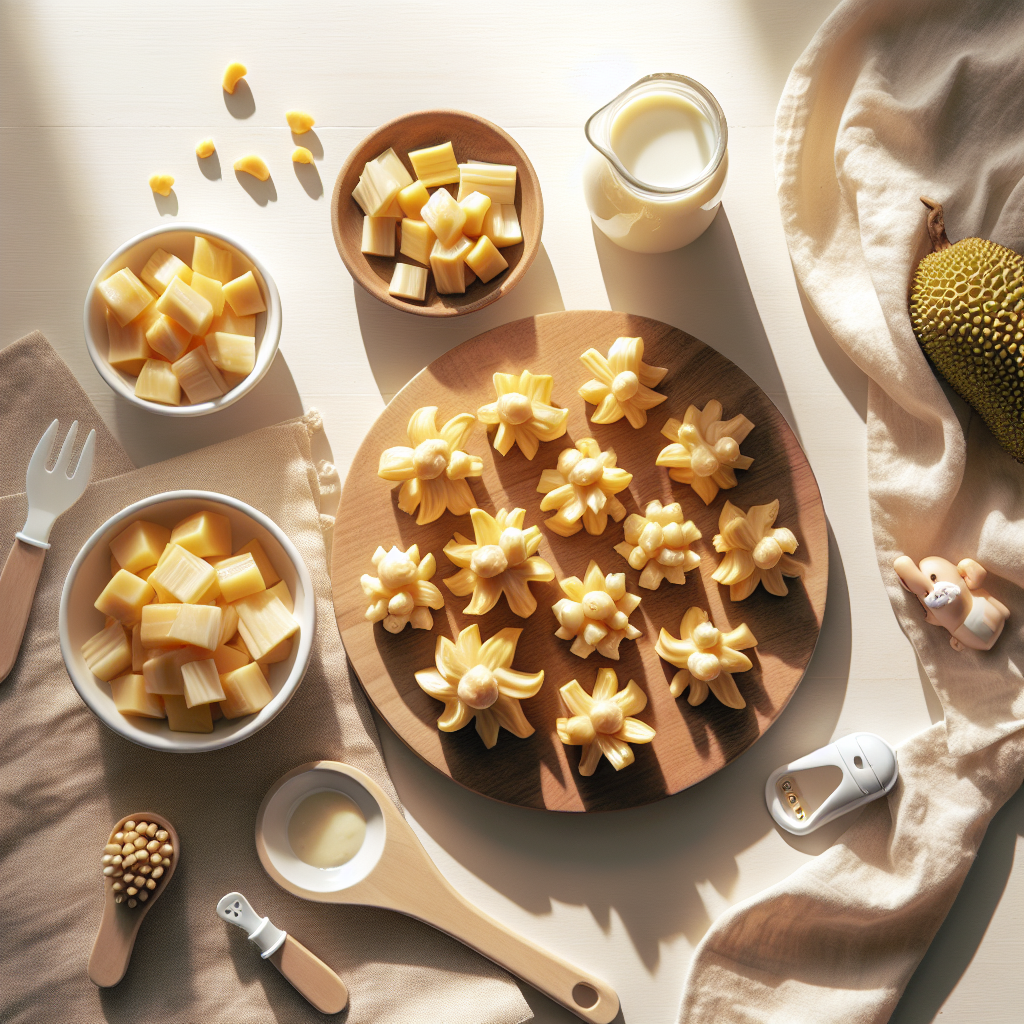
At this age, you can offer ripe jackfruit in bite-sized pieces that your toddler can spear with a fork or pick up independently. Continue to ensure the fruit is soft and remove all seeds and tough strings. You can also offer jackfruit mixed into yoghurt, porridge, or served alongside other fruits as part of a balanced snack or meal.
Nutrition highlights
Jackfruit provides vitamin C, which supports your baby's immune system and helps their body absorb iron from plant-based foods. It also contains fibre to support healthy digestion and small amounts of B vitamins that play a role in energy metabolism. While jackfruit is nutritious, it is lower in protein and fat than many other foods, so pair it with protein-rich foods as part of a balanced meal.
Lower-risk serving reminders
Ripe jackfruit has a low choking risk because its soft, tender flesh breaks down easily in the mouth when fully ripe. The fibrous texture also encourages chewing and makes it less likely to be swallowed whole, provided you remove any tough strings and serve appropriately sized pieces for your baby's age.
Allergen introduction checklist
Jackfruit is not a common food allergen, and allergic reactions to jackfruit are rare. However, individuals with birch pollen allergy or latex allergy may experience cross-reactivity to jackfruit, so introduce it carefully if your baby has a known history of these allergies.
Common questions
Can babies eat tinned jackfruit?
Choose tinned jackfruit in water or juice rather than brine or syrup, and rinse it well before serving. Ensure it is soft and ripe, as tinned young green jackfruit is often firm and intended for savoury dishes rather than babies.
How do I know if jackfruit is ripe enough for my baby?
Ripe jackfruit should be soft enough to squash easily between your fingers, with a sweet aroma and yellow-orange flesh. If the fruit feels firm or the flesh is pale and fibrous, it is not yet ripe enough for your baby.
Do I need to cook jackfruit for my baby?
No, ripe fresh jackfruit does not need to be cooked and can be served raw once it is soft and the seeds and tough strings are removed. Unripe jackfruit should be cooked until very soft if you wish to offer it.
General feeding checklist
- Seat baby upright and stable for all meals.
- Model slow chewing and allow baby to control pace.
- Stop and reset if baby is upset, tired, or over-stuffed.
Readiness signs to check
- Baby can sit upright with minimal support during meals.
- Hands and mouth coordinate for bringing food to the mouth.
- Tongue-thrust reflex is reduced, so food is not immediately pushed out.
- Interest in self-feeding and opening mouth for food cues is visible.
Pause and seek advice if
- Coughing is persistent or distress does not settle quickly during meals.
- You notice repeated vomiting, rash, swelling, wheeze, or breathing changes after a food.
- Baby struggles with swallowing progression over multiple meals despite texture adjustments.
- There is a known medical condition affecting feeding, growth, or airway safety.
Other ages: 6–8 months · 9–11 months