Baby-led weaning · age-specific guide
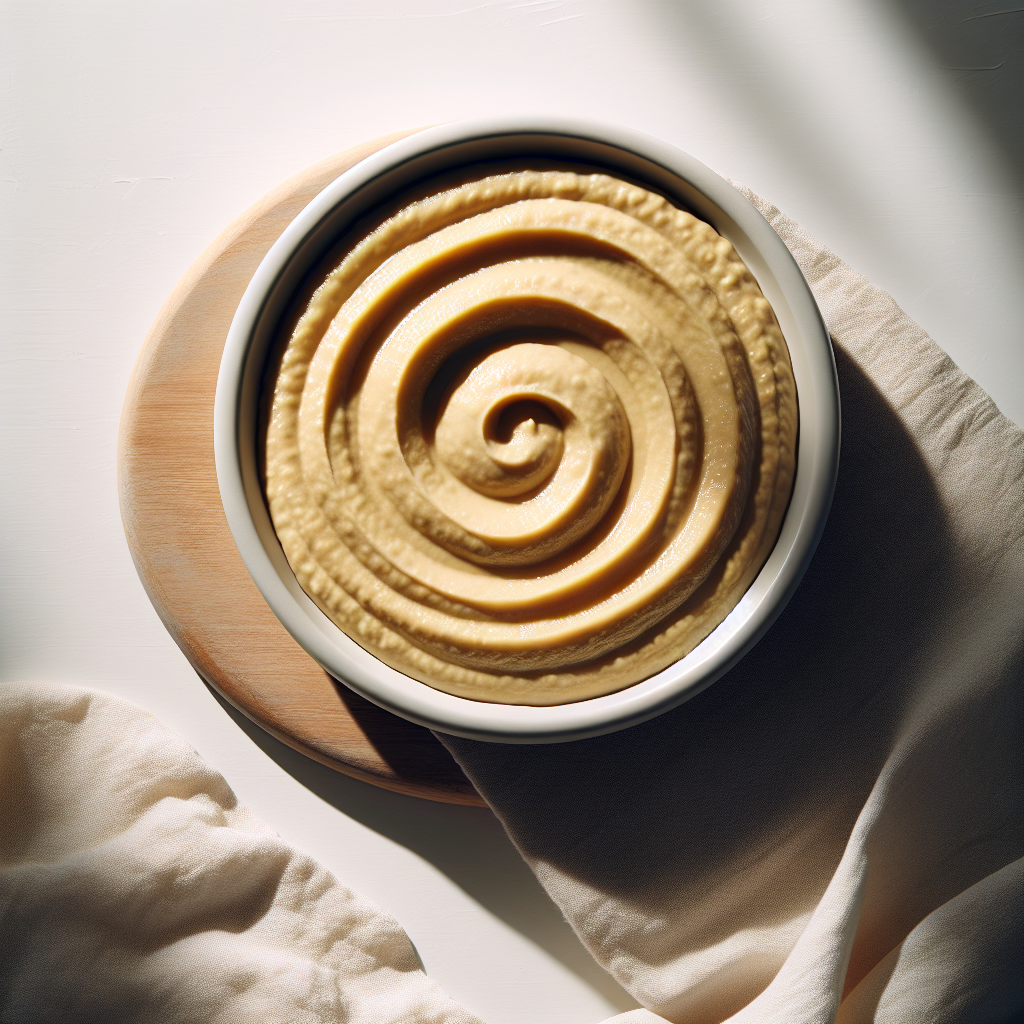
Hummus thinned for 6–8 months
Thinned hummus can be introduced from around 6 months of age, as soon as your baby is ready to start solid foods. Hummus is made from chickpeas, which are a nutritious legume, but the thick, sticky texture of shop-bought or traditional hummus poses a choking risk for young babies. Thinning it with a little olive oil, breast milk, or formula makes it safer and easier for babies to manage.
How to serve at 6–8 months
Thin shop-bought or homemade hummus with olive oil, breast milk, or formula until it has a smooth, spreadable consistency. Spread a thin layer onto a piece of soft toast, a rice cake, or a steamed vegetable spear such as carrot or courgette, so your baby can grip the food and gnaw the hummus off. Avoid offering hummus in a thick dollop or by the spoonful, as this can be difficult for young babies to manage safely.
Nutrition highlights
Thinned hummus is rich in plant-based protein and iron, both of which support growth, development, and healthy blood production. Chickpeas also provide fibre, which aids digestion, and B vitamins that help convert food into energy. The healthy fats from olive oil or tahini support brain development and help babies absorb fat-soluble vitamins.
Lower-risk serving reminders
Thinned hummus has a low choking risk because its smooth, spreadable consistency helps it move safely through the mouth and throat without forming a sticky clump. The key is ensuring it remains thin enough to avoid the thick, paste-like texture that can be difficult for babies to swallow.
Allergen introduction checklist
Hummus is not a common allergen, as chickpeas are legumes and rarely cause allergic reactions in babies. However, shop-bought hummus may contain sesame (tahini), which is a priority allergen, so always check the ingredients if you are using ready-made varieties.
Common questions
How do I thin hummus for my baby?
Mix hummus with a small amount of olive oil, breast milk, formula, or water until it reaches a thin, spreadable consistency that is not thick or sticky.
Can I make my own thinned hummus for baby-led weaning?
Yes, homemade hummus is ideal as you can control the ingredients and consistency. Simply blend cooked chickpeas with olive oil, lemon juice, and a little liquid until smooth and thin.
Should I remove the skins from chickpeas before making hummus?
Removing the skins is not essential but can create a smoother texture. For young babies, a smooth consistency is safer and easier to manage, so peeling may be helpful if you have the time.
General feeding checklist
- Seat baby upright and stable for all meals.
- Model slow chewing and allow baby to control pace.
- Stop and reset if baby is upset, tired, or over-stuffed.
Readiness signs to check
- Baby can sit upright with minimal support during meals.
- Hands and mouth coordinate for bringing food to the mouth.
- Tongue-thrust reflex is reduced, so food is not immediately pushed out.
- Interest in self-feeding and opening mouth for food cues is visible.
Pause and seek advice if
- Coughing is persistent or distress does not settle quickly during meals.
- You notice repeated vomiting, rash, swelling, wheeze, or breathing changes after a food.
- Baby struggles with swallowing progression over multiple meals despite texture adjustments.
- There is a known medical condition affecting feeding, growth, or airway safety.
Other ages: 9–11 months · 12–24 months