Baby-led weaning · age-specific guide
Huckleberry for 6–8 months
Huckleberries may be introduced as soon as your baby is ready to start solids, which is generally around 6 months of age. As with all berries, ensure the huckleberries are ripe and very soft to make them easier for your baby to manage. Always supervise mealtimes closely and ensure your baby is seated upright.
How to serve at 6–8 months
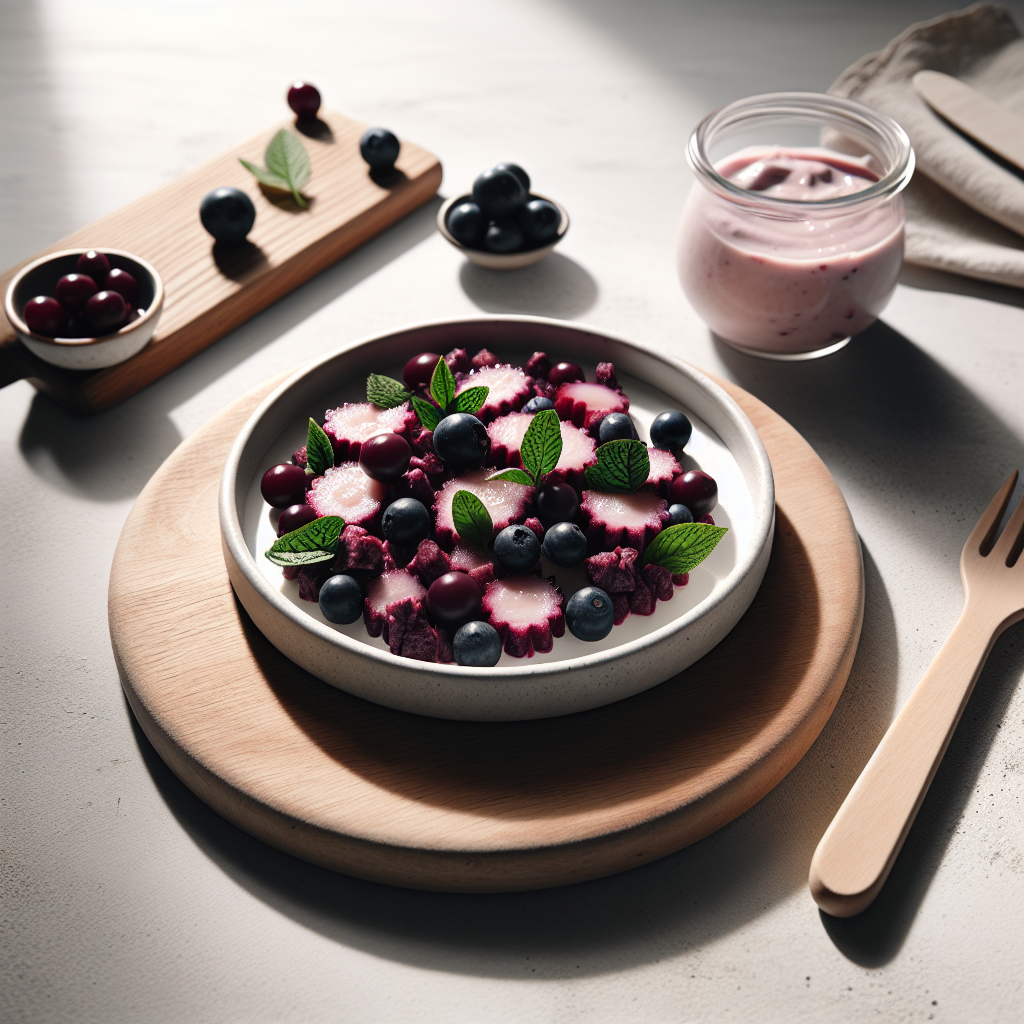
Offer ripe, very soft huckleberries flattened gently between your fingers to reduce their round shape, or mash them lightly if your baby is still developing their biting and chewing skills. You can also serve them in a wide wedge of soft fruit on a preloaded spoon for your baby to bring to their mouth. If the skins feel tough, flatten the berries more firmly or serve them lightly mashed to ensure they are easy to manage.
Nutrition highlights
Huckleberries are rich in vitamin C, which supports immune function and helps your baby absorb iron from other foods. They also contain antioxidants and fibre, which support digestive health and overall development. These small berries provide natural sweetness and a range of beneficial plant compounds that contribute to a varied diet.
Lower-risk serving reminders
Huckleberries present a low choking risk when prepared appropriately, as they are small, soft berries that flatten easily when ripe. Their tender texture breaks down readily in the mouth, making them safer than firm, round fruits.
Allergen introduction checklist
Huckleberries are not a common allergen and are generally well tolerated by babies. As with any new food, introduce huckleberries on their own and watch for any signs of an adverse reaction, though allergies to huckleberries are rare.
Common questions
Do I need to remove the skins from huckleberries for my baby?
No, the skins of ripe huckleberries are soft and thin enough for babies to manage. If the skins seem tough or the berries are not fully ripe, you can gently flatten or mash them to make them easier to eat.
Can I serve frozen huckleberries to my baby?
Yes, but thaw them completely and ensure they are soft before serving. Frozen berries can be harder and pose more of a choking risk, so always bring them to room temperature and check the texture first.
Are huckleberries the same as blueberries?
Huckleberries and blueberries are similar but different species. Huckleberries tend to be slightly smaller with a more tart flavour, but they can be prepared and served to babies in the same way as blueberries.
General feeding checklist
- Seat baby upright and stable for all meals.
- Model slow chewing and allow baby to control pace.
- Stop and reset if baby is upset, tired, or over-stuffed.
Readiness signs to check
- Baby can sit upright with minimal support during meals.
- Hands and mouth coordinate for bringing food to the mouth.
- Tongue-thrust reflex is reduced, so food is not immediately pushed out.
- Interest in self-feeding and opening mouth for food cues is visible.
Pause and seek advice if
- Coughing is persistent or distress does not settle quickly during meals.
- You notice repeated vomiting, rash, swelling, wheeze, or breathing changes after a food.
- Baby struggles with swallowing progression over multiple meals despite texture adjustments.
- There is a known medical condition affecting feeding, growth, or airway safety.
Other ages: 9–11 months · 12–24 months