Baby-led weaning · age-specific guide
Grape for 12–24 months
Grapes may be introduced as soon as your baby is ready to start solids, which is generally around 6 months of age. However, grapes are one of the most common choking hazards for young children, so it is essential to modify their shape and texture before serving. Always ensure grapes are ripe and soft, and supervise your baby closely during mealtimes.
How to serve at 12–24 months
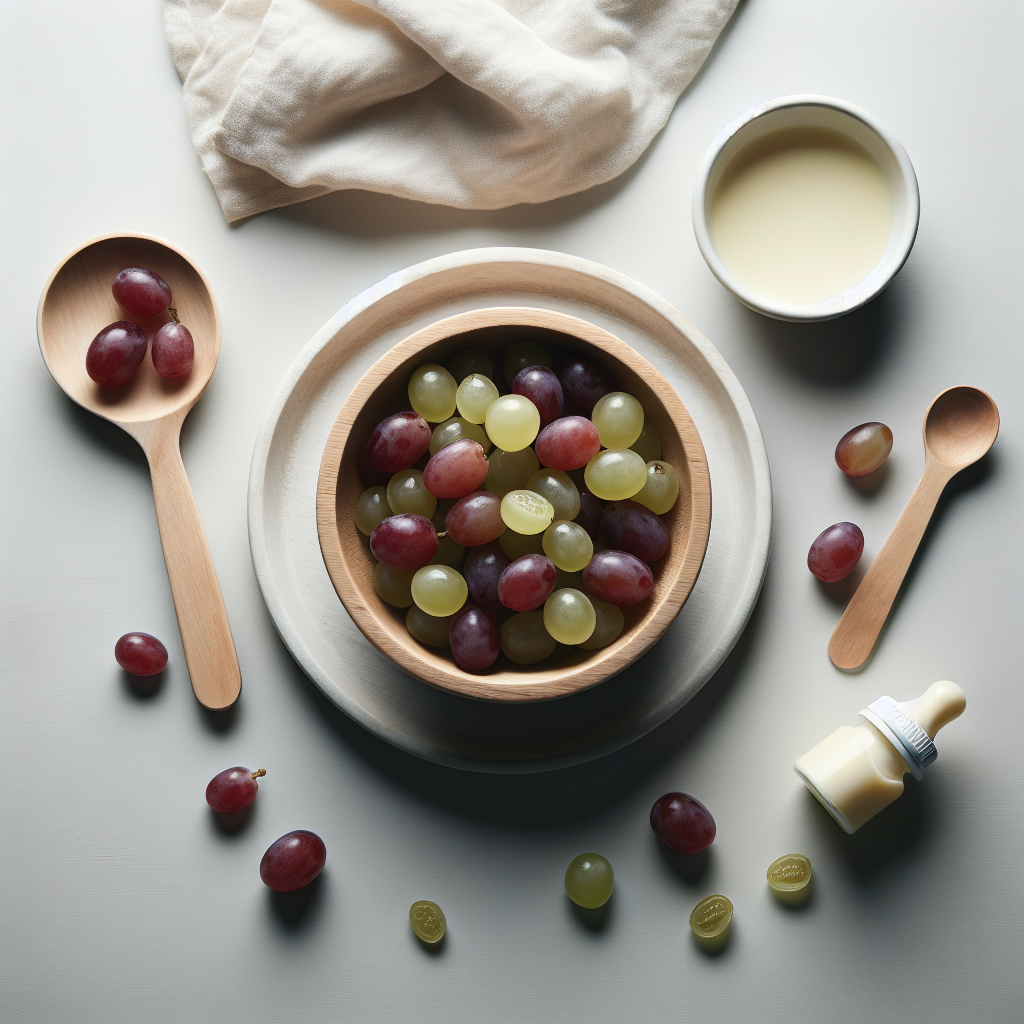
Quarter ripe grapes lengthwise and continue to flatten or smash them as needed, even as your toddler becomes more confident with finger foods. Round grapes remain a choking hazard well into childhood, so do not serve them whole or simply halved. Offer the prepared pieces alongside other fruits or foods at mealtimes.
Nutrition highlights
Grapes provide vitamin C, which supports immune function and helps the body absorb iron from other foods. They also contain vitamin K, which plays a role in blood clotting, and antioxidants that support overall health. While grapes offer natural sugars for energy, they are not a significant source of protein or iron, so pair them with other nutrient-dense foods.
Higher-risk texture handling
Grapes are a high choking risk because their firm, round shape and slippery texture allow them to lodge in a child's airway. The skin can also be difficult for babies to manage, and whole or halved grapes are particularly dangerous as they can block the throat completely.
Allergen introduction checklist
Grapes are not a common allergen and are not among the top foods associated with allergic reactions. Reactions to grapes are rare, though any new food should be introduced in small amounts and observed for signs of sensitivity.
Common questions
How do I prepare grapes safely for my baby?
Always quarter grapes lengthwise into thin strips, remove any tough skins if necessary, and flatten or smash them to reduce choking risk. Never serve whole or halved grapes to babies or toddlers.
When can my baby eat whole grapes?
It is safest to continue quartering grapes lengthwise until at least age 4 or 5, when children have developed more advanced chewing skills and understand how to manage round, slippery foods.
Should I remove the skin from grapes?
If the grape skin is tough or your baby is just starting solids, removing it can make the fruit easier to manage. For softer, ripe grapes, quartering lengthwise is usually sufficient to reduce choking risk.
General feeding checklist
- Seat baby upright and stable for all meals.
- Model slow chewing and allow baby to control pace.
- Stop and reset if baby is upset, tired, or over-stuffed.
Readiness signs to check
- Baby can sit upright with minimal support during meals.
- Hands and mouth coordinate for bringing food to the mouth.
- Tongue-thrust reflex is reduced, so food is not immediately pushed out.
- Interest in self-feeding and opening mouth for food cues is visible.
Pause and seek advice if
- Coughing is persistent or distress does not settle quickly during meals.
- You notice repeated vomiting, rash, swelling, wheeze, or breathing changes after a food.
- Baby struggles with swallowing progression over multiple meals despite texture adjustments.
- There is a known medical condition affecting feeding, growth, or airway safety.
Other ages: 6–8 months · 9–11 months