Baby-led weaning · age-specific guide
Grape tomato for 6–8 months
Grape tomatoes may be introduced as soon as your baby is ready to start solids, which is typically around 6 months of age. Because grape tomatoes are small, round, and firm, they pose a high choking risk and must always be modified before serving. Wait until your baby has developed the motor skills to manage pieces of food safely, and always supervise closely during mealtimes.
How to serve at 6–8 months
Choose very ripe, soft grape tomatoes and quarter them lengthwise into long, thin strips. Flatten or gently smash each strip to remove any round shape and make them easier to grasp and chew. You can serve the strips on their own as finger food, or mix them into soft grains like quinoa or mashed avocado to help your baby practise scooping.
Nutrition highlights
Grape tomatoes are a good source of vitamin C, which supports immune function and helps the body absorb iron from plant-based foods. They also provide vitamin A for healthy vision and skin, as well as antioxidants like lycopene that support overall health. While not rich in iron or protein, grape tomatoes add beneficial nutrients and variety to your baby's diet.
Higher-risk texture handling
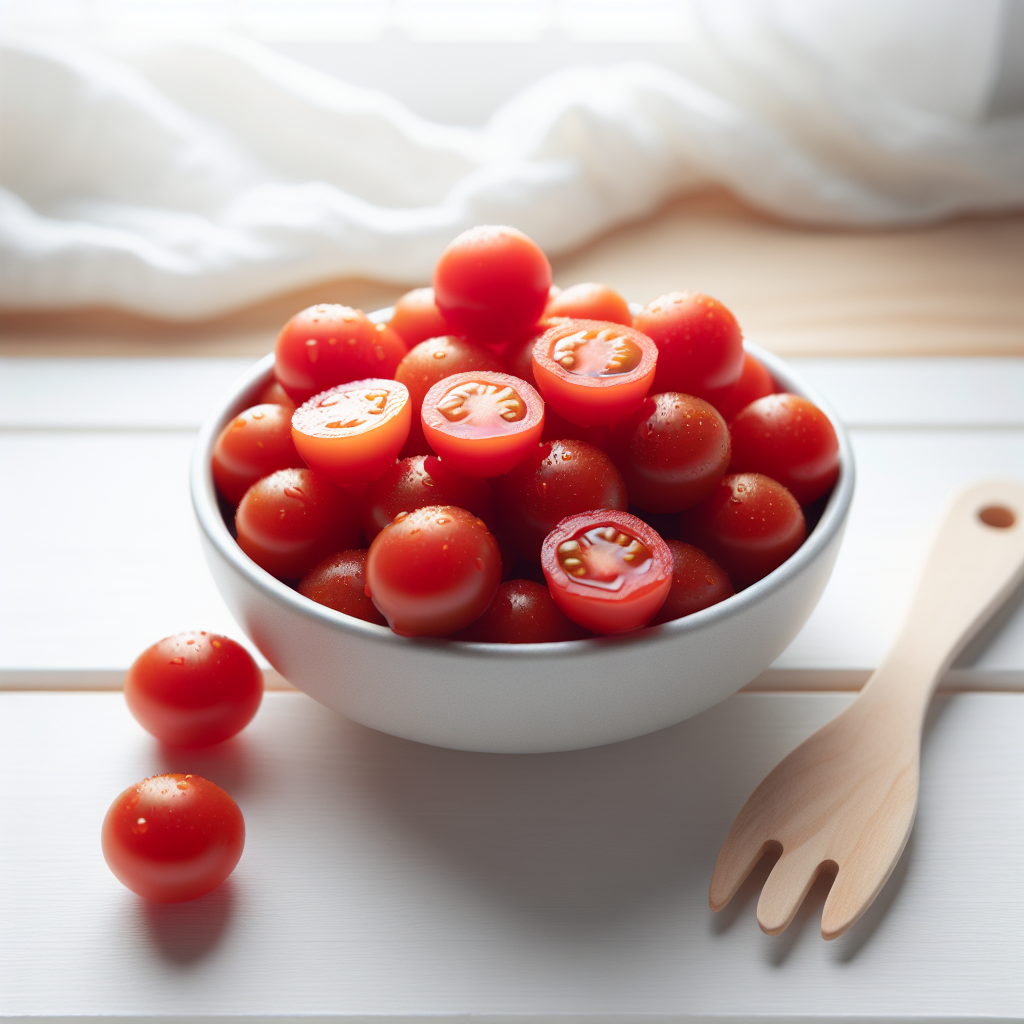
Grape tomatoes are high choking risks because their small, round shape and firm, slippery texture can cause them to slide whole into the throat and block the airway. Even when babies bite into a whole or halved grape tomato, the pieces can be difficult to chew and swallow safely.
Allergen introduction checklist
Grape tomatoes are not considered a common allergen. However, tomatoes belong to the nightshade family and may occasionally cause a rash around the mouth due to their acidity, which is usually harmless and resolves on its own.
Common questions
Do I need to peel grape tomatoes for my baby?
You only need to remove the skin if it is tough or thick. Choose very ripe, soft grape tomatoes with thin skins, and peel them if they feel resistant or leathery.
How do I make grape tomatoes safe for baby-led weaning?
Always quarter grape tomatoes lengthwise into long strips, then flatten or smash each piece to remove the round shape. Never serve grape tomatoes whole or simply halved, as they remain a choking hazard.
Can the acidity in grape tomatoes upset my baby's tummy?
Tomatoes are acidic and may occasionally cause nappy rash or a harmless rash around the mouth, but they are generally well tolerated. If you notice discomfort, you can offer smaller amounts or wait a few weeks before trying again.
General feeding checklist
- Seat baby upright and stable for all meals.
- Model slow chewing and allow baby to control pace.
- Stop and reset if baby is upset, tired, or over-stuffed.
Readiness signs to check
- Baby can sit upright with minimal support during meals.
- Hands and mouth coordinate for bringing food to the mouth.
- Tongue-thrust reflex is reduced, so food is not immediately pushed out.
- Interest in self-feeding and opening mouth for food cues is visible.
Pause and seek advice if
- Coughing is persistent or distress does not settle quickly during meals.
- You notice repeated vomiting, rash, swelling, wheeze, or breathing changes after a food.
- Baby struggles with swallowing progression over multiple meals despite texture adjustments.
- There is a known medical condition affecting feeding, growth, or airway safety.
Other ages: 9–11 months · 12–24 months