Baby-led weaning · age-specific guide
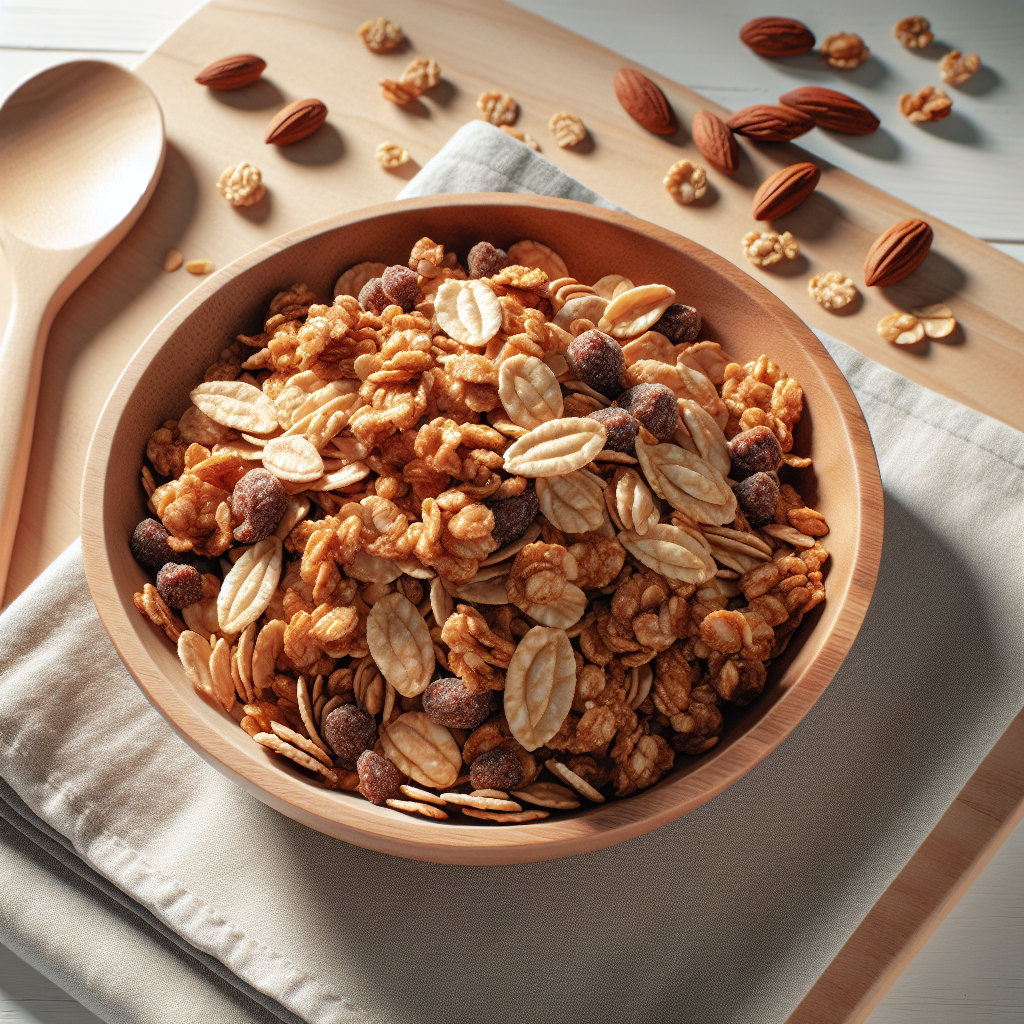
Granola soft cluster for 12–24 months
Granola soft clusters may be introduced from around 9 months of age, once your baby has developed the ability to pick up smaller pieces and has some chewing experience with other softer finger foods. Before this age, granola clusters can be too firm and difficult for younger babies to manage safely. Always choose soft varieties without honey, which should not be given before 12 months, and check that clusters are truly soft rather than crunchy.
How to serve at 12–24 months
Continue to offer soft granola clusters in small, bite-sized pieces that your toddler can pick up easily with their developing pincer grasp. You can also serve them mixed into yoghurt, sprinkled on smoothie bowls, or offered alongside fresh fruit as a snack. Always choose low-sugar options and avoid varieties with hard nuts or large dried fruit pieces that could pose a choking risk.
Nutrition highlights
Granola soft clusters typically provide carbohydrates for energy and often contain oats, which offer fibre to support healthy digestion. Many varieties also include seeds, nuts, or dried fruit, which can add small amounts of healthy fats, vitamins, and minerals. However, granola can be high in added sugars, so choosing lower-sugar options and serving it occasionally as part of a varied diet is beneficial for babies.
Lower-risk serving reminders
Soft granola clusters have a low choking risk because they break down easily when gummed or chewed and quickly become soft when mixed with saliva. Unlike hard or crunchy granola, soft clusters do not pose the same sharp-edged hazard and can be safely mashed between the gums.
Allergen information
Granola soft clusters commonly contain wheat and oats, making them a source of gluten, which is a common allergen. If your baby has not yet been introduced to wheat or gluten, offer a small amount at first and watch for signs of an allergic reaction such as hives, vomiting, or difficulty breathing.
Wheat / gluten
Common questions
Can I give my 6-month-old granola soft clusters?
It's best to wait until around 9 months when your baby has more chewing experience and the ability to pick up smaller pieces. Younger babies may find even soft clusters challenging to manage safely.
Are granola clusters too sweet for babies?
Many granola products contain added sugars, so it's important to check labels and choose varieties with little to no added sugar. Offering granola occasionally rather than daily helps limit your baby's exposure to excess sugar.
How should I serve granola soft clusters for baby-led weaning?
Break clusters into smaller, manageable pieces about the size of a chickpea or smaller, and supervise closely. You can also crumble them over yoghurt or porridge for added texture.
General feeding checklist
- Seat baby upright and stable for all meals.
- Model slow chewing and allow baby to control pace.
- Stop and reset if baby is upset, tired, or over-stuffed.
Readiness signs to check
- Baby can sit upright with minimal support during meals.
- Hands and mouth coordinate for bringing food to the mouth.
- Tongue-thrust reflex is reduced, so food is not immediately pushed out.
- Interest in self-feeding and opening mouth for food cues is visible.
Pause and seek advice if
- Coughing is persistent or distress does not settle quickly during meals.
- You notice repeated vomiting, rash, swelling, wheeze, or breathing changes after a food.
- Baby struggles with swallowing progression over multiple meals despite texture adjustments.
- There is a known medical condition affecting feeding, growth, or airway safety.
Other ages: 6–8 months · 9–11 months