Baby-led weaning · age-specific guide
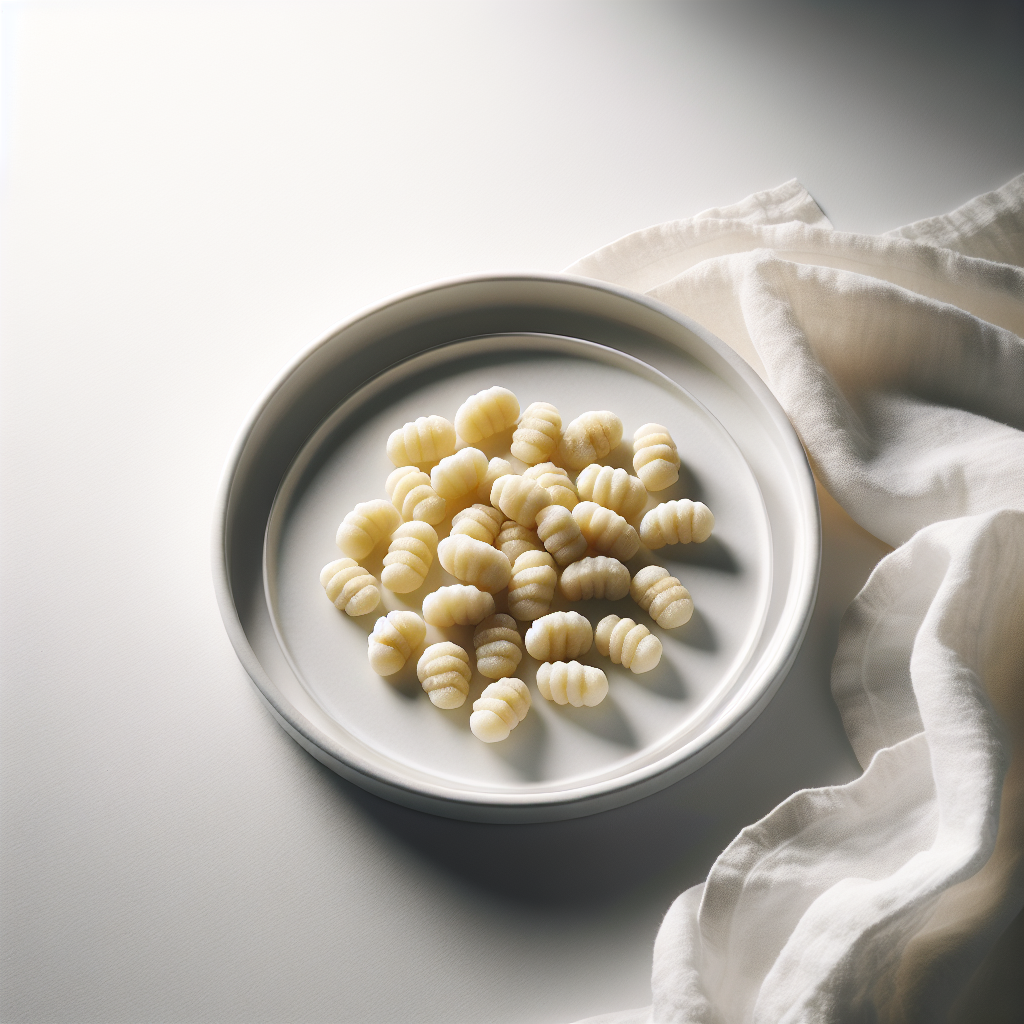
Gnocchi soft for 6–8 months
Gnocchi can be introduced as soon as your baby is ready to start solid foods, which is typically around 6 months of age. Ensure the gnocchi is well-cooked until very soft and easy to squash between your fingers. As gnocchi contains wheat, it's important to introduce it as part of a varied diet and watch for any signs of an allergic reaction during early exposures.
How to serve at 6–8 months
Cook gnocchi until very soft and easily squashed between your fingers. You can serve whole pieces or gently flatten them with the back of a fork to make them easier for little hands to grasp. Mix with a small amount of breast milk, formula, or full-fat yogurt to help bind the pieces together if needed, or toss in a thin coating of olive oil and serve alongside soft cooked vegetables or a protein source.
Nutrition highlights
Gnocchi is primarily made from potato and wheat flour, providing carbohydrates for energy to fuel your baby's growth and activity. While it offers some B vitamins and a small amount of fibre, gnocchi is relatively low in protein and iron, so it's best served alongside nutrient-dense foods like vegetables, legumes, or meat. Pairing gnocchi with healthy fats such as olive oil or a sauce containing vegetables can help boost the overall nutritional value of the meal.
Lower-risk serving reminders
Soft gnocchi has a low choking risk because it is pillowy and easily breaks down with gentle pressure from the gums. When cooked until very soft, it naturally compresses and dissolves in the mouth, making it manageable for babies learning to eat.
Allergen information
Gnocchi typically contains wheat, which is a common allergen and source of gluten. When introducing gnocchi for the first time, offer a small amount and watch for signs of an allergic reaction such as hives, vomiting, or difficulty breathing.
Wheat / gluten
Common questions
Can babies have shop-bought gnocchi?
Yes, babies can have shop-bought gnocchi as long as it's cooked until very soft and you check the ingredients for added salt and preservatives. Choose varieties with minimal ingredients and lower sodium content when possible.
Does gnocchi need to be cut for baby-led weaning?
For younger babies around 6 to 8 months, you can serve gnocchi whole or gently flattened if pieces are particularly large, as they're already small and soft. As babies develop their pincer grip around 9 months, the standard gnocchi size is ideal for practising self-feeding.
What can I serve with gnocchi for my baby?
Serve gnocchi with nutrient-dense toppings like tomato sauce, pesto mixed with yogurt to reduce salt, cooked vegetables such as courgette or spinach, or a protein like shredded chicken or white beans. This helps balance the meal and provides essential nutrients like iron and protein that gnocchi lacks on its own.
General feeding checklist
- Seat baby upright and stable for all meals.
- Model slow chewing and allow baby to control pace.
- Stop and reset if baby is upset, tired, or over-stuffed.
Readiness signs to check
- Baby can sit upright with minimal support during meals.
- Hands and mouth coordinate for bringing food to the mouth.
- Tongue-thrust reflex is reduced, so food is not immediately pushed out.
- Interest in self-feeding and opening mouth for food cues is visible.
Pause and seek advice if
- Coughing is persistent or distress does not settle quickly during meals.
- You notice repeated vomiting, rash, swelling, wheeze, or breathing changes after a food.
- Baby struggles with swallowing progression over multiple meals despite texture adjustments.
- There is a known medical condition affecting feeding, growth, or airway safety.
Other ages: 9–11 months · 12–24 months